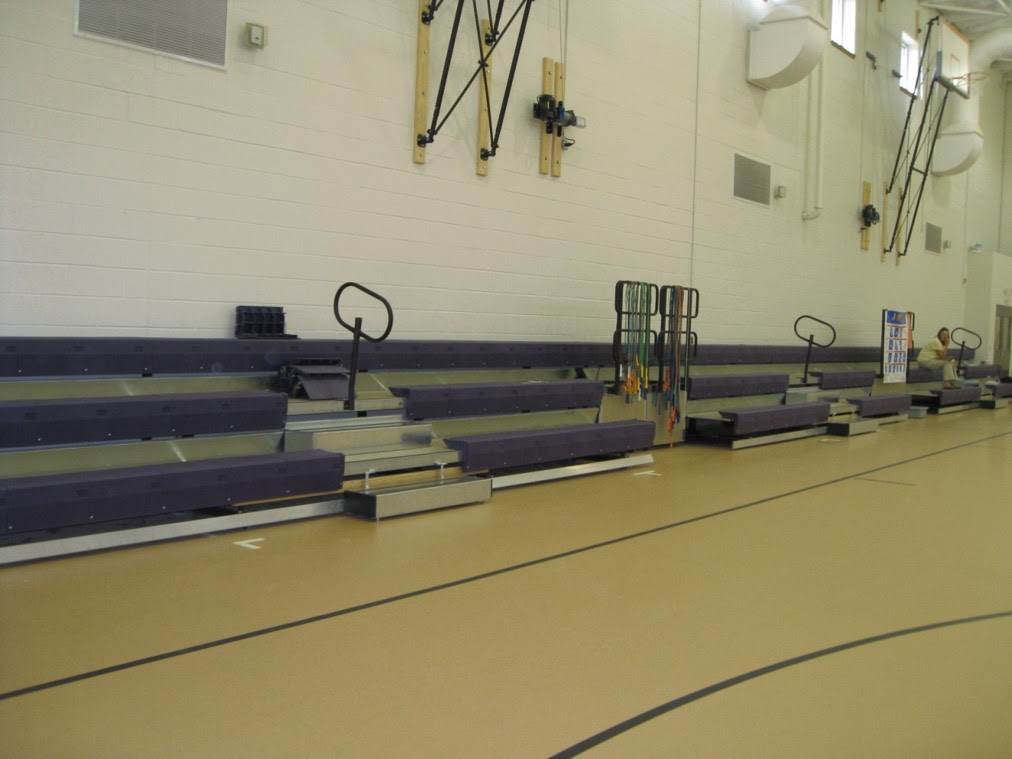
Accessible Work Areas
Thank you to Marsha Godeaux from TDLR for taking the time to explain about employee work areas. Click here to watch the video.
This newsletter will cover Employee work areas. There is a misunderstanding that work areas are not required to comply with the ADA or TAS Standards. We will explain what is required to comply within work areas and what is exempted. Keep in mind that the requirements we are covering are only the 2010 ADA Standards and the 2012 Texas Accessibility Standards. The ABA which covers Federal Facilities do not have the same requirements.
What is a Work Area?
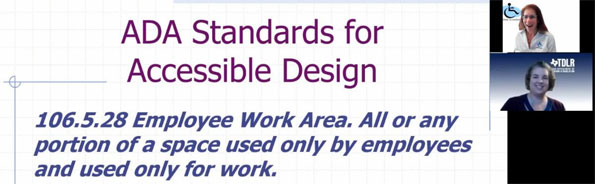
Employee Work Area. All or any portion of a space used only by employees and used only for work. Corridors, toilet rooms, kitchenettes and break rooms are not employee work areas.
Work Area Equipment. Any machine, instrument, engine, motor, pump, conveyor, or other apparatus used to perform work. As used in this document, this term shall apply only to equipment that is permanently installed or built-in in employee work areas. Work area equipment does not include passenger elevators and other accessible means of vertical transportation.
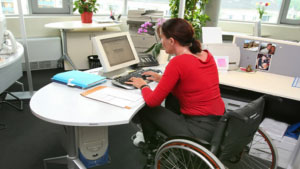
Work cubicles are part of a work area
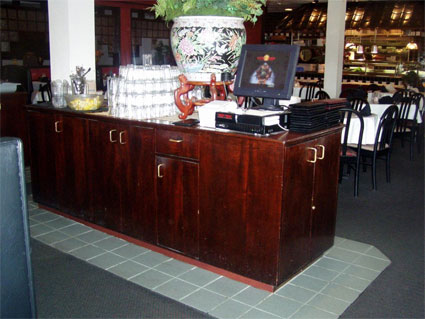
a Point of Sale counter is considerd a work area as long as the public is not required to approach it.
What are the requirements?
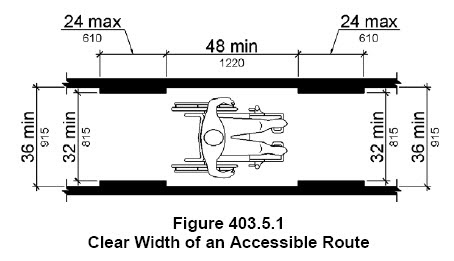
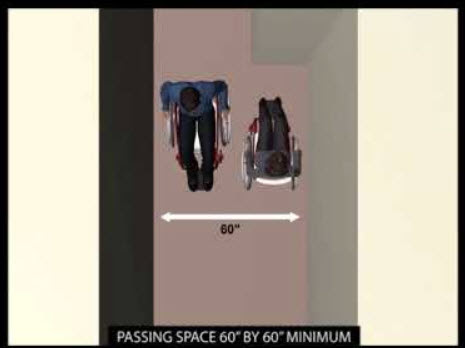
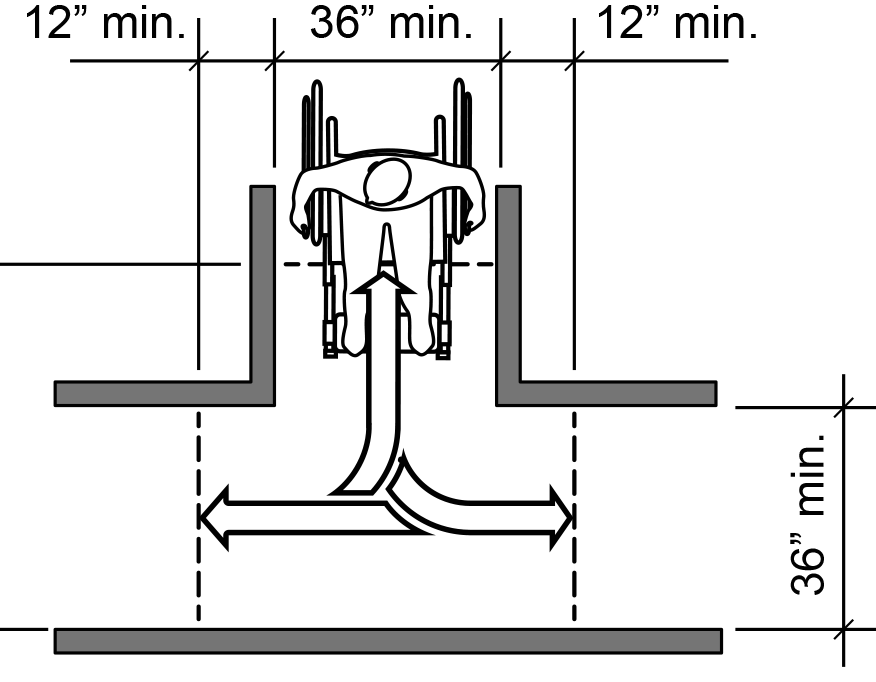
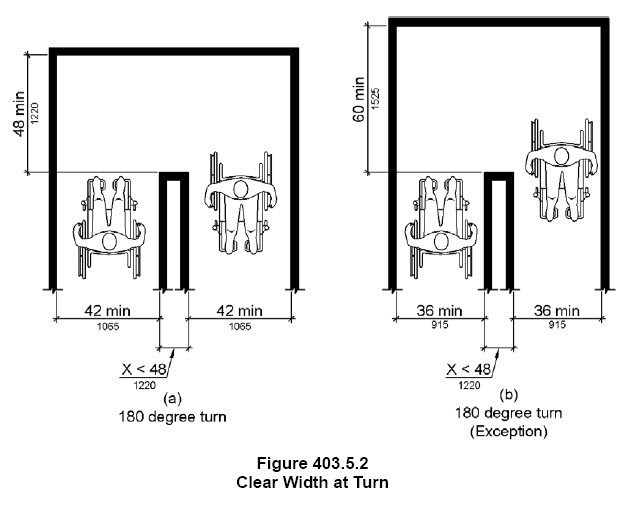
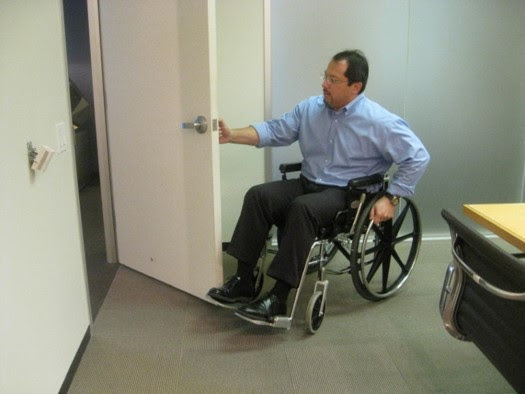
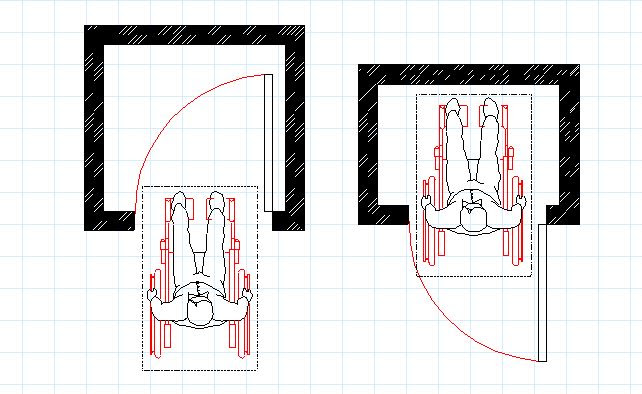
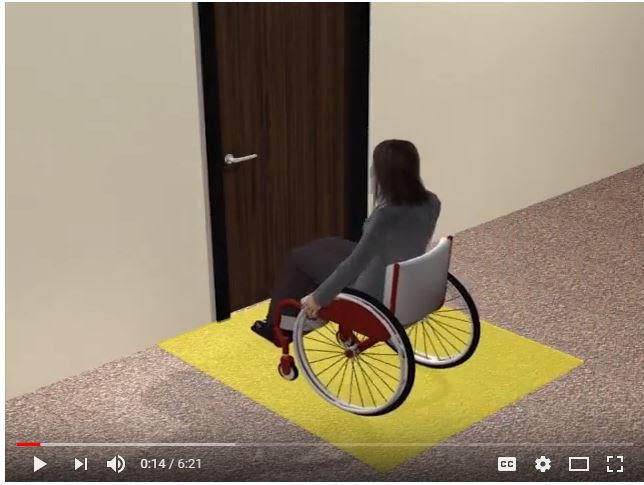
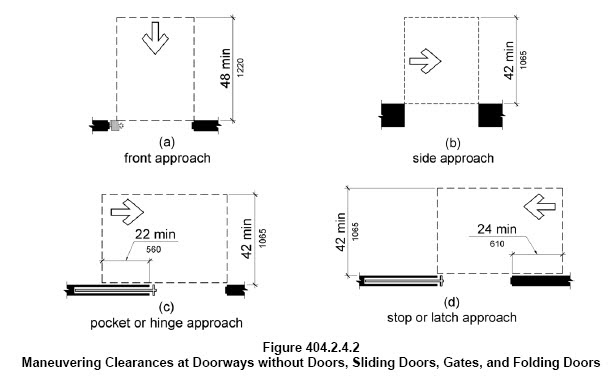
203.9 Employee Work Areas. Spaces and elements within employee work areas shall be designed and constructed so that individuals with disabilities can approach, enter, and exit the employee work area.
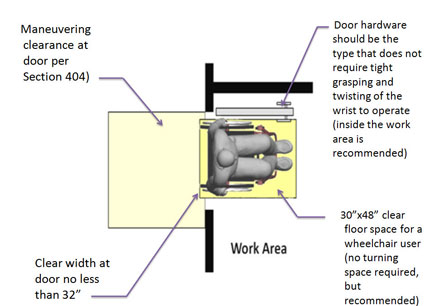
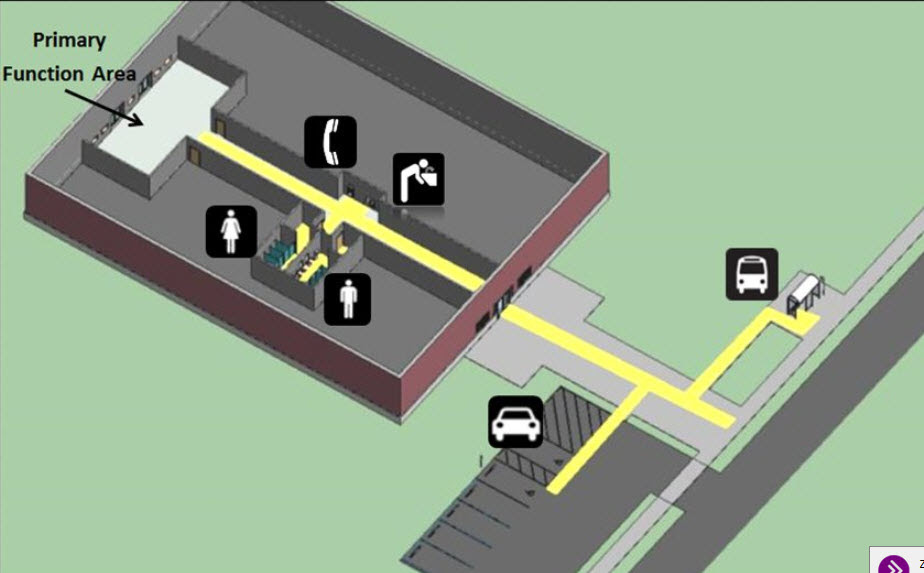
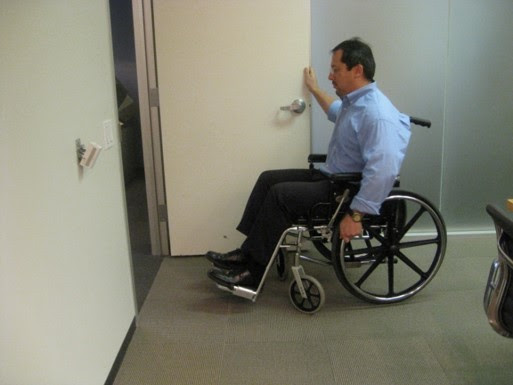
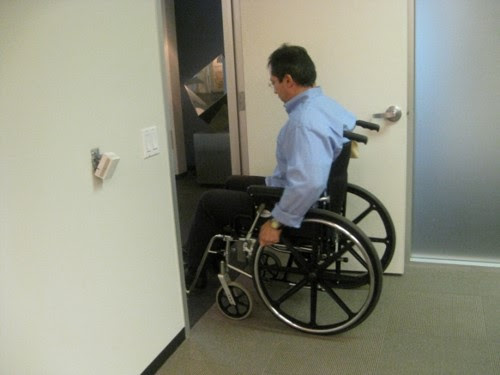
The image above summarizes the approach, enter and exist requriement
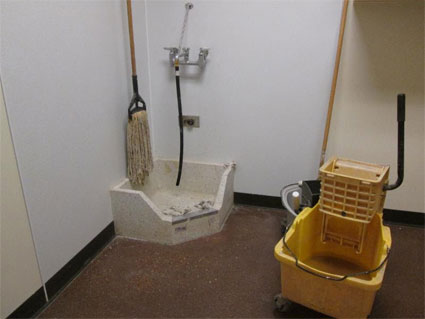
An example of a work area that only requires an approach, enter and exit would be a janitor’s closet. Elements within the janitor’s closet such as the faucet for the mop sink will not be required to comply.
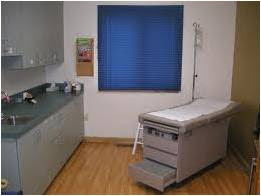
An exam room is partially a “work” area and partially a “patient” area. The area that is only used by the doctor (the sink) will be exempted from having to comply.
What are some exceptions?
Employee work areas, or portions of employee work areas, other than raised courtroom stations, that are less than 300 square feet and elevated 7 inches or more above the finish floor or ground where the elevation is essential to the function of the space shall not be required to comply with these requirements or to be on an accessible route.
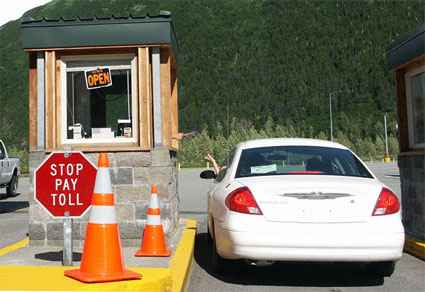
This toll booth is less than 300 s.f. and elevated more than 7″ a.f.f. and therefore do not require an accessible route to it or the ability to approach it and enter it.
Common Circulation Path
In addition to approach, enter and exit, if the employee work area is larger than 1,000 s.f.. then a common path within the work area to common use spaces shall be provided
206.2.8 Employee Work Areas. Common use circulation paths within employee work areas shall comply with 402.
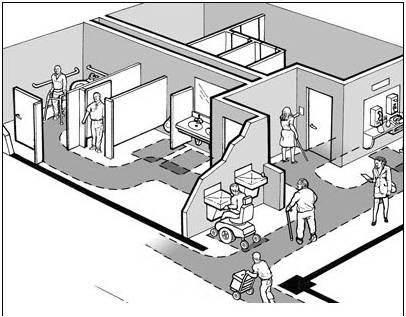
A “common” circulation path is one that is used by more than one person and not intendend for work
Section 402 states that a minimum 36″ width shall be provided along the circulation path.
EXCEPTIONS:
1. Common use circulation paths located within employee work areas that are less than 1000 square feet (93 m2) and defined by permanently installed partitions, counters, casework, or furnishings shall not be required to comply with 402.2.

This raised work area is allowed since the work area is less than 1,000 s.f.
If the path is around work area equipment, then it will not have to comply with the 36″ clear width.
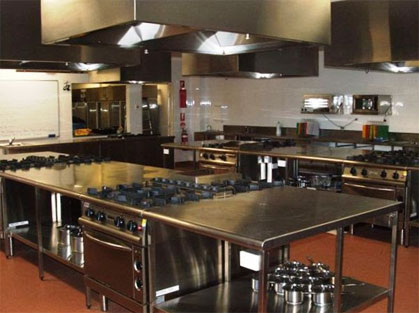
This commercial kitchen has equipment that is an integral part of the work area. The 36″ min. circulation path in this space is not required to comply due to the location of the work area equipment.
Protruding Objects
Even though the only requirement for a work area is “approach, enter and exit”, it also requires that circulation path be provided. Part of the circulation path has to make sure there are no protruding objects projecting onto the circulation path more than 4″. This requirement are for any employee or visitor to the employee area that might be visually impaired.
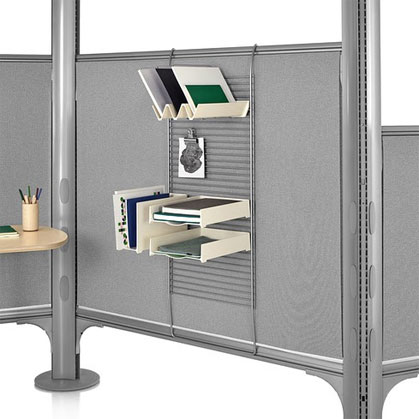
the filing system is located along the common circulation path inside the office space and projects more than 4″ onto the circulation path.
What about other employee areas that are not work related?
The requirements thus far have been for areas that are considered part of the “work” areas in a space. But there are other areas that are also part of an employee area, but are not related to the work they perform. Those areas that are NOT related to their job description will not be exempted and must comply. Below are a few examples of areas that might be for employees only, but must be fully compliant with the Standards:
Break Rooms
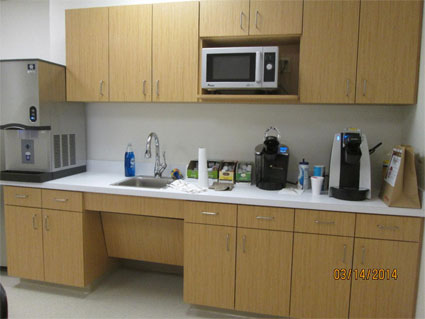
even though a break room is not a public area, it is still required to comply with the ADA and TAS because it is not considered a “work” area, but rather a space where they take a break from work.
LEED employee shower and employee restrooms
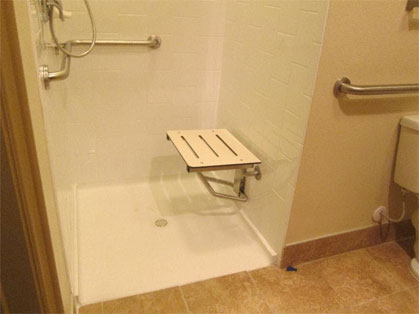
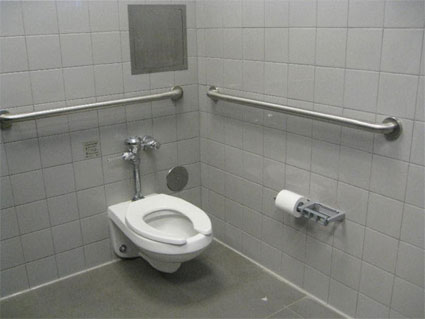
an employee shower or even an employee restroom are also not considered “work” areas and must comply.
Employee Locker Room
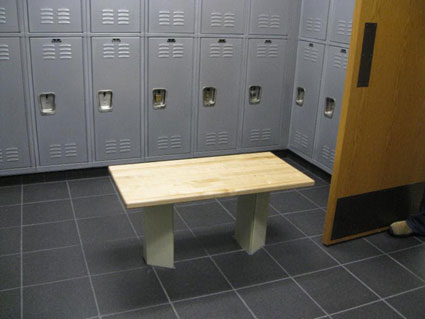
The lockers as well as the bench in this locker/dressing room must comply with the Standards
What happens when an employee is disabled?
The Standards sometimes provide additional guidance through “advisories”. These are NOT requirements, but they are suggestions that might make your design a better one. Below are some of the advisories on work areas:
Advisory 203.9 Employee Work Areas. Although areas used exclusively by employees for work are not required to be fully accessible, consider designing such areas to include non-required turning spaces, and provide accessible elements whenever possible.
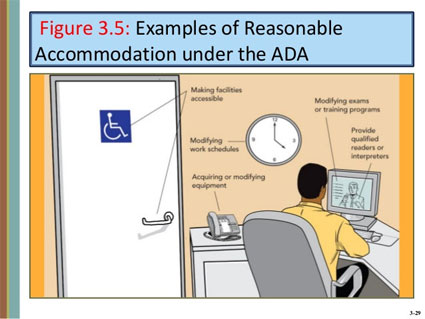
Under the Title I of the ADA, employees with disabilities are entitled to reasonable accommodations in the workplace; accommodations can include alterations to spaces within the facility. Designing employee work areas to be more accessible at the outset will avoid more costly retrofits when current employees become temporarily or permanently disabled, or when new employees with disabilities are hired.
Abadi Accessibility is proud to support the Americans with Disabilities Act (ADA) 31st Anniversary. On July 26th we celebrate this important civil rights law that works to ensure all people with disabilities have the same rights and opportunities as everyone else. Celebrate with us by visiting: www.adaanniversary.org/ #ADA31 #ThanksToTheADA
How are you planning to celebrate Americans with Disabilities Act (ADA) 31st Anniversary? This July 26th the ADA National Network and individuals, communities, and organizations across the country will be participating. Learn how you can be involved by visiting www.adaanniversary.org/ #ADA31 #ThanksToTheADA
Introduction to our newsletter:
After I wrote my first newsletter about counters, my clients are still not clear on all the different requirements for the different types of counters and fixed or built-in surfaces that the ADA requires to be accessible. First of all let me review that there are five type of counters scoped in the ADA Standards: Work surfaces, dining counters, service counters, sales counters and check out counters. Then there are two type of counters that are not scoped: work area counters and non-work area common use counters that do not fall under the other listed. There are also Food service lines, as well as other portions public side service areas. For those please check out my newsletter I wrote I 2014.
This newsletter will explain the different requirements for dining surfaces, non-employee work surfaces and sales and service counters.
Dining Counters
According to Scoping section 226, at least 5% of seating spaces and standing spaces at dining surfaces must comply with 902. Standing spaces are those counters where people might stand to eat or drink rather than sit. Those counters must also comply. Some examples of dining counters are bars where drinks are served, fast food establishments with fixed tables, and booths and banquettes at a restaurant.
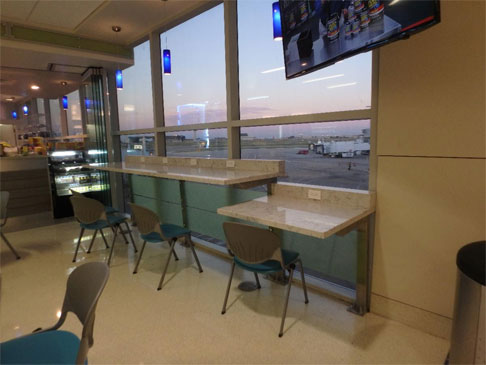
These fixed dining counters in a cafeteria is an example of a dining surface.
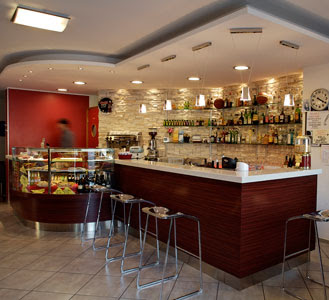
a bar is an example of a dining surface
Section 902 gives us direction on how to make the dining surfaces accessible:
- There must be a knee clearance complying with section 306 so that a person in a wheelchair will approach and use the counter in a forward approach
- The height of the counter must be between 28″-34″ a.f.f. PLEASE NOTE….WE RECOMMEND TO NEVER USE THE MINIMUMS OR MAXIMUMS WHEN DESIGNING.
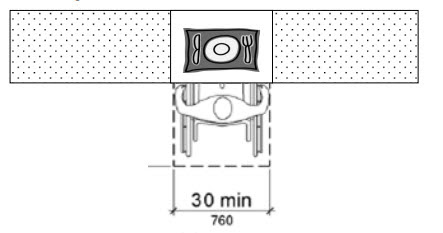
A dining counter should have a 30″ width and a 17″ min. depth at the knee clearance.
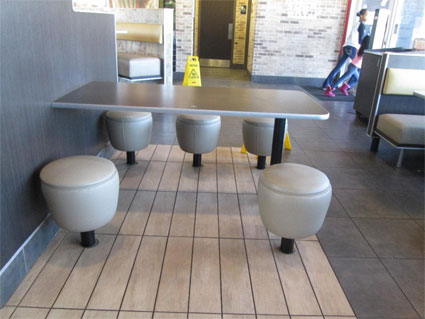
A dining counter has a forward approach knee clearance and it is 34″ a.f.f.
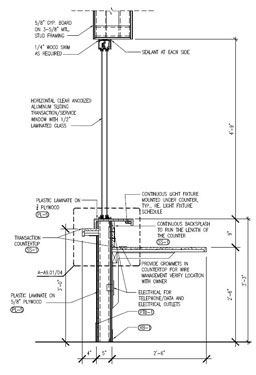
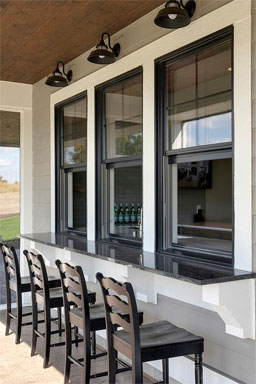
This is a dining counter but also a service window. It is acceptable to have the dining counter in front of the service counter
Non-Employee Work Surfaces
Section 226 tells you that 5% of non-employee work surfaces must comply and meet the requirements set forth in section 902. These are also required to be dispersed throughout the space they are in. Section 902 states that a work surface must have a forward approach with a knee space per section 306 and be 30″ wide minimum and 34″ high maximum
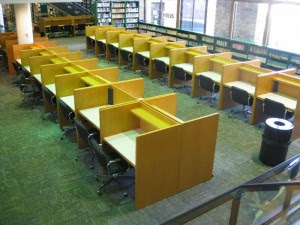
Study carrols in a library is an example of a non-employee work surface
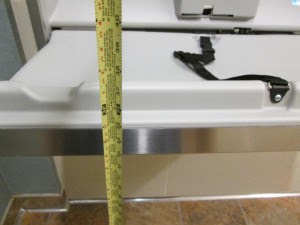
Diaper changing counters are also considered a “work surface”
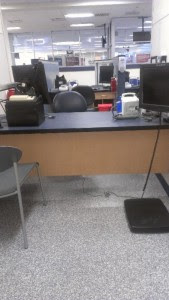
A patient registration desk is another example of a non-employee work surface
All the requirements in section 902 are for non-employee work surfaces (or for the public). Employee work surfaces that are part of a work area are exempted until such time when a person with disabilities is hired at which point, the surface must be provided to accommodate them and their abilities.
Sales and Service counters
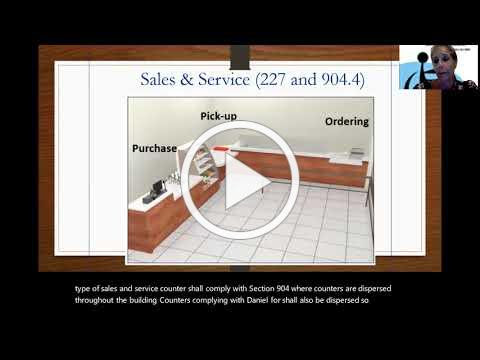
Where provided, at least one of each type of sales counter and service counter shall comply with 904.4.
Where counters are dispersed throughout the building or facility, counters complying with 904.4 also shall be dispersed.
Keep in mind that the requirements are the either sales or service counters. The term “transaction” is no longer used. A transaction could occur but it is not the only pre-requisite for compliance.
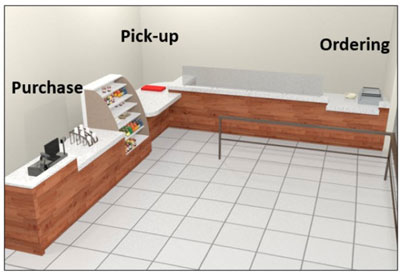
The counter shown above has different functions (some are sales and some are service). Each one must have a portion at an accessible height
Section 904 gives us the following requirements for sales and service counters:
- 36” high maximum
- Same depth as the main counter
- 36” length min.
- Parallel approach OR Forward approach allowed
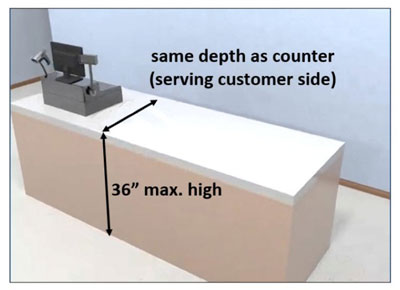
the accessible couter must be 36″ a.f.f. maximum and at least 36″ long
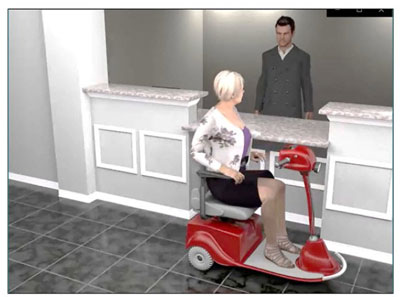
A sales or service counter can have either with a forward approach knee clearance or a parallel or side approach.
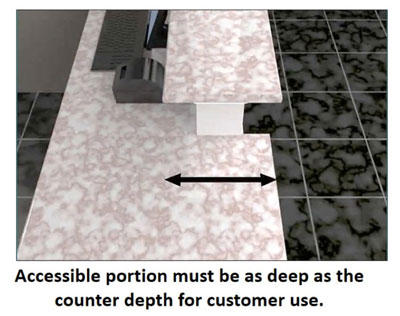
The accessible portion of the counter must be the same depth as the main (or public) side of the counter. Even though the reception counter is deeper than the public counter, the accessible portion will only have to be 36″ a.f.f. maximun and 36″ min. long the same depth as the public counter (which can be higher than 36″ a.f.f.)
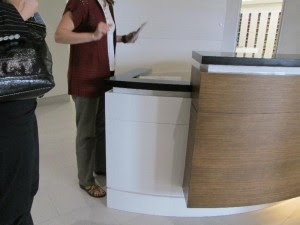
The reception desk is considered a “service” counter because information is a service a business would provide to their guests. The one shown above did not have a 36″ long counter
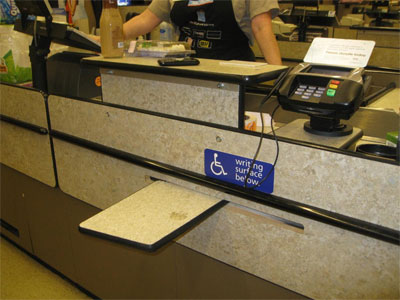
A service or sales counter may not be the type that is flipped up, or pushed in once it is used. it must be a permanent counter that is always available.
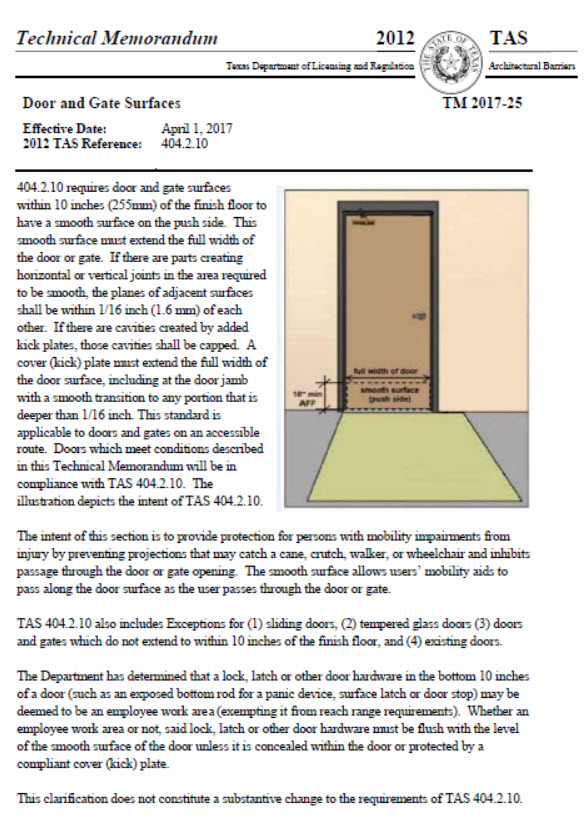
Section 404.2.10 Door and Gate Surfaces
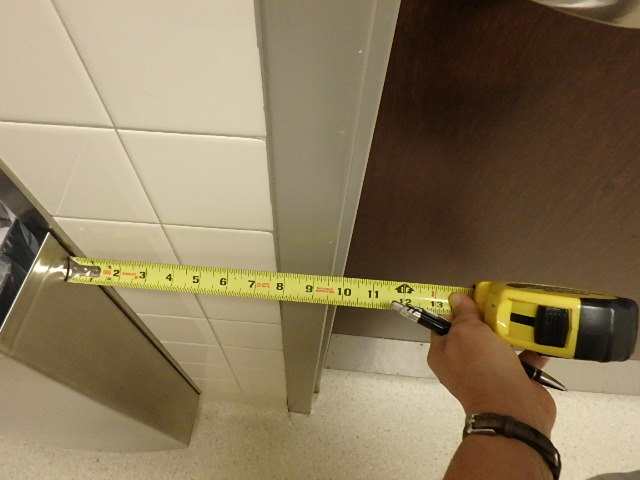
The 2010 ADA Standards require that the push side of swinging doors have the bottom rail that is 10″ measured vertically from the finish floor or ground be “smooth”.

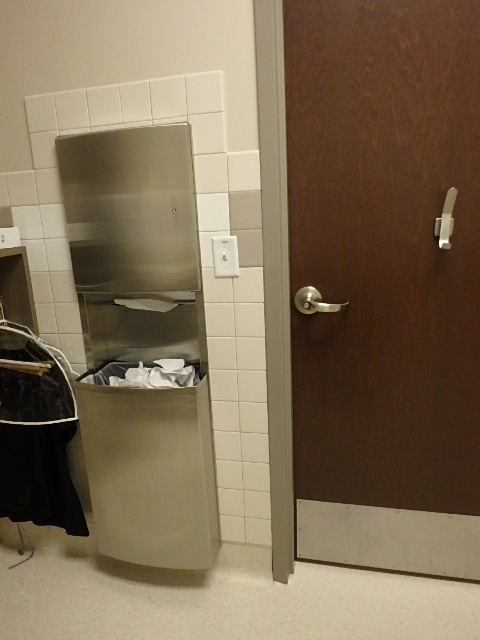
This door is a flush door and therefore considered to have a “smooth surface” within 10″ from the floor
Sometimes the doors are paneled by joints and may not be considered to have a “smooth surface”. If there are joints in the surface below 10″ from the finish floor, it is only allowed to be within 1/16 inch of the same plane as the other to be considered “smooth”.
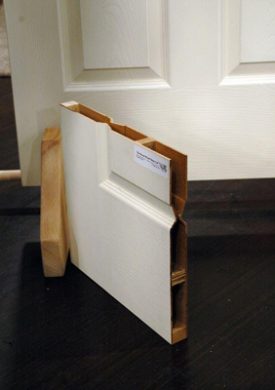
This paneled door is not considered to have a smooth surface because there are joints deeper than 1/16 inches and below 10″ a.f.f. creating a paneled effect.
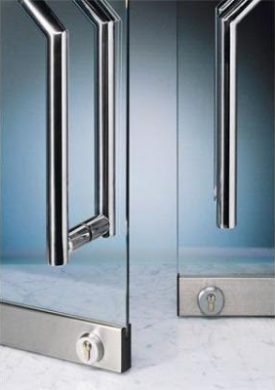
The locking mechanism on this door is more than 1/16 inches from the face of the bottom rail and therefore will not be considered to have a smooth surface
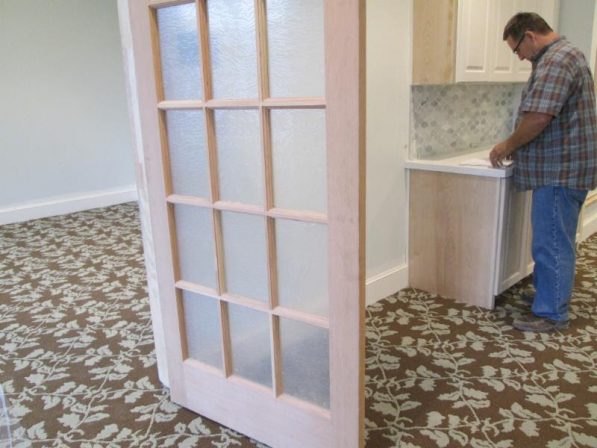
This door has glass panels that are located above 10 inches a.f.f. , therefore the bottom rail is considered smooth
According to the 2010 ADA , the smooth surface should extend full width of the door or gate. This may be an issue when door hardware is located within the 10 inch smooth surface.
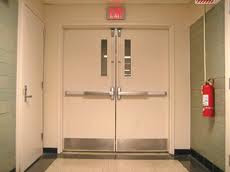
The kick plate extends the entire width of the door and therefore considered to have a smooth surface

The door hardware at this door is located within the 10 inches and therefore it is not considered to have a smooth surface
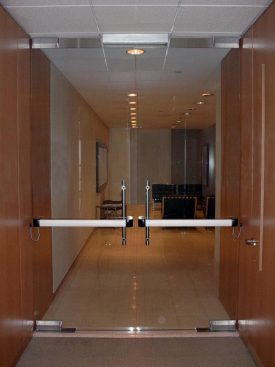
The hinges have a chrome plate on either side of the door which makes the bottom rail not smooth since it is not extending all the way across the door
There are some exceptions:
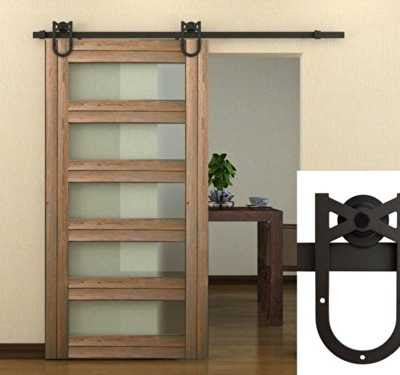
1. Sliding doors shall not be required to comply with section 404.2.10
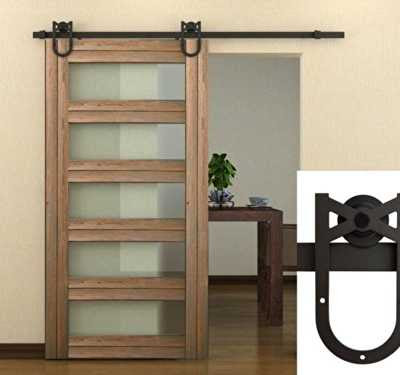
This door does not have a smooth surface within 10″ of the floor, but since it is a sliding door then it is allowed
2. Tempered glass doors without stiles and having a bottom rail or shoe with the top leading edge tapered at 60 degrees minimum from the horizontal shall not be required to meet the 10 inch bottom smooth surface height requirement.

This door has tempered glass and the bottom rail is tapered 60 degrees at the top, therefore the 4″ height of the bottom rail is compliant

This bottom rail is not tapered and it is less than 10″ high, therefore is it not compliant
3. Doors and gates that do not extend to within 10 inches (255 mm) of the finish floor or ground shall not be required to have smooth surface at the bottom of the gate or door
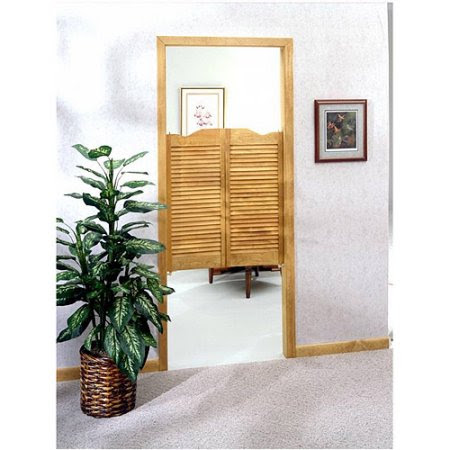
This door does not extend to 10 inches from the ground, therefore it will not require a smooth surface at the bottom
2017 AIA Convention Expo in Orlando Florida
I just attended the 2017 AIA Convention Expo and met with some vendors about their new products for barrier free design. I am not endorsing or recommending these products. These are interesting products that might work well for barrier free applications. I hope you find these interesting as well.
LIFT-U Accessor Convertible Walkway
I visited with the folks at LIFT-U on their convertible walkways. If you are walking along a walkway (exterior or interior) and you encounter a change in level, this product will create a ramp for you with a push of a button. It is surface mounted and will require electricity. Below is a video of how it works.
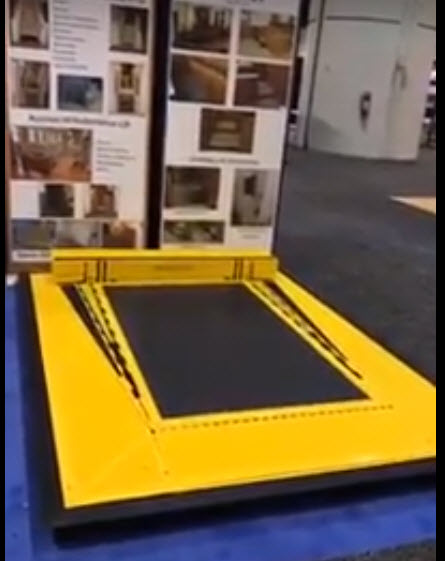
Convertible walkway
One of the limitations with this product is that it will only go up to 6″ in height. The length of the ramp that it creates is only six feet long to achieve a 1:12 maximum slope at a 6″ maximum height curb. So if you encounter a taller change in level, this product will not work for ADA compliance. In addition, if you are approaching a door, it will only comply if there is a 60″ landing in front of the door. But in general, this product seems to have a lot of potential.
Cavity Sliders
We visited with the folks at Cavity Sliders and they showed us their ADA Magnetic accessible hardware by Cavilock. This lock is used for pocket or sliding doors and can be used with one hand, does not require tight grasping, pinching or twisting of the wrist to operate and it requires less than 5 lbs to lock and unlock.
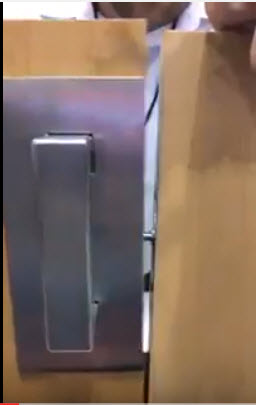
We ran across an interesting product that is installed onto any window to open and close it electronically. This can be used any place that requires operable windows to be accessible. Some examples are assisted living centers, schools, hotels etc. The ADA requires that operable windows meet also the reach range and operation requirements. The lock should be not only mounted within reach range (no higher than 48″ a.f.f.) but also not require more than 5 lbs to lock and unlock. This mechanism assists in the opening and makes the windows accessible.
Just Manufacturing
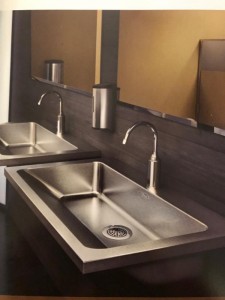
Just Manufacturing has come up with a way to have an accessible sink that is also deeper than 6 1/2″. They taper than sink in the front 30 degrees which allows for proper knee clearance and makes the sink farther back which allows it to be deep for more practical uses.
ADA Enviro Series 30 degrees lavatory system.
Need CEUs
Building Professionals Institute seminar, Arlington Texas
Understanding the Fair Housing Act- August 10th Metrocon17 Dallas Texas
Green CE On Demand webinar “How Accessible is Your work place?”
Green CE On Demand webinar “ADA and Residential Facilities”
AIA U online course: “Applying the ADA on Existing and Altered Buildings”
or
Green CE “Applying the ADA on Existing and Altered Buildings”
If you are interested in Building Code seminars check out my colleague Shahla Layendecker with SSTL Codes
If you want to learn more about these standards, be sure to check out my books:
“The ADA Companion Guide” “Applying the ADA” published by Wiley.
Section 306 Toe Clearance
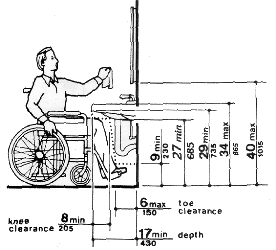
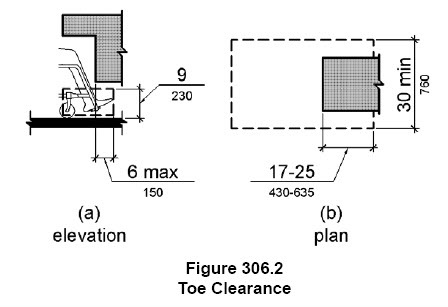
In the 1991 ADAAG, there was a figure (Figure 31) which showed dimensions for knee and toe clearances. There was a lot of confusion as to why the “toe” clearance was shown as 6″ MAX? Why not minimum? why couldn’t we have more toe clearance under a sink, drinking fountain or desk?
What was throwing us off was the fact that the figure showed the toe clearance dimension to the rear wall where the sink/lavatory was mounted. That was misleading.
The 6″ dimension on the figure is not a construction dimension. It is not giving you a requirement for a distance to the rear wall. In fact we don’t care where the rear wall is, since we are given guidance about knees and toes which occur in the front of the element.
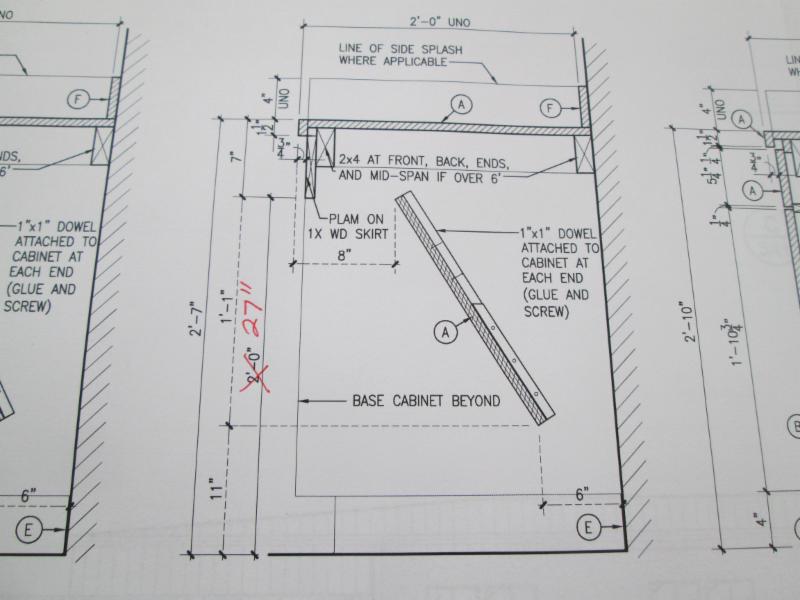
This section shows a protective skirt with a dimension at the bottom shown 6″ from the rear wall. The 6″ dimension is showing the toe clearance. The dimension that they should have shown is the 17″ min. depth from the front of the counter.
The 2010 ADA Standards revised the figure to remove the rear wall reference. But did it make it more clear?
The question remains: why is the 6″ a maximum and not a minimum?
In order to understand, you must read the words of the standard:
306.1 General. Where space beneath an element is included as part of clear floor or ground space or turning space, the space shall comply with 306. Additional space shall not be prohibited beneath an element but shall not be considered as part of the clear floor or ground space or turning space.
What the standards are trying to explain is that when designing your floor space that will be used by a person in a wheelchair, make sure you allocate the toe clearance so that most of the required 17″-25″ of depth occurs in front of the obstruction, and only 6″ should be counted beyond the obstruction.
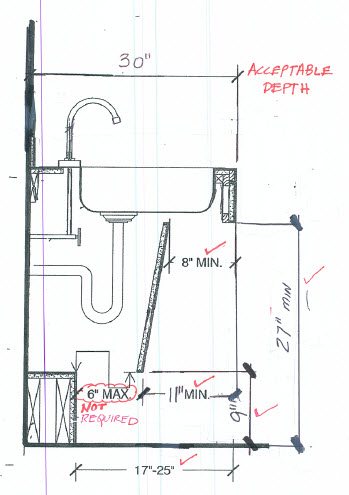
The 30″x 48″ rectangle can go underneath a sink for a depth of 17″ where 11″ will be considered knee clearance and 6″ will be considered toe clearance (11″+6″=17″). If the depth is 19″, then the knee space will be allowed to be 13″ and the toe clearance will be 6″ (13″+6″=19″) etc. You can always increase the knee clearance at the front of the obstruction, but the maximum depth that can be designated for the toes will only be 6″.
The toe clearance should be 17″-25″ deep. The blocking shown on the section is not required to be provided to create the 6″ max of toe clearance.
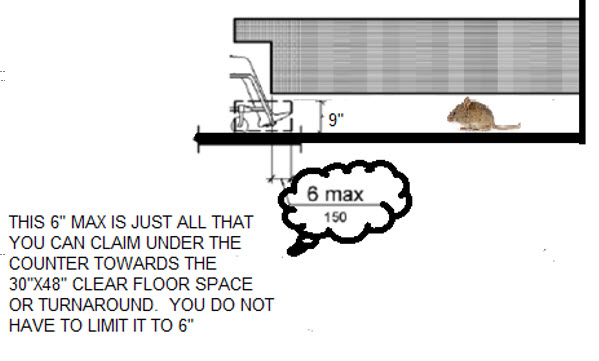
My colleague drew this picture to show this concept. It’s not prohibited to have more than 6″ beyond the protective panel, it’s just not considered part of the “toe clearance”.
The requirement is used for measuring turning spaces or clear floor space that uses the floor under objects such as sinks, lavatories, drinking fountains or desks. So the 6″ under an element is the only amount allowed to be considered “toe clearance”. Any more than 6″ it’s just air space.
News from TDLR
There is a new Technical Memoradum from TDLR explaining the smooth surface at doors.
Accessible means of egress exit stairway
The 2010 ADA Standards Section 207 references the International Building Code (IBC)-2000 (including 2001 Supplement to the International Codes) and IBC-2003 for means of egress, areas of refuge, and railings provided on fishing piers and platforms.
At least one accessible means of egress is required for every accessible space and at least two accessible means of egress are required where more than one means of egress is required. The technical criteria for accessible means of egress allow the use of exit stairways and evacuation elevators when provided in conjunction with horizontal exits or areas of refuge. While typical elevators are not designed to be used during an emergency evacuation, evacuation elevators are designed with standby power and other features according to the elevator safety standard and can be used for the evacuation of individuals with disabilities.
The IBC also provides requirements for areas of refuge, which are fire-rated spaces on levels above or below the exit discharge levels where people unable to use stairs can go to register a call for assistance and wait for evacuation.
Doorways
Entry doorways are subject to the ADA standards. If the door is an entrance and a means of egress they must comply. But a means of egress only door does not. According the the US Access board The ADA Standard requires the door entering into the egress stair to comply. It is technically considered an “entrance” to the exit stairway.
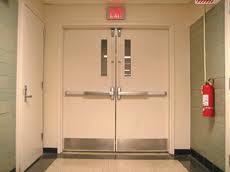
This means of egress door is allowing entry into the exit stair and therefore will have to comply with door hardware, vision light location and maneuvering clearnaces among other things.
After entering compliance is required with IBC thus the door maneuvering clearance is not required in the stairwell for re-entry but could be required by the IBC. The door at the bottom at the stairs is also subject to IBC requirements.
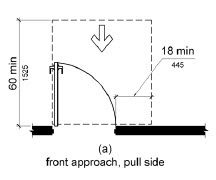
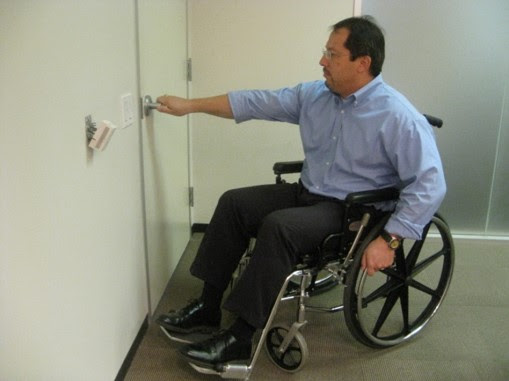
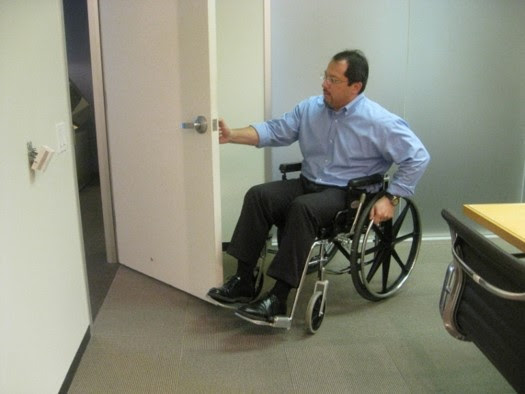
This photo shows a door maneuvering from the inside of the stairway leading back into the building. It is not 18″ min., but since it is not an entry door into the stairway it only has to meet the requirements per the IBC. Maneuvering clearances that the ADA dictate may not apply in this case.
Signage
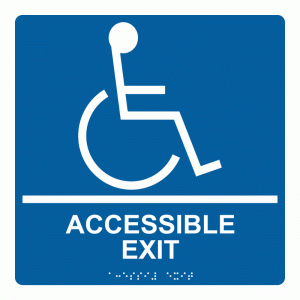
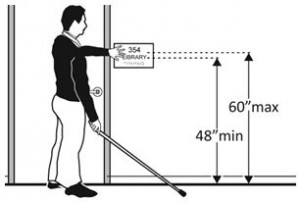
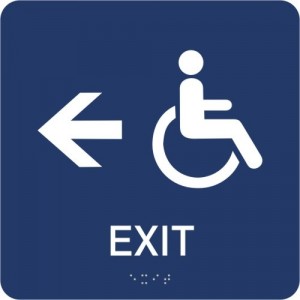
Doors at exit passageways, exit discharge, and exit stairways shall be identified by tactile signs complying with ADA Section 703.1 which states that a visual and tactile characters must be provided; Section 703.2 which describes the raised or tactile characters required including braille (section 703.3) and how to mount it (703.4); and Section 703.5 which describes the requirements for visual characters.
This sign shows raised characters and braille
An exit passageway is a horizontal exit component that is separated from the interior spaces of the building by fire-resistance-rated construction and that leads to the exit discharge or public way. The exit discharge is that portion of an egress system between the termination of an exit and a public way.
Signs required by section 1003.2.13.6 of the International Building Code (2000 edition) or section 1007.7 of the International Building Code (2003 edition) (incorporated by reference, see “Referenced Standards” in Chapter 1) to provide directions to accessible means of egress shall comply with Section 703.5.
Need CEUs
If you are interested in Building Code seminars check out my colleague Shahla Layendecker with
SSTL CodesIf you want to learn more about these standards, be sure to check out my books:
They are available for sale now. (also available as an e-book)
If you have any questions about these or any other topics, please feel free to contact me anytime.
Marcela Abadi Rhoads, RAS #240
Abadi Accessibility
214. 403.8714
marhoads@abadiaccess.com
www.abadiaccess.com
It is summer and it is time to take vacations! As you travel you might stay at hotels or motels. People with disabilities also enjoy traveling and the ADA has requirements for guest rooms in hotels (as well as other type of transient lodging) that will accommodate mobility impairments, visual impairments and hearing impairments as well. This newsletter outlines a few of the requirements for designing transient lodging facilities for people with disabilities.
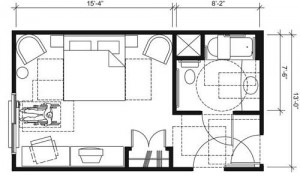
Guest Rooms with Mobility features
A hotel must have a certain number of rooms provided with features that people in wheelchairs and other mobility equipment will use. The number of guest rooms required is based on the total number of guest rooms in the hotel and based on the table below
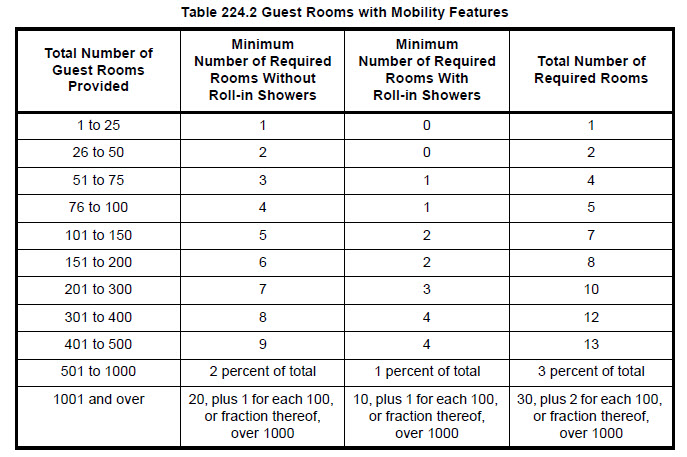
This table will also tell you how many rooms without “roll in showers” are required. Once you have more than 50 guest rooms then you will need to provide a roll in shower (and it the number gets greater as the number of guest rooms increase). When a guest room states that a room should not have roll in showers, then a accessible tub or transfer shower should be provided.
In addition, these rooms must be dispersed by type of rooms, type of beds and type of amenities provided in the room.
Other items that are required for mobility are the following:
1) All doors in the hotel must have a clear width of 32″ min. Since traveling is a social activity, and people with disabilities would travel with friends and family, they should be able to go “visit” another room. The clear width makes that possible. Mobility rooms doors must also meet the requirement in
Section 4042) Living and dining areas within the guest room must be accessible.
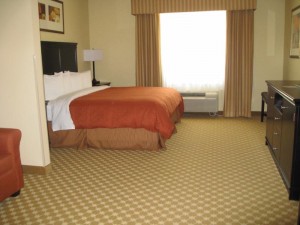
3) At least one sleeping area shall provide a clear floor space complying with 305 on both sides of a bed. The clear floor space shall be positioned for parallel approach to the side of the bed.
4) At least one bathroom that is provided as part of a guest room shall comply with
603. No fewer than one water closet, one lavatory, and one bathtub or shower shall comply with applicable requirements of 603 through 610. In addition, required roll-in shower compartments should have a seat within.
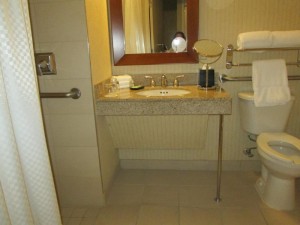
This restroom is not compliant due to the fact that there is no enough clearance at the toilet, the mirror is mounted too high and the flush control is located opposite of the transfer side. There are other issues with the shower.
5) If vanity counter top space is provided in non-accessible guest toilet or bathing rooms, comparable vanity counter top space, in terms of size and proximity to the lavatory, shall also be provided in accessible guest toilet or bathing rooms.
6) Kitchens and kitchenettes shall comply with
804.7) Turning space shall be provided within the guest room.
8) Where operable windows are provided in accessible rooms for operation by occupants, at least one opening shall comply with
309.
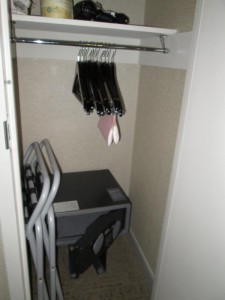
9) Other elements must comply with the standards, such as reach ranges for closet rods, locks, and other fixed elements.
Guest Rooms with Communication features
In addition to mobility features, a certain number of rooms must also provide communication features. These would be for people that are hearing impaired and visually impaired. The number of rooms with communication features are found in the table below:
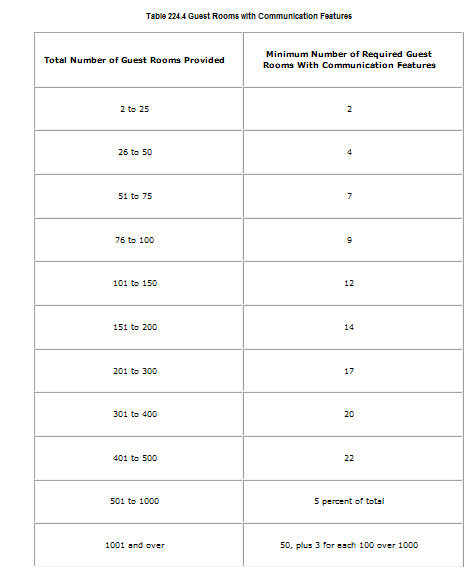
These rooms must be dispersed also by type of rooms. Only 10% of the communication rooms can also be a mobility rooms.Factors to be considered in providing an equivalent range of options may include, but are not limited to, room size, bed size, cost, view, bathroom fixtures such as hot tubs and spas, smoking and nonsmoking, and the number of rooms provided.
Some other requirements for these rooms are:
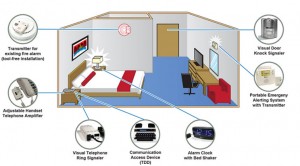
- Where emergency warning systems are provided, alarms complying with 702 shall be provided in rooms with communication features
- Visible notification devices shall be provided to alert room occupants of incoming telephone calls and a door knock or bell. Notification devices shall not be connected to visible alarm signal appliances. Telephones shall have volume controls compatible with the telephone system and shall comply with 704.3. Telephones shall be served by an electrical outlet complying with 309 located within 48 inches (1220 mm) of the telephone to facilitate the use of a TTY
Need CEUs
August 16th: “ADA and Urban Regeneration” at AIA Dallas (Time TBD)
If you are interested in Building Code seminars check out my colleague Shahla Layendecker with
SSTL CodesIf you want to learn more about these standards, be sure to check out my books:
 Abadi
Abadi