Author Archive
Thursday, July 3rd, 2025
Looking to knock out your Barrier-Free HSW AIA-approved CEUs? Join us for three informative, in-person courses designed to deepen your understanding of accessibility and the ADA.
🗓 July 15 – How Accessible is Your Workplace?
📍 Herman Miller Showroom, 2811 McKinney Ave, Suite 18, Dallas
🕛 Begins at 12:00 PM
🗓 August 19 – Applying the ADA to Existing and Altered Buildings
📍 Tangram Interiors, 300 S. Pearl Expressway, Suite 200, Dallas
🕛 Begins at 12:00 PM
🔗 Register Now »
🗓 September 9 – The ADA and Residential Facilities
📍 Kimball Downtown Showroom, 1699 Cedar Springs Rd, Dallas
🕛 Begins at 12:00 PM
🔗 Register Now »
Don’t miss this chance to earn credits, connect with fellow professionals, and explore the latest in inclusive design.
Monday, August 5th, 2024
The ADA regulations for building access only apply to built-in or fixed elements. Movable furniture and movable equipment (unless scoped in the standards specifically) are not covered by the Standards and do not have any requirements.
Scope of coverage. The 1991 Standards and the 2010 Standards apply to fixed or built-in elements of buildings, structures, site improvements, and pedestrian routes or vehicular ways located on a site.
My colleagues get confused about these requirements, so I am sharing some examples of when these rule can be ambigous and how we can clarify the requirements.
When elements that are not built in or fixed are not required to comply
Movable furniture is not required to comply with the ADA. Even if the furniture is a reception desk, a dining surfaces, or benches. That means that they don’t have any regulations, but they cannot be used as an accessible element that is required.

The image above shows movable tables in a cafeteria at a school. Even though a school is required to provide areas for kids and faculty with disabilities to eat lunch just like everyone else, the fact that these are movable will exempt them from any requirements found in the standards.

The image shown above shows a dining area that is not only movable but raised higher than the ground. But because it is not built in it does not have to be on an accessible route and the table does not have to have a knee space

The image shown above shows movable classroom tables. Since they are not built in, they will not have to be at a certain height or have knee clearance.

The image shown above shows a system’s furniture reception desk with a service counter. Because it is movable, the counter will not be required to comply with the sales and service counter requirements.

Even though the banquette itself is not scoped in the Standards, and even though the tables at this dining area is movable and also not scoped, what is scoped because it is a built in element is the charging outlet that is provided at the banquette. Because that charging outlet is fixed or built in, it will be required to be within reach (15″ min. a.f.f.)
When elements that are not built in or fixed are used to provide cane detection to protruding objects
Movable furniture and elements cannot be used to create cane detection for persons who are visually impaired. Cane detection is required to be permanently available because if the movable element is moved the cane detection will not be there. Below are some examples.

The image shown above shows a movable table below a pendant light. The pendant light is technically located along a circulation path because the table is not considered permanently in the location shown. It could potentially move and therefore the pendant light would be located in the open circulation path.

The pendant light was mounted at 63″ a.f.f. and therefore considered a protruding object.

The image shown above shows movable planters that are being used as cane detection to the open stairs beyond

The image shown above shows movable trash can that is being used as a cane detection for the paper towel dispenser that is protruding onto the circulation path. since the trash can is movable, it cannot be used as cane detection.
Movable elements being used to provide accessibility when a buiilt in or fixed element is not compliant.
Becuse only fixed or built in elements are scoped and have requirements, movable elements cannot be counted as the accessible element instead of the built in element. Below are some examples

In this kitchen, there are two built in microwaves that are mounted higher than the allowable reach range. The owner decided to provide a movable microwave as the accessible element, but as we have explained, this microwave can be moved and not returned, therefore it cannot be used as the “accessible” element.

But in this kitchen there is only a movable microwave and it will not be required to be within reach.because it is not technically there.

The image shown above shows a movable shower seat. If a shower seat is required, it must be built in and not mvable.

The bench shown above is not bolted down and therefore not considered a substitute for the built in enches at the lockers
Which movable elements are scoped and required to comply?
Even though ADA only applies to built in or fixed elements, there are a few elements that are movable but also scoped. Below are some examples:

The image shown above are of washer and dryers. Even thought they are movable, they are also technically built in because it is connected to the wall via venting. But even if they were not, there is scoping for the equipment on section 611.

Even though a beverage dispenser could be considered movable, most of the time it is part of the plumbing and built in by way of the connection of the water line. But even if it wasn’t built in, beverage dispensers are scoped by the standards and requirements are found in section 904.

Exercise equipment are also “movable” but are scoped and have requirements in the standards. The requirmements for Exercise equipment is found in section 1004
Monday, July 1st, 2024
Happy 34th birthday to the Americans with Disabilities Act!!!
July 26, 2024 will be the ADA’s 34th anniversary! This historic date became the “indepence day” for persons with disabilities. Just like in July we celebrate the date that the United States gained their independence from England, so too we celebrate the independence from people with disabilities having to navigate architectural barriers. Throughout the year and on the ADA Anniversary, the ADA National Network recognizes this landmark event and the important work to promote equal opportunity for people with disabilities.
As architects and design professionals we remove barriers from our buildings that would prevent persons with disabities to feel independent and dignified.
This newsletter will cover one of the topics which is found in the 2010 ADA Standards for Accessible design as well as the ICC ANSI A117.1.
Happy 34th anniversary to the ADA!

Work surfaces at residential kitchens
The ADA and ANSI have requirements for residential dwelling units and their kitchens. Although, the ADA does not have jurisdiction with non public accommodations such as Multi-family housing (which falls under the IBC/ICC requirements), they do deal with the type of residences that are considered “public accommodations” such as social service homes, fire station sleeping quarters, and apartments at places of education that are leased to faculty and students.
In these “residences” if there are kitchens provided, there is a requirement that a work surface be provided adjacent to the ovens.
804.3 Kitchen Work Surface. In residential dwelling units required to comply with 809, at least one 30 inches (760 mm) wide minimum section of counter shall provide a kitchen work surface that complies with 804.3.

The image shown above shows a 30″ clear floor space adjacent the oven door.
What are the requirements
The only kitchens that require a work surface are at ADA required residetial dwelling units (Section 809). Other kitchens and kitchennettes do not require the work surface adjacent the oven.

The photo above is a break room kitchennette with an oven. A work surface is not required at this kitchennette because it is not a residential dwelling unit
What are the requirements
Below are the requirements for work surfaces
804.3.1 Clear Floor or Ground Space.
- A clear floor space complying with 305 positioned for a forward approach shall be provided.
- The clear floor or ground space shall be centered on the kitchen work surface and shall provide knee and toe clearance complying with 306.
- EXCEPTION:
Cabinetry shall be permitted under the kitchen work surface provided that all of the following conditions are met:(a) the cabinetry can be removed without removal or replacement of the kitchen work surface;(b) the finish floor extends under the cabinetry; and(c) the walls behind and surrounding the cabinetry are finished.

The kitchen above provided a work surface with a clear floor space centered under the counter

The kitchen above provided a work surface with doors in front of it, but since the flooring does all the way to the back wall and the surfaces are finished, they are allowed to have doors provided in front of the work surface.

The kitchen above did not provide a work surface adjacent the oven door.
The Work surface height should be no higher than 34″ a.f.f.
804.3.2 Height. The kitchen work surface shall be 34 inches (865 mm) maximum above the finish floor or ground.EXCEPTION: A counter that is adjustable to provide a kitchen work surface at variable heights, 29 inches (735 mm) minimum and 36 inches (915 mm) maximum, shall be permitted.
804.3.3 Exposed Surfaces. There shall be no sharp or abrasive surfaces under the work surface counters.
Monday, June 3rd, 2024
Accessible Signage Location
The 2010 ADA (and other States standards like Texas) section 216 requires that signage that designates interior rooms that are permanent (which means that their function will not change in the future due to the fixtures within). Those signs must have raised characters and braille. Although pictograms and symbols are not required, if they are provided, they must also comply with the standards.
Some of the requirements are for height and location of signs. This newsletter will focus on that requirement and will provide examples of some problematic rules.

Height of the sign
The 2010 ADA states that the signs required to comply must have raised characters and there should be brailled that matches the words of the raised characters and located directly below the corresponding words.
703.2 Raised Characters. Raised characters shall comply with 703.2 and shall be duplicated in braille complying with 703.3.
The height of the sign is in relationship to the raised characters. In other words, the Standards require that the bottom of the raised characters be located between 48″-60″ a.f.f.
703.4.1 Height Above Finish Floor or Ground. Tactile characters on signs shall be located 48 inches (1220 mm) minimum above the finish floor or ground surface, measured from the baseline of the lowest tactile character and 60 inches (1525 mm) maximum above the finish floor or ground surface, measured from the baseline of the highest tactile character.


Door Signage that has both name of room and room numbers must also meet the requirements. The bottom most baseline of the raised characters should not be mounted lower than 48″ a.f.f. and the top most baseline should not be mounted higher than 60″ a.f.f.

The sign is mounted higher than 60″ a.f.f. to the baseline of the raised characters
Where should the sign be located?
Signs have requirements on where they need to be located.
1. If it is provided at a door, they must be mounted alongside the door at the latch side. Although they are allowed to be located on the push side of doors with closers.

The sign must be located adjacent the latch side of the door. If there is a sign on the door, it can stay there as long as there is also a second sign where it is required

The sign should not be located on the door on the pull side of the door because if a person is reading it, the door could open and hit them
2. Where a tactile sign is provided at double doors with one active leaf, the sign shall be located on the inactive leaf.
3.. Where a tactile sign is provided at double doors with two active leafs, the sign shall be located to the right of the right hand door.

4..Where there is no wall space at the latch side of a single door or at the right side of double doors, signs shall be located on the nearest adjacent wall.


Sign located at the wall adjacent the latch/handle of the door

The wall beyond the swing of the door is less than 18″ and therefore the sign did not have the centerline at 9″ at the floor space beyond the arc.

The sign can be mounted to a glass wall if it is adjacent the latch side of the door
5..Signs containing tactile characters shall be located so that a clear floor space of 18 inches (455 mm) minimum by 18 inches (455 mm) minimum, centered on the tactile characters, is provided beyond the arc of any door swing between the closed position and 45 degree open position.

The ADA figure shows the 18″x18′ clear floor space at the sign. It must be centered at the sign and also located beyond the arc of the door.

The clear floor space of 18″x18″ was obstructed by a drinking fountain

The clear floor space at the sign was obstructed by a drinking fountain.
Monday, May 13th, 2024
Usable Bathrooms
In the Fair Housing Design Manual, Requirement 7 states that a covered dwelling unit must have usable bathrooms. The definition of usable bathrooms is not fully accessible, like the ADA or the ICC ANSI A117.1, but rather required to:
Bathrooms must be designed and constructed so a person in a wheelchair can maneuver about the space and use fixtures and appliances. The guidelines provide specifications for baths which, when applied, provide a minimum level of accessibility.
To create Fair Housing “usable bathrooms” there are just a few requirements that we must incorporate into our designs. But some can be a bit confusing. This newsletter will explain those requirements and give you examples of when the confusion occcurs. This newsletter will only cover the bathroom for the dwelling units and not the common and public spaces.

Definition of bathroom
In The fair housing defines bathrooms as a room:
“which includes a water closet (toilet), lavatory (sink), and bathtub or shower. It does not include single-fixture facilities or those with only a water closet and lavatory”
Therefore powder rooms will not be required to be “usable” as outlined in the Guidelines, except for a few requirements that will be listed below.


Examples of powder rooms
Usable Bathrooms Usable bathroom specifications include:
1. An accessible route to and into the bathroom with a nominal 32- inch clear door opening (Requirements 3 and 4).
“The Guidelines specify that kitchens and all bathrooms, including powder rooms, must be on an accessible route; therefore, no part of kitchens or bathrooms may be located in a raised or sunken area unless an accessible route can be provided to that area.”
This requirement applies to all bathrooms, and also to powder rooms when the powder room is the only toilet facility on the entry level of a multistory dwelling unit in an elevator building.

2. Switches, outlets, and controls in accessible locations (Requirement 5).

3. Reinforced walls to allow for the later installation of grab bars around the toilet, tub, and shower stall; under certain conditions provisions for reinforcing must be made in shower stalls to permit the installation of a wall-hung bench seat (Requirement 6).

Hotel Ballroom for conferences or events

These are the minimums sizes for blocking, but keep in mind that to install future grab bars for mobility, it is recommended that longer ones be installed for longer grab bars in the future.
4. Maneuvering space within the bathroom to permit a person using a mobility aid to enter the room, close and reopen the door, and exit (Requirement 7).

5. Maneuvering and clear floor space within the bathroom to permit a person using a mobility aid to approach and use fixtures; fixture dimensions and placement are specified under certain conditions (Requirement 7).


clearances at the different fixtures in the usable bathrooms


clearance at the toilet can have an obstruction, but only 24″ deep

showers can only have a parallel approach
In dwelling units containing more than one bathroom
Some dwelling units have more than one bathroom. So the question is, how many of the bathrooms have to be “usable”? The answer is it depends (gotta love that answer)
The fair housing gives us two choices: Spec A or Spec B
(This is not to be confused with Type A and Type B units that are described in the ICC ANSI A117.1. Those are different standards and requirements.)
If you choose Spec A bathroom layout then ALL the bathrooms have to meet the “usable” requirements.
If you choose Spec B then only one must be usable
If Specification A is selected as the basis for designing a bathroom, all bathrooms in the dwelling unit also must comply with the A Specifications.


Spec A Batrhoom
(plumbing fixtures all in the same wet wall. perpendicular approach at bathing allowed and facility and clear floor space beyond the door)
If Specification B is selected, only one bathroom in the dwelling unit must meet those requirements;

Spec B Batrhoom
(fixtures are in different wet walls. parallel approach at bathing facility and clear floor space beyond the door)
all other bathrooms in the dwelling unit must be
1) on an accessible route (Requirement 4),
2) have doors with a nominal 32-inch clear opening (Requirement 3),
3) have switches, outlets, and controls in accessible locations
(Requirement 5),
4) and have reinforced walls around toilets, tubs, and shower stalls (Requirement 6).

Spec B Batrhoom only one of the bathrooms required to be “usable”
but the others must be on an accessible route
Friday, April 5th, 2024
What ADA considers “Assembly” vs. IBC
When designing, we designers must remember that there are multiple regulations that we might have to follow. There is the local model codes that are adopted by the City or municipality that we are designing in. There is State requirements as well as Federal. One of the regulations we need to follow is the ones that require equal access for persons with disabilities. But as we design and reference the different codes and standards, we need to be aware that they are not the same or have the same requirements. For example the term “Assembly” is different in its application and definition in the IBC and ADA.
The ADA and TAS treat “assembly” differently than the IBC. The IBC defines assembly as an occupancy:
IBC 303.1 Assembly Group A
Assembly Group A occupancy includes, among others, the use of a building or structure, or a protion thereof, for the gathering of persons for purposes such as civic, social or religious functions;recreation, food or drink consumption or awaiting transportation.
This implies that any place a person gathers is considered “assembly”. These occupancies will also include spaces that do not have fixed elements, such as seats or counter.
The ADA and TAS on the other hand,treats “assembly” as an area. The Definition states that assembly areas:
106.5.10 Assembly Area. A building or facility, or portion thereof, used for the purpose of entertainment, educational or civic gatherings, or similar purposes. For the purposes of these requirements, assembly areas include, but are not limited to, classrooms, lecture halls, courtrooms, public meeting rooms, public hearing rooms, legislative chambers, motion picture houses, auditoria, theaters, playhouses, dinner theaters, concert halls, centers for the performing arts, amphitheaters,arenas, stadiums, grandstands, or convention centers
This implies that only certain areas that are meant for entertainment, educational or civic gatherings. And those areas must have fixed seating since the ADA and TAS only have scoping for Assembly Seating which are fixed.
Below are some examples of the required “assembly areas” that will need to comply with the Standards
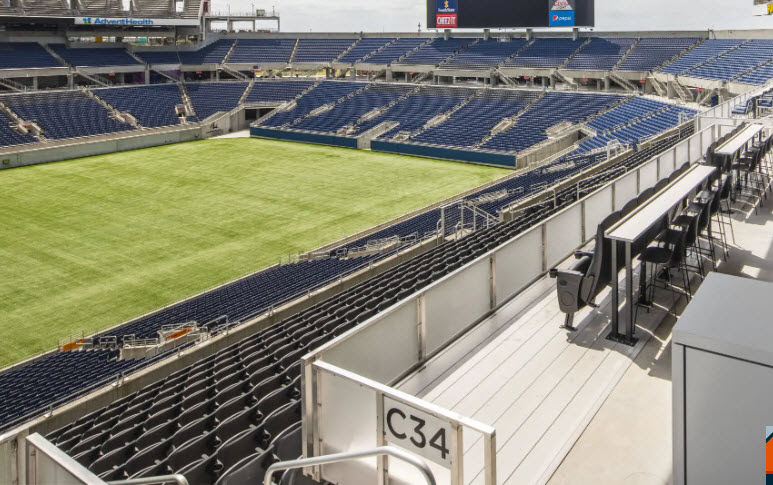
Sports spectator seatiing must meet ADA Standards
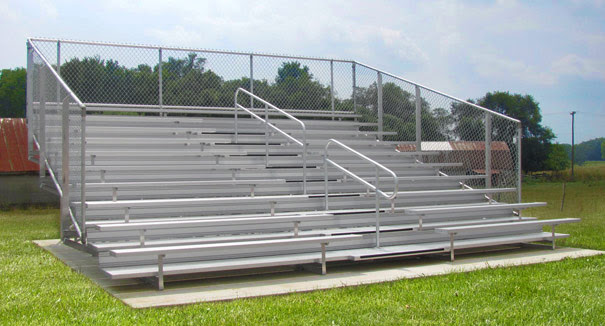
Outdoor or indoor bleachers for spectators
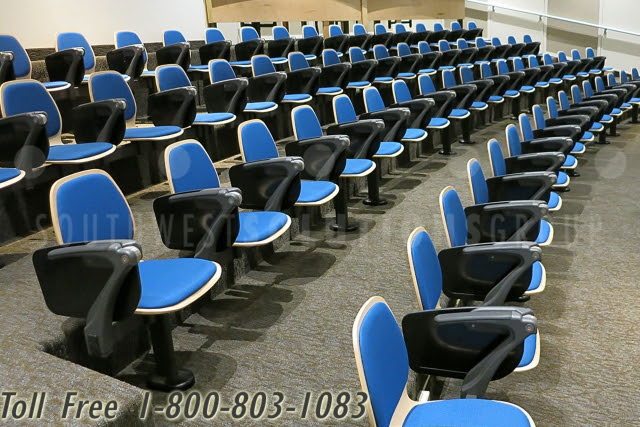
Outdoor or indoor bleachers for spectators
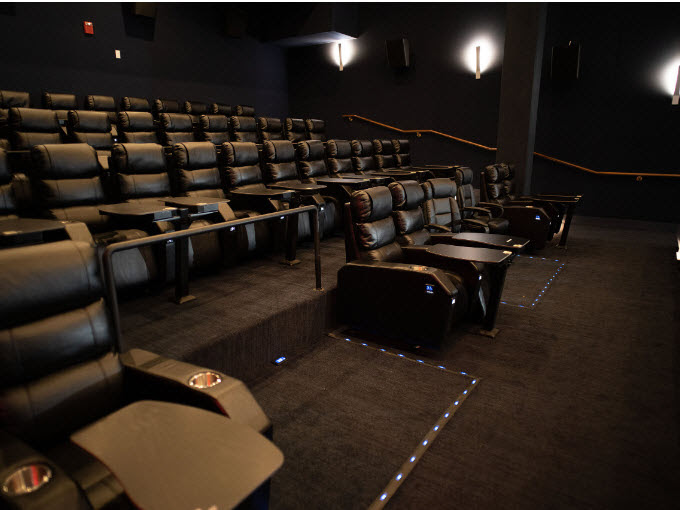
Outdoor or indoor bleachers for spectators
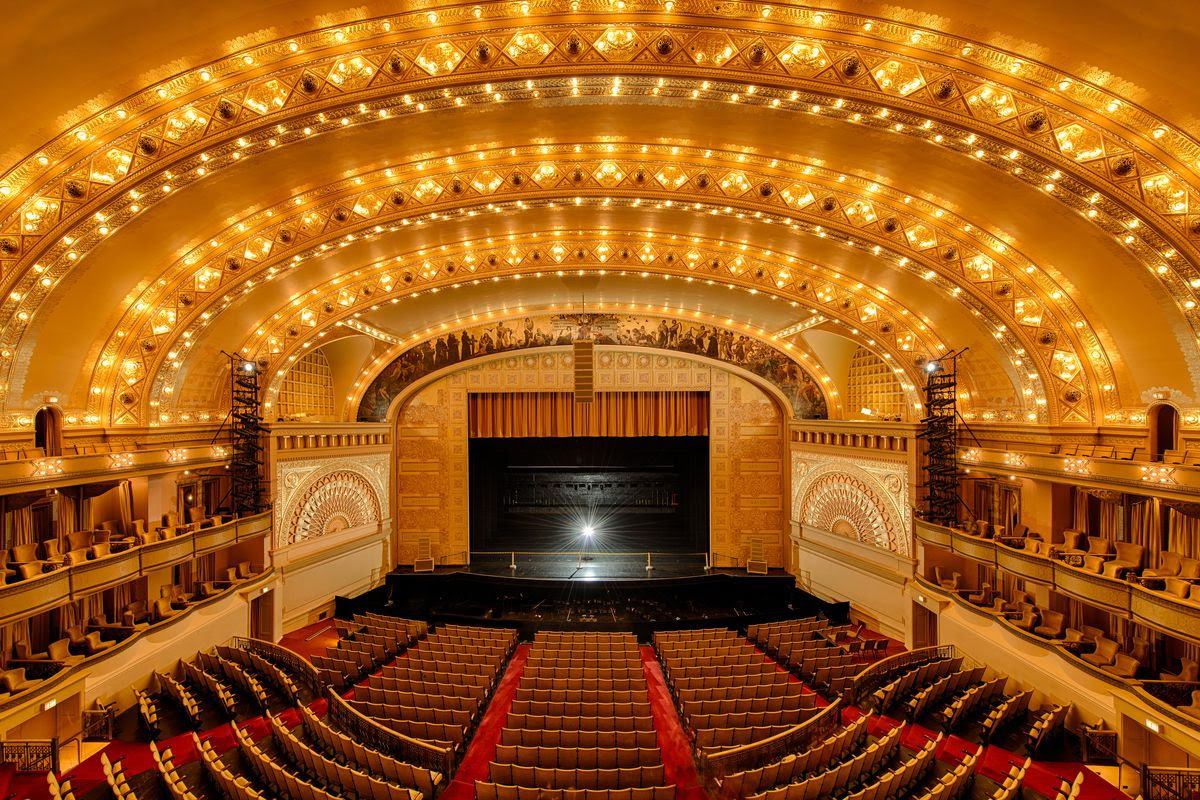
Performance Theater
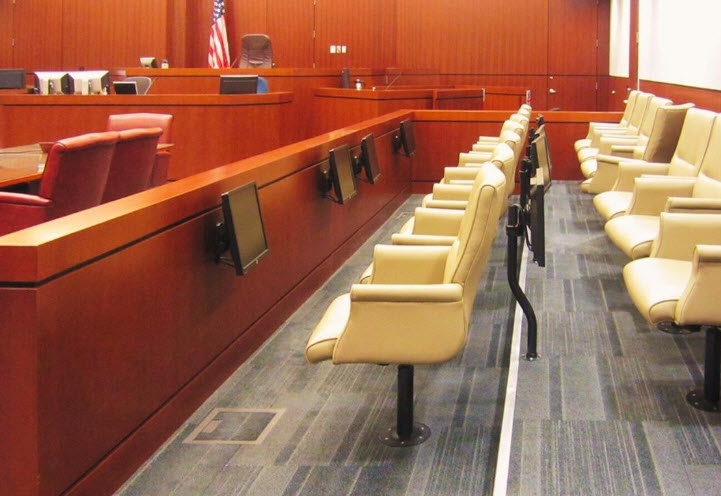
Court rooms
Assembly Seating
The ADA and TAS have requirements (Scoping) for assembly and it is mainly dealing with fixed seating. Assembly seating is ONLY located in the assembly areas listed in the definition: classrooms, theaters, court rooms etc. And they must be fixed for them to meet the criteria for ADA/TAS requirements to be met.
One of my clients is an airport and they were concerned about the lounge seating at the terminal gate waiting area. A passenger lounge at the terminal gate is NOT an assembly area per ADA and TAS, and therefore no wheelchair seats are required. In addition, most of the lounges have seats that are not fixed and are considered “furniture” which are also not required to comply with persons with disabilities.
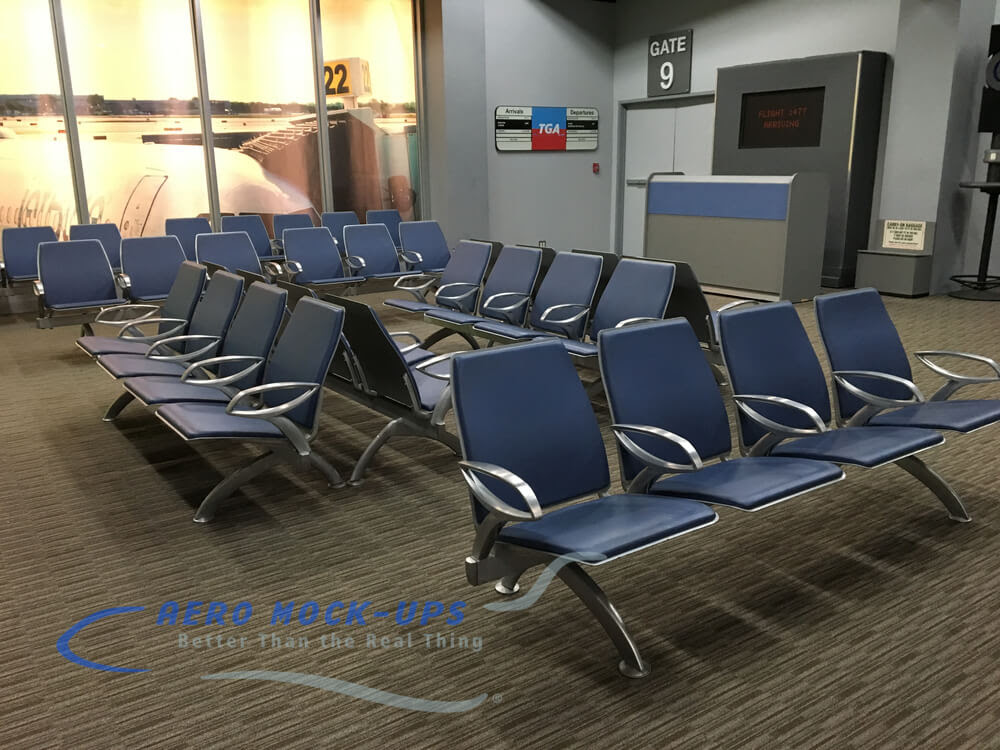
Airport terminal Gate passenger waiting lounge. These seats are not located in a TAS/ADA defined “assembly” area. Therefore there is no requirements to provide accessible seating in the lounge.
What is NOT assembly areas per ADA but are Assembly occupancies
The IBC catagorizes areas where people congregate as assembly occupancies. The Assembly occupancy is broad and encompasses many facilities. They are not all required to comply with the ADA Assembly seating requirements. Below are some examples of what the IBC considers an Assembly occupancy, but will not trigger compliance with ADA Assembly areas.
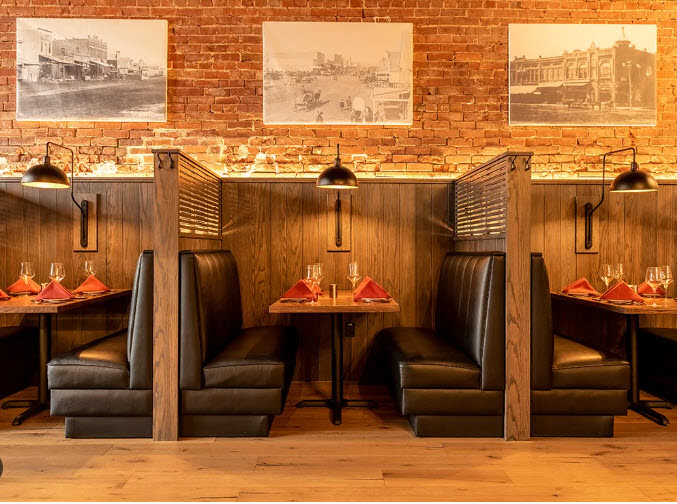
Restaurants. If they were fixed tables, they would have to comply with ADA section 226 and 902
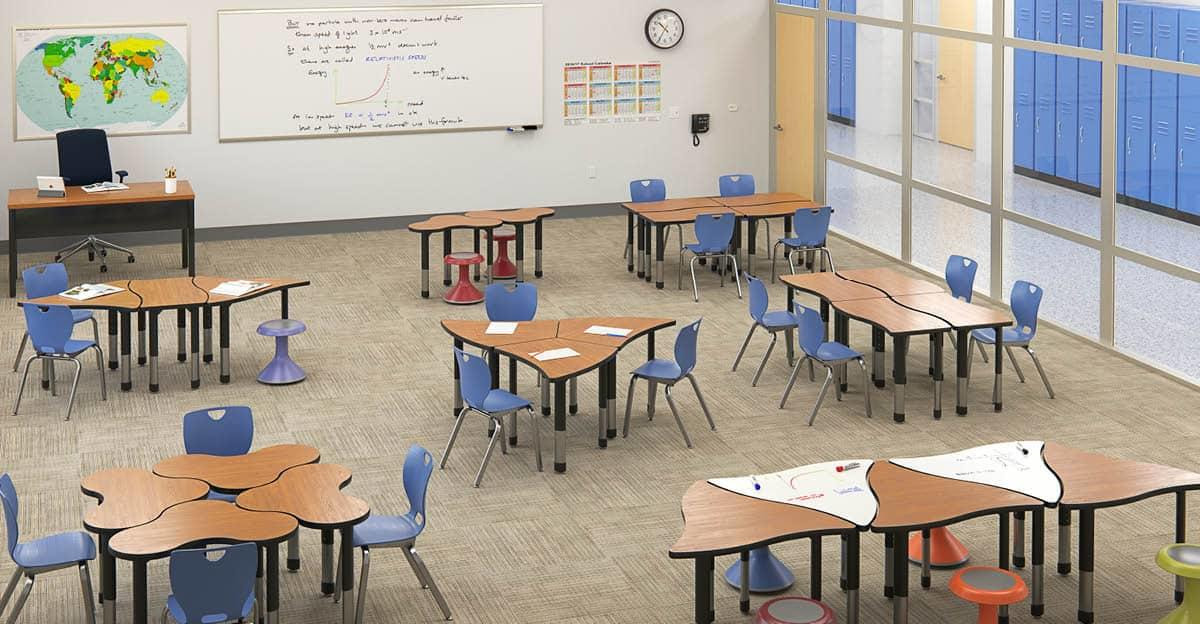
Classrooms with non fixed seating or tables. If they were fixed tables, they would have to comply with ADA section 226 and 902
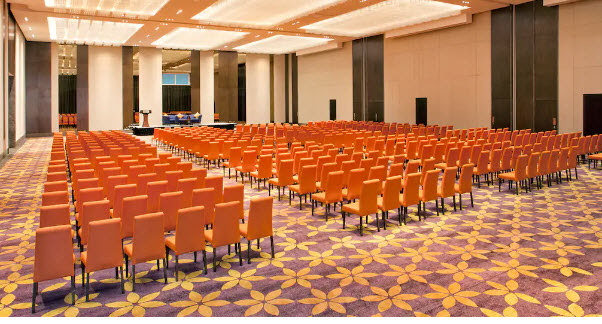
Hotel Ballroom for conferences or events

Library reading areas. Even if they were fixed seats they would not be required to comply
Friday, March 1st, 2024
Addition of Electrical rooms
The ADA and TAS both apply to new construction as well as alterations in existing facilities. So when there is new construction or an “alteration”, then those spaces being built or altered will have to comply with the Standards. There are some exceptions.
Electrical rooms are considered machinery spaces and are exempted by section 203 and therefore do not have to comply with ADA or TAS.
203.5 Machinery Spaces. Spaces frequented only by service personnel for maintenance, repair, or occasional monitoring of equipment shall not be required to comply with these requirements or to be on an accessible route. Machinery spaces include, but are not limited to, elevator pits or elevatorpenthouses; mechanical, electrical or communications equipment rooms; piping or equipment catwalks; water or sewage treatment pump rooms and stations; electric substations and transformer vaults; and highway and tunnel utility facilities.
So when a project is just to construct or renovate electrical rooms we could assume that the entire project will not have to comply….but you might not be correct.
One of my clients was adding electrical closets in a college campus. These rooms were sometimes located in existing closets. Some of the electrical rooms were being added along corridors. But some were getting built new inside classrooms. This is where it gets complicated…..
As stated above, the ADA standards will apply to existing building or spaces being altered (based on the definition of alteration).
Definition of Alteration: 106.5.5 Alteration. A change to a building or facility that affects or could affect the usability of the building or facility or portion thereof.
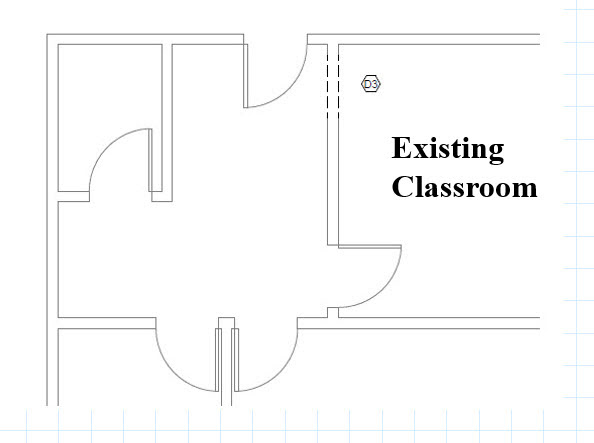
The drawing above is of a classroom in a college where part of the wall is being demolished in order to provide a new IT closet.
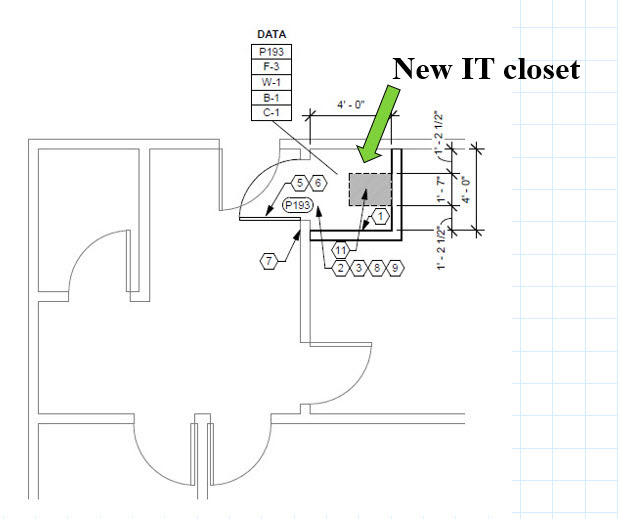
The drawing above shows the new electrical room inside the existing classroom
The new IT closet inside the existing classroom is considered an alteration of the classroom. Since the classroom is an area that contains a primary function and it will trigger the path of travel elements that serve the classroom to be compliant.
202.4 Alterations Affecting Primary Function Areas. In addition to the requirements of 202.3, an alteration that affects or could affect the usability of or access to an area containing a primary function shall be made so as to ensure that, to the maximum extent feasible, the path of travel to the altered area, including the parking areas, rest rooms, telephones, and drinking fountains serving the altered area, are readily accessible to and usable by individuals with disabilities, unless such alterations are disproportionate to the overall alterations in terms of cost and scope.
So by adding the electrical closet to the existing classroom, the room layout changed and even though the closet is exempted, it triggered compliance with the rest of the building areas that serve the classroom.
Friday, February 2nd, 2024
Edge protection at ramps
There is a standard that requires that the side edges of a ramp be protected from wheelchair casters from falling off the edge if the ramp edges are open and located 10″ above the ground. Edge protection along ramp runs and landings keep wheelchair casters and crutch tips on the surface and can be provided by curbs, barriers, or extended surfaces.
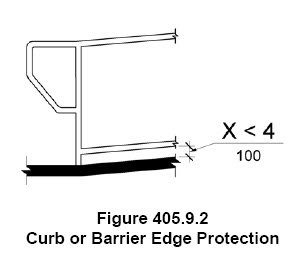
At one of my inspections yesterday, there was a ramp that had handrails alongside of low planter wall (so the edges were not open). But it also had a low bar that was mounted 4″ above the surface of the ramp. The additional edge protection was not required, since there was no drop off on either side of the ramp edges.
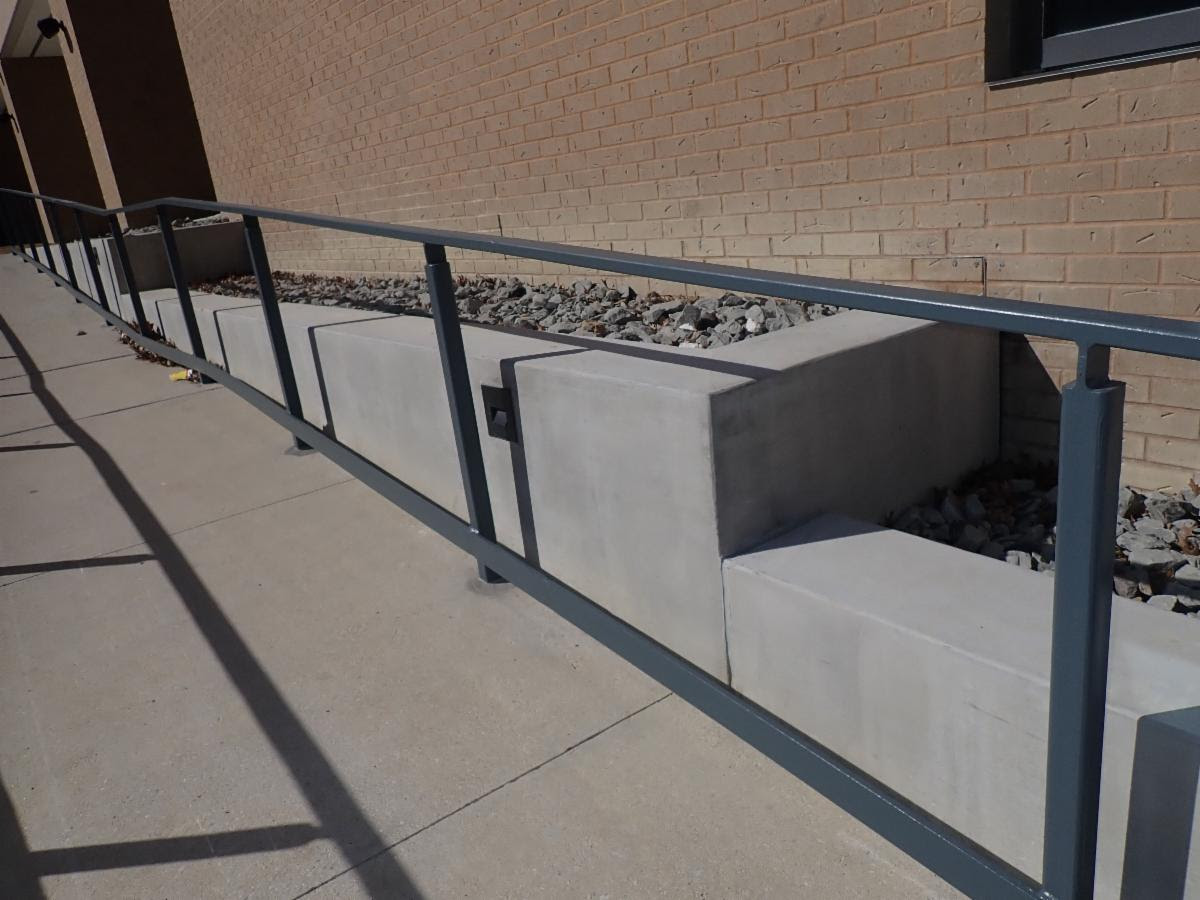
The ramp shown above had a low wall that acted as edge protection AND a low rail that was also intended to be edge protection.“
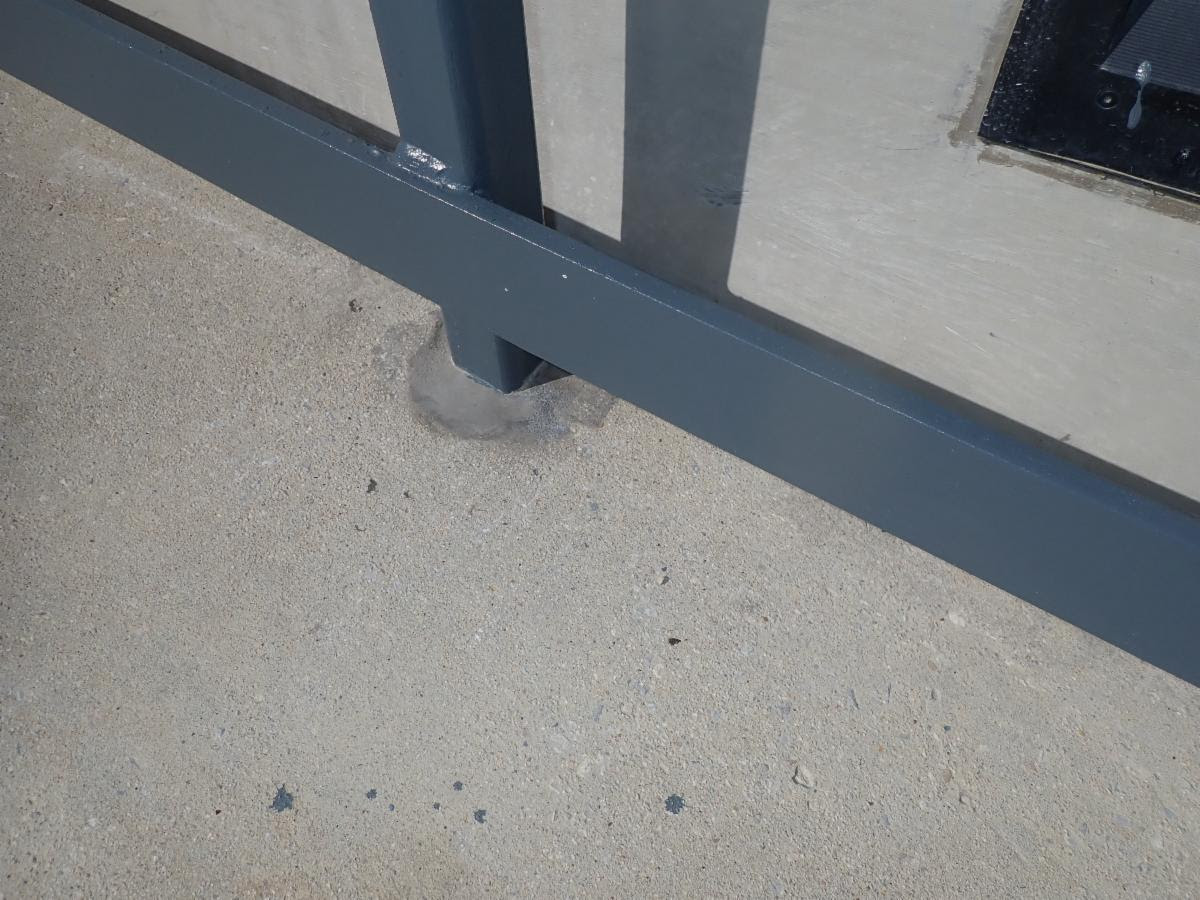
The photo above shows the low rail that was intended as edge protection. The ramp did not require it since the edges were not exposed.
Cane detection
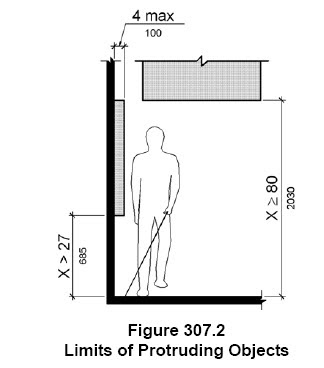
When an object is located along a circulation path and mounted higher than 27″ a.f.f. , said object is not “cane detectable” (read last month’s newsletter which discussed Protruding Objects)
At one of my inspections yesterday, there were two examples of cane detection: one was not necessary and one was a good example of a prevention from becoming a protruding object.
Below are the two examples:
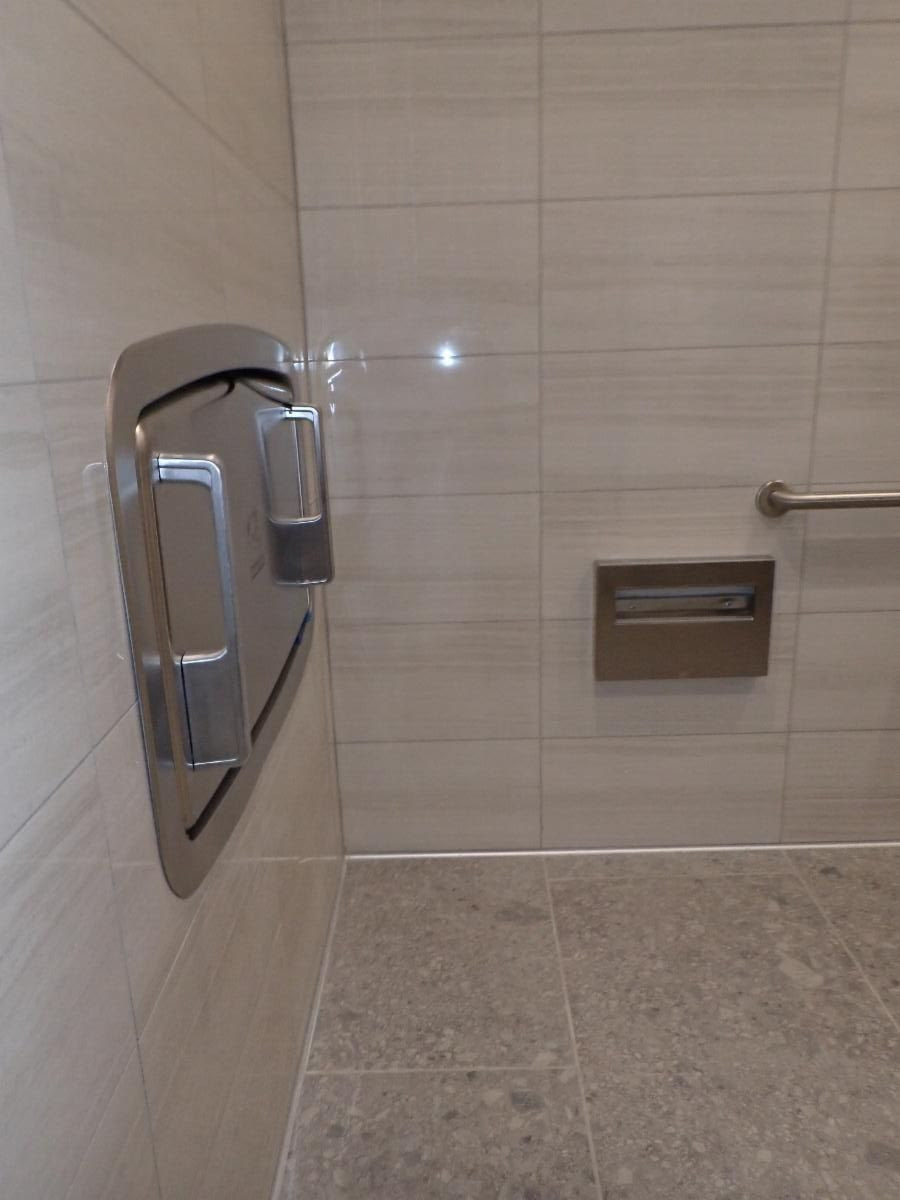
The photo above shows a diaper counter located along a circulation path in a restroom. It is a recessed type diaper counter with handles that project out onto the path. (the diaper counter was a Koala product)
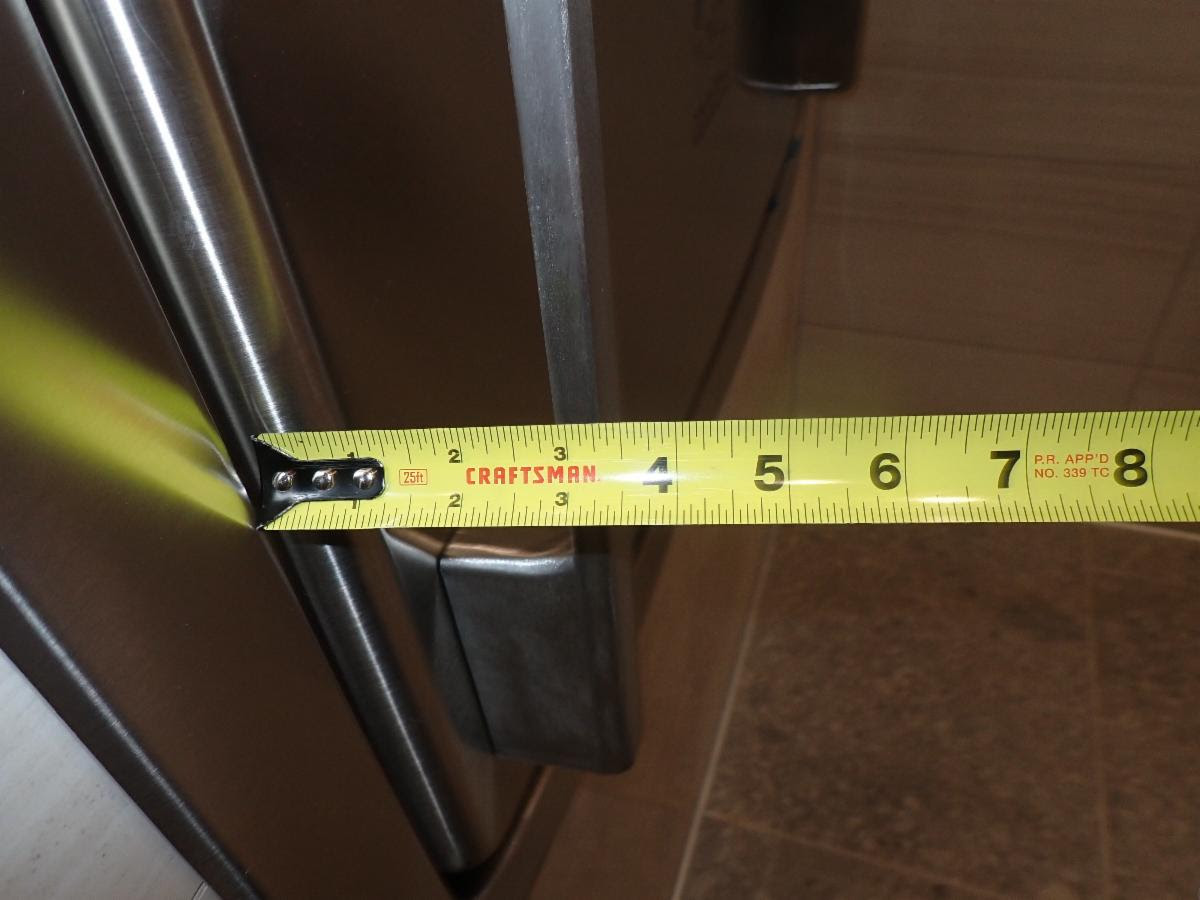
But the handles are only 3 1/2″ from the mounting surface which does not make it a protruding object.
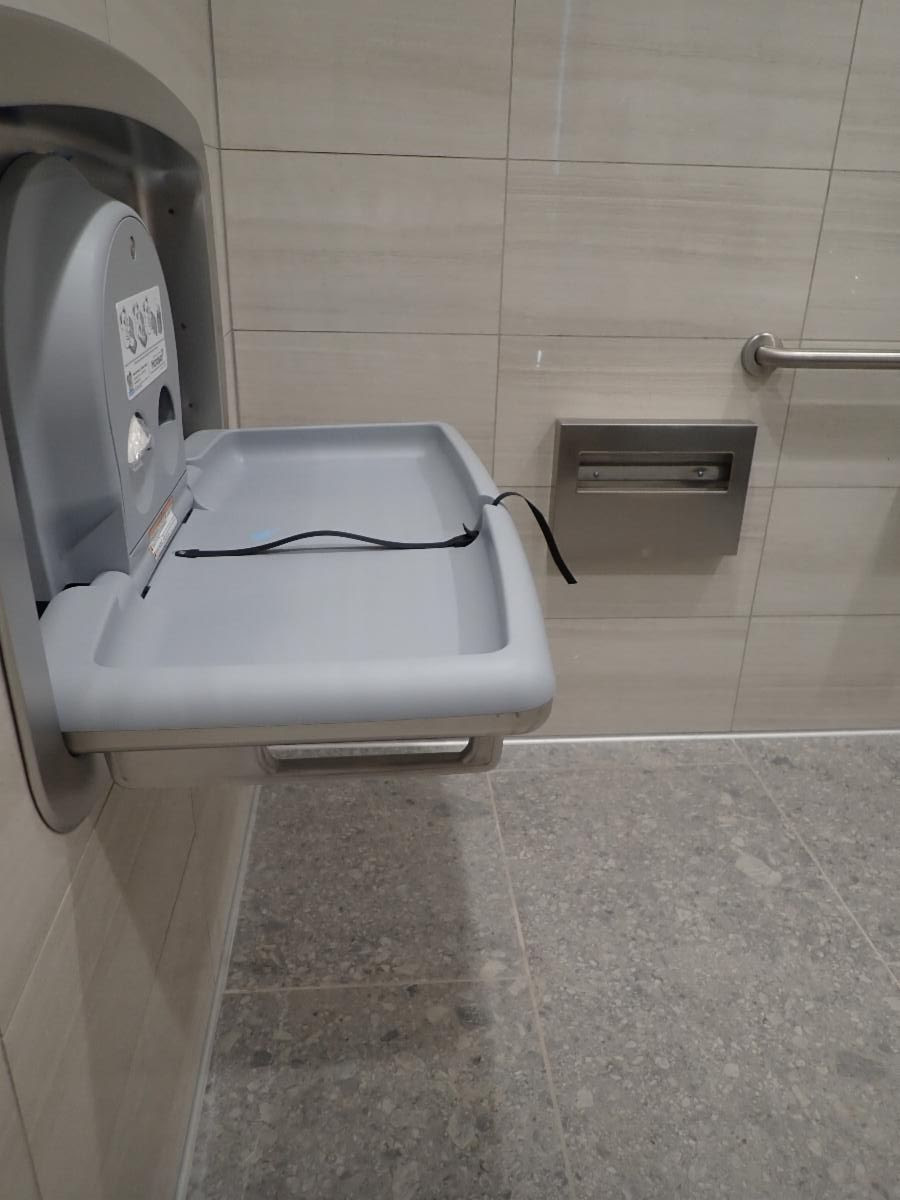
Once the diaper counter is down, and if it is left down, It could be a protruding object….but the handles are now below the counter and will act as cane detection.
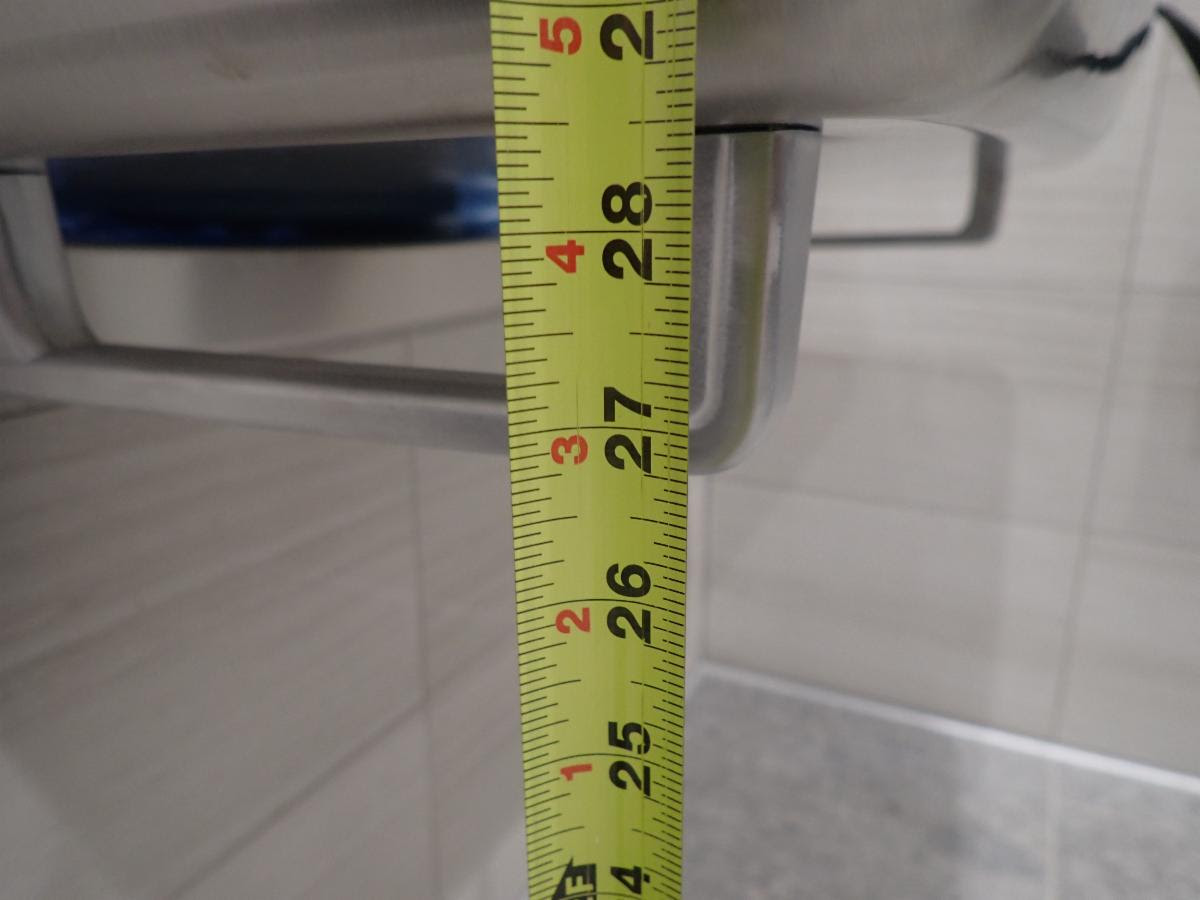
The photo above shows the handles below the counter that are mounted lower than 27″ a.f.f. and act as cane detection.
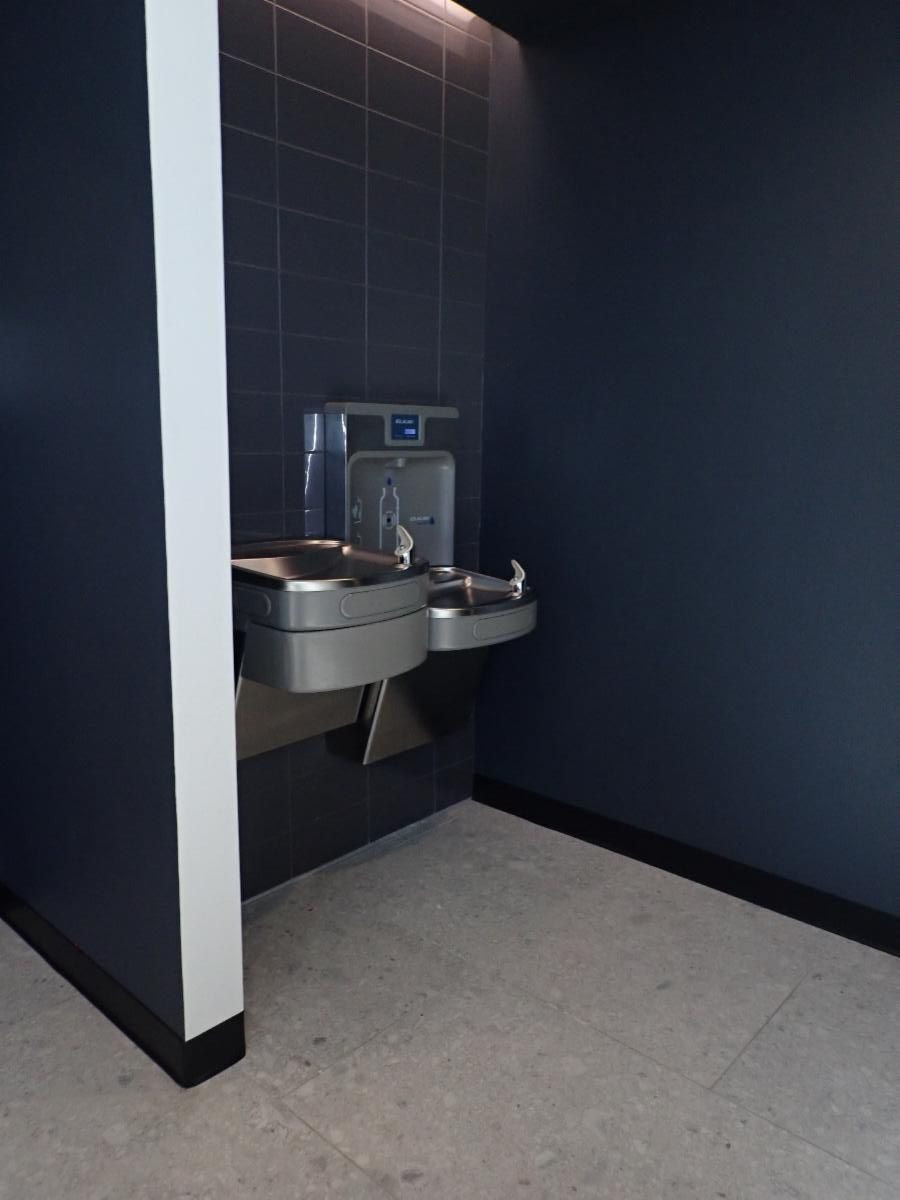
The photo above shows a drinking fountain located in an alcove. It is not technically protruding onto a circulation path and the walls on either side of the drinking fountains act as cane detection. So the cane detectable apron installed under the “high” drinking fountain was not required.
Wednesday, January 3rd, 2024
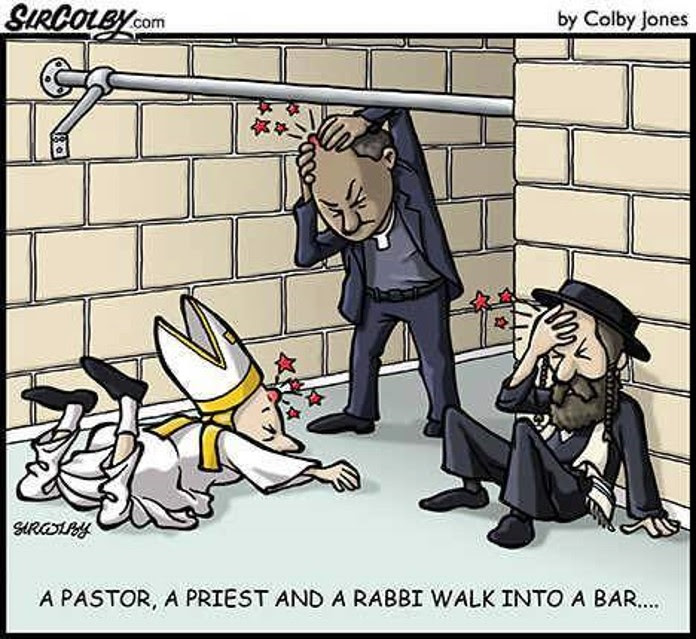
BECAUSE IT WAS A PROTRUDING OBJECT
What is a protruding object?
Most of the rules in the 2010 ADA Standards for Accessible design seems to be relating to people who use wheelchairs. But the guidelines apply to other disabilities besides mobility. There are guidelines to assist person who are hearing impaired, congnitively impaired as well as visually impaired.
People who are visually impaired use the built environment to find the way. They might use a cane to “feel” objects which will guide them and will assist them to avoid any hazards. People who use a cane can only detect objects that are located along their circulation path and mounted BELOW 27″ a.f.f.
A circulation path is not the same as an accessible route.
When you see the words “accessible route” in the ADA Standards it is describing the path a person in a wheelchair would use to get around. When you see the words “circulation path” in the ADA Standards it describes any path that a pedestrian would take regardless of disability. Most of the time, the circulation path applies to persons that are visually impaired.
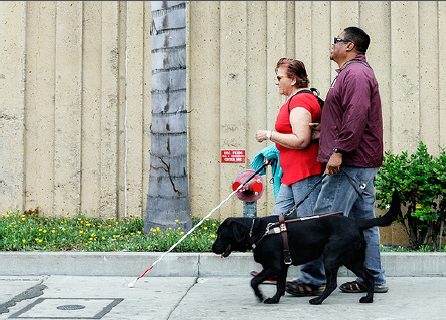
People who are visually impaired use the built environment to find the way. They might use a cane to “feel” objects which will guide them and will assist them to avoid any hazards. People who use a cane can only detect objects that are located along their circulation path and mounted BELOW 27″ a.f.f.
Anything that is mounted ABOVE 27″ a.f.f. or below 80″ a.f.f. could be considered a protruding object IF it is more than 4″ from the mounting surface.
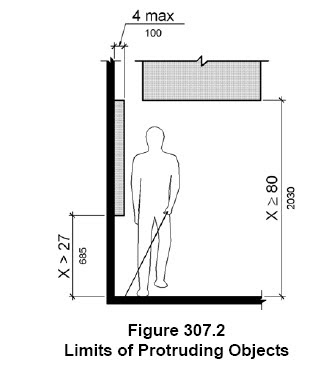
But are any object that extends more than 4″ from its mounting surface a “protruding object”?
No….only if they are also located in a circulation path.
A circulation path in the ADA is not the same as what we design professionals think of a circulation path. We think of it ONLY as corridors, walkway, elevators, stairs….
A circulation path in the ADA describes ANY place that a able bodied pedestrian will be going. This would include the path you would take to go from the doorway to the toilet inside a restroom, the path from the toilet to the sink inside a restroom, the path from a doorway to your seat in a conference room or classroom, the path from one room to a different room etc.
“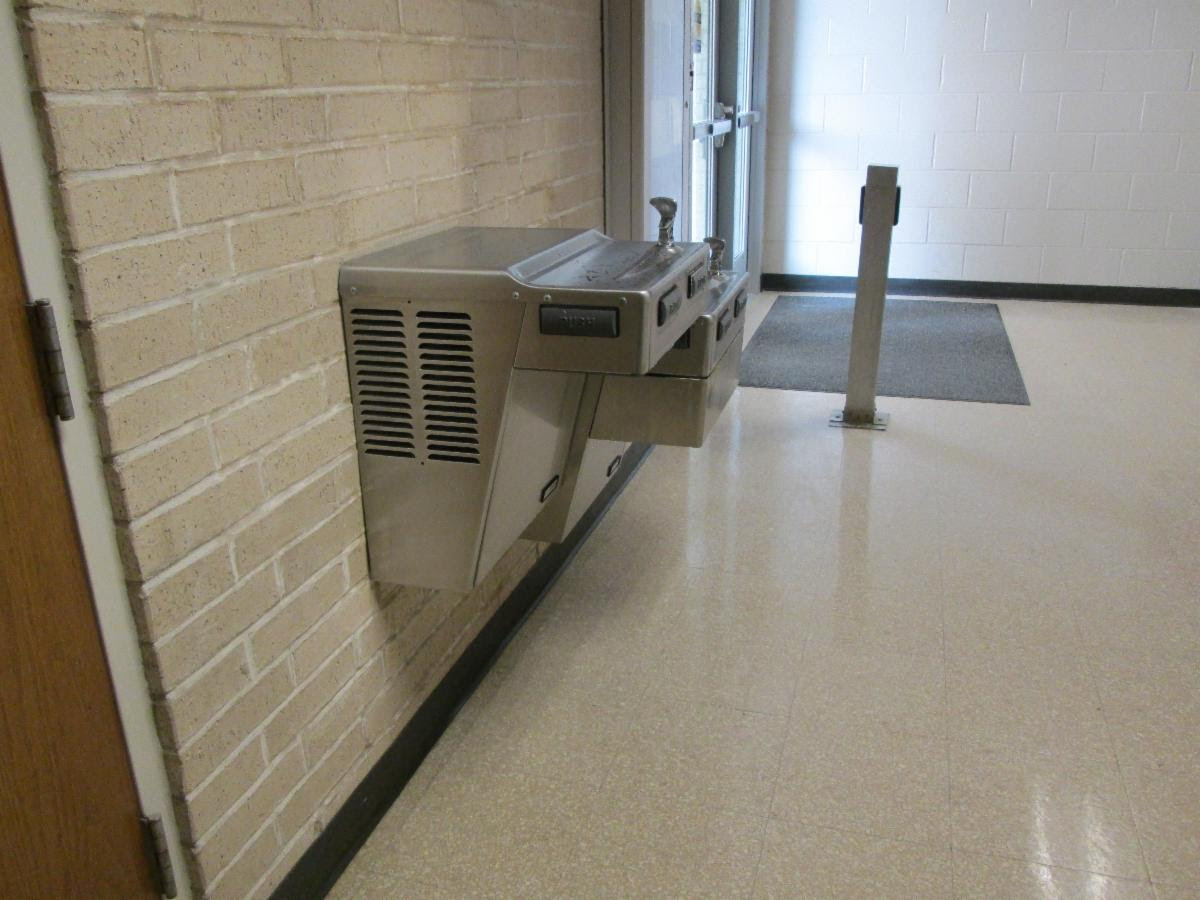
The photo above is showing a drinking fountain in a circulation path from one room to another
Some people ask me, but there is plenty of room in the middle of the corridor where the drinking fountain does not protrude…..Yes, but a person who is visually impaired who uses a cane to find their way is trained to walk close to the walls in order that they can tap the cane on a surface which will gude them to where they are going. So the middle of the corridor would not be THEIR circulation path.
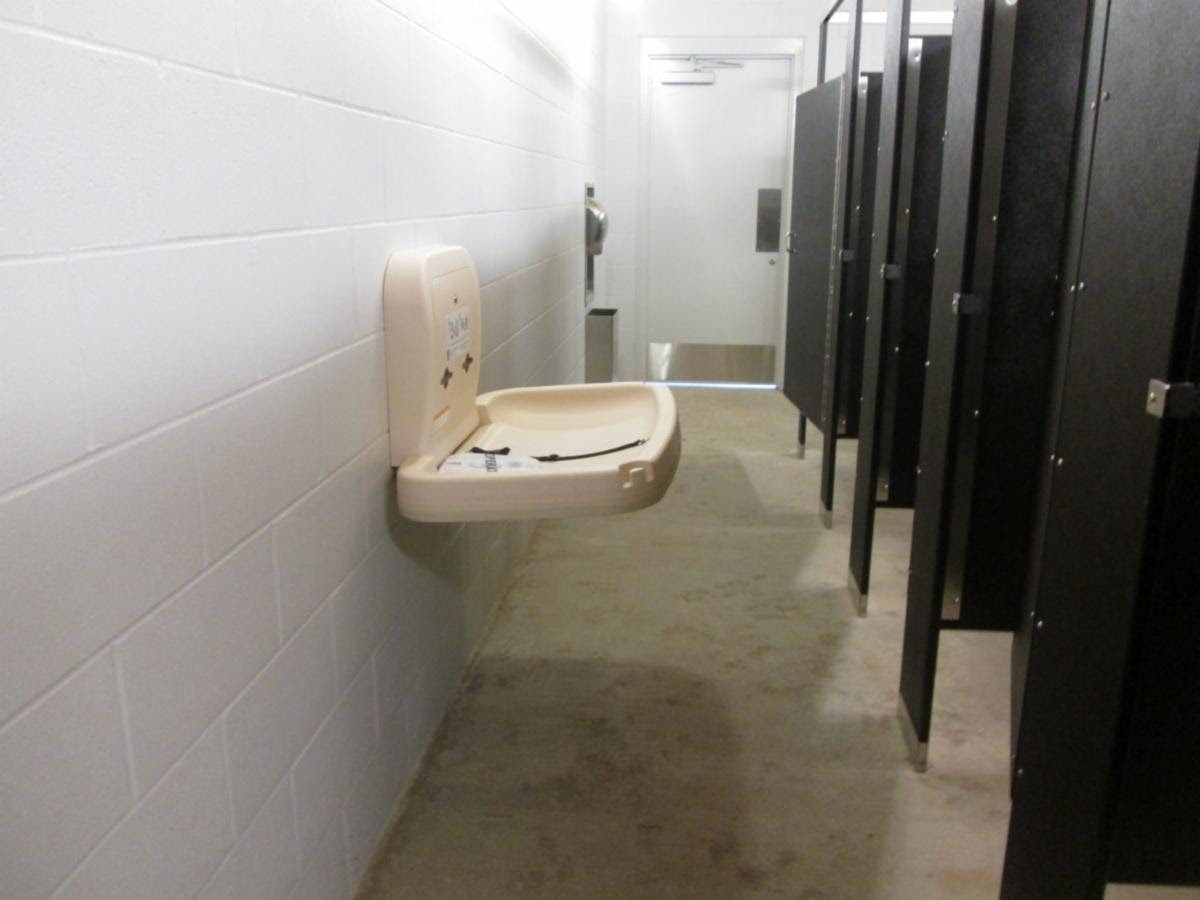
The photo above is showing a diaper counter located in the circulation path to the toilet compartments as well as the exit door. It also projects more than 4″ onto that circulation path making it a protruding object.
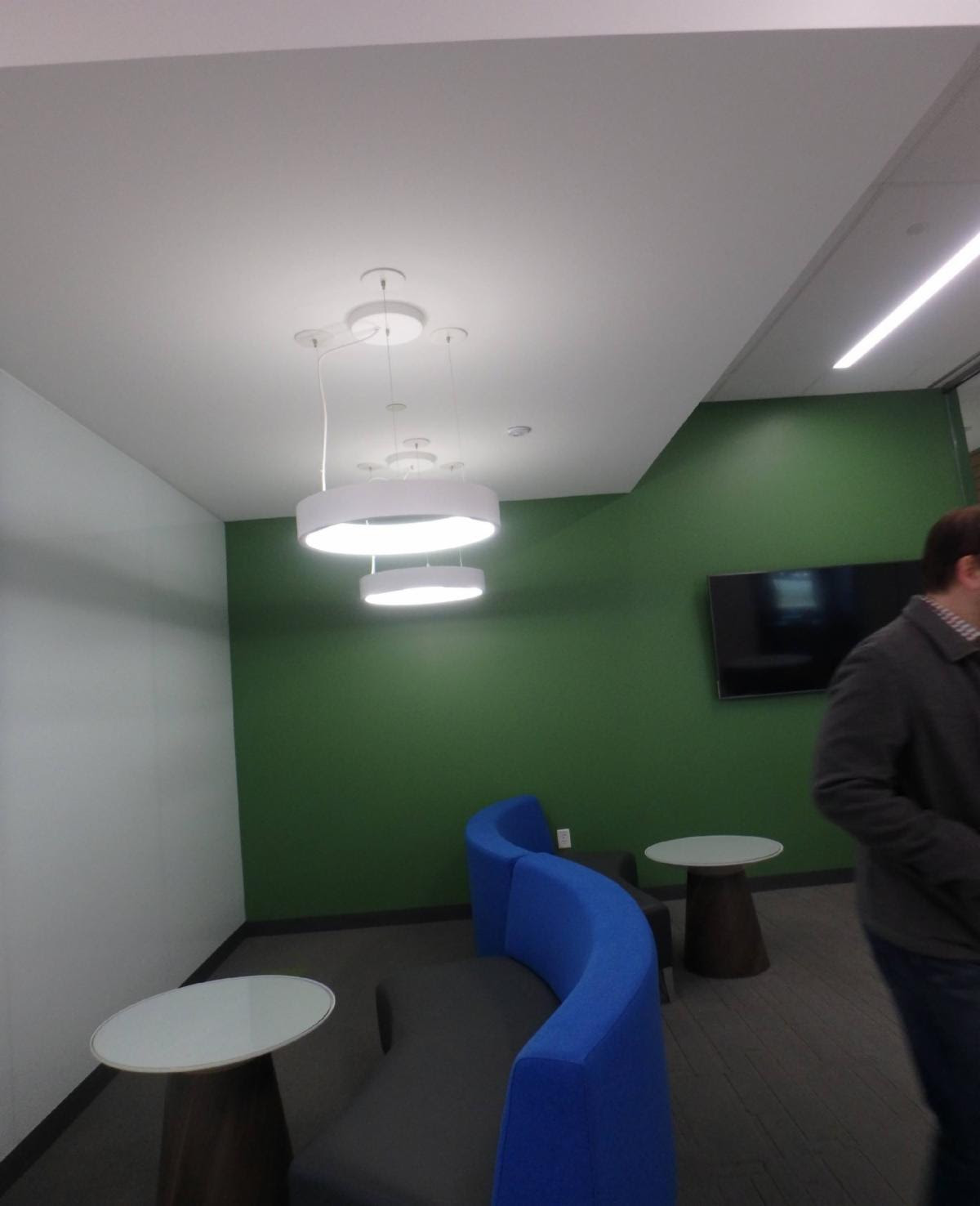
The photo above is showing a pendant light fixture mounted lower than 80″ a.f.f. and in a circulation path from one side of the room to the other. But you might say that there is a seat located right below it. Unless that seat is FIXED or BUILT IN it does not constitute a cane detectable element because it could be moved from that location. Only permanent elements will be able to be used as cane detection.
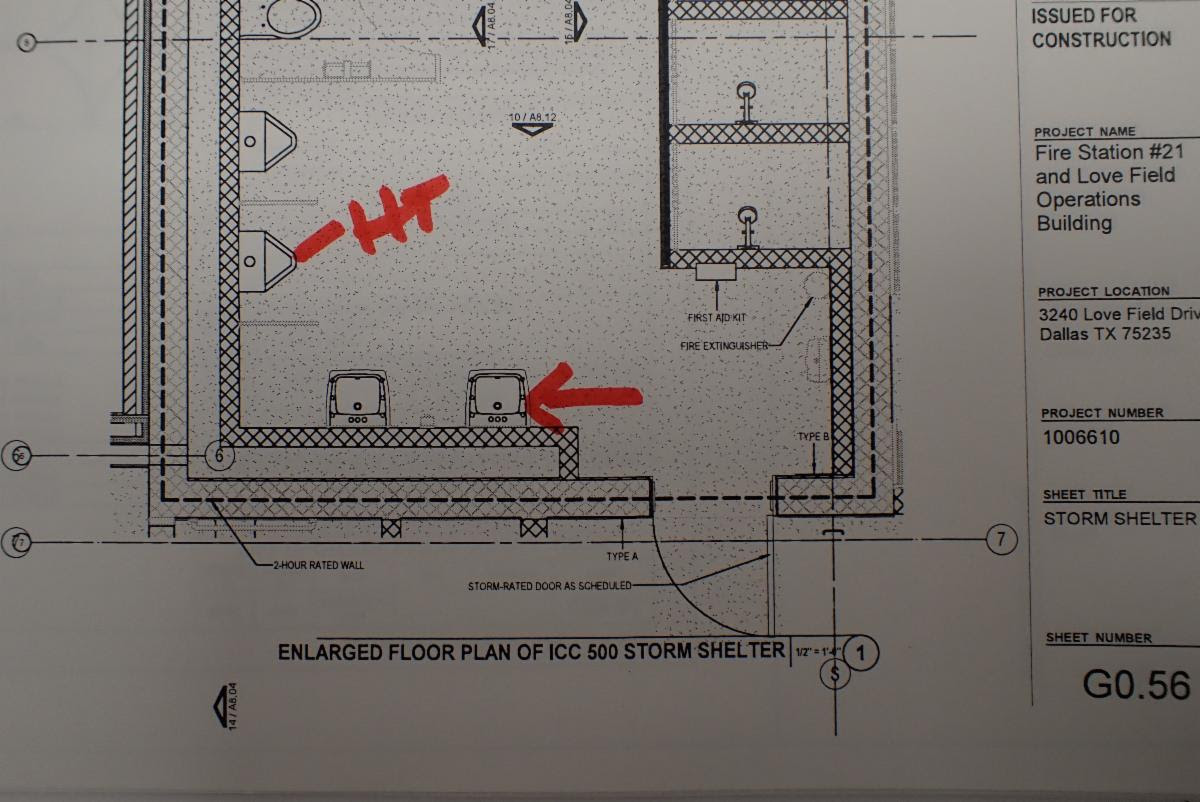
The drawing above is showing a plan of a lavatory located on the way to the urinals and showers at this lavatory might be a protruding object if the leading edge is mounted higher than 27″ a.f.f. which is possible since the knee space for a lavatory is required to be a minimum of 27″ a.f.f.
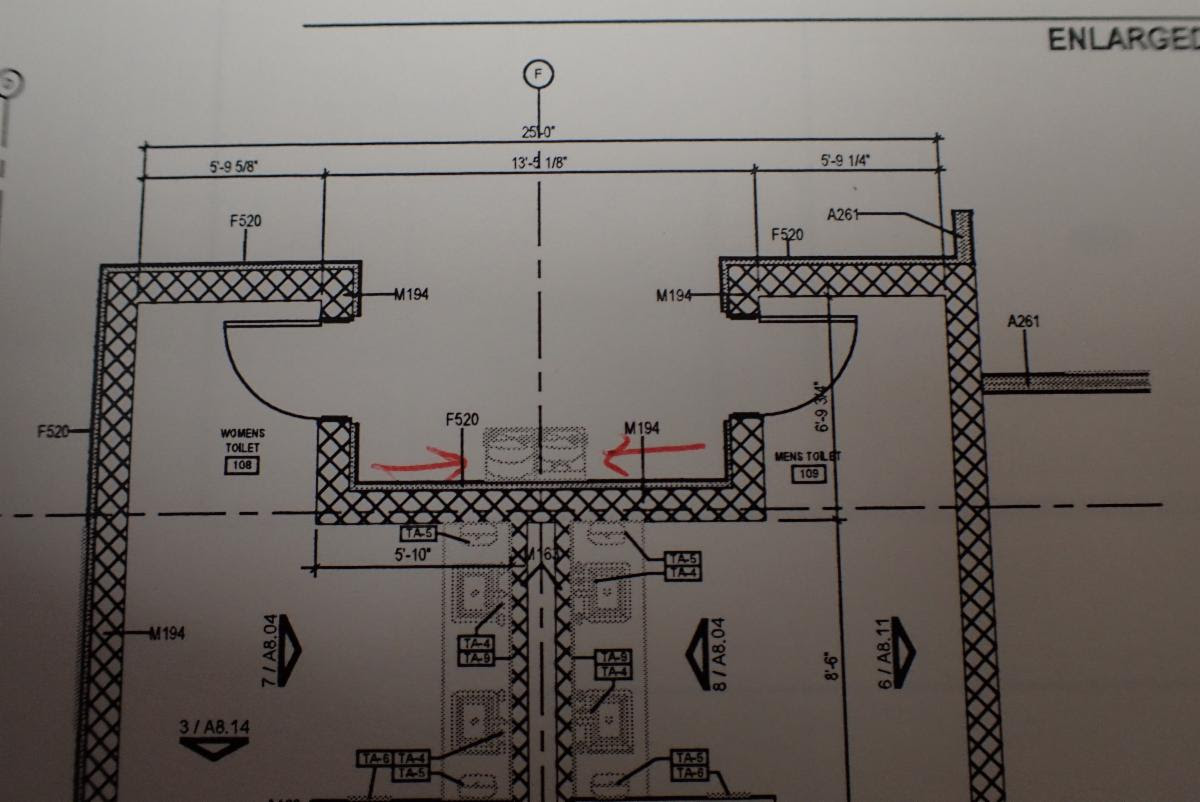
The floor plan above is showing a set of drinking fountains in an alcove. It appears as though the alcove puts them away from the circulation path, but because the alcove is wide a person who is visually impaired could accidentally walk into the drinking fountain if one of the leading edges are higher than 27″ a.f.f.
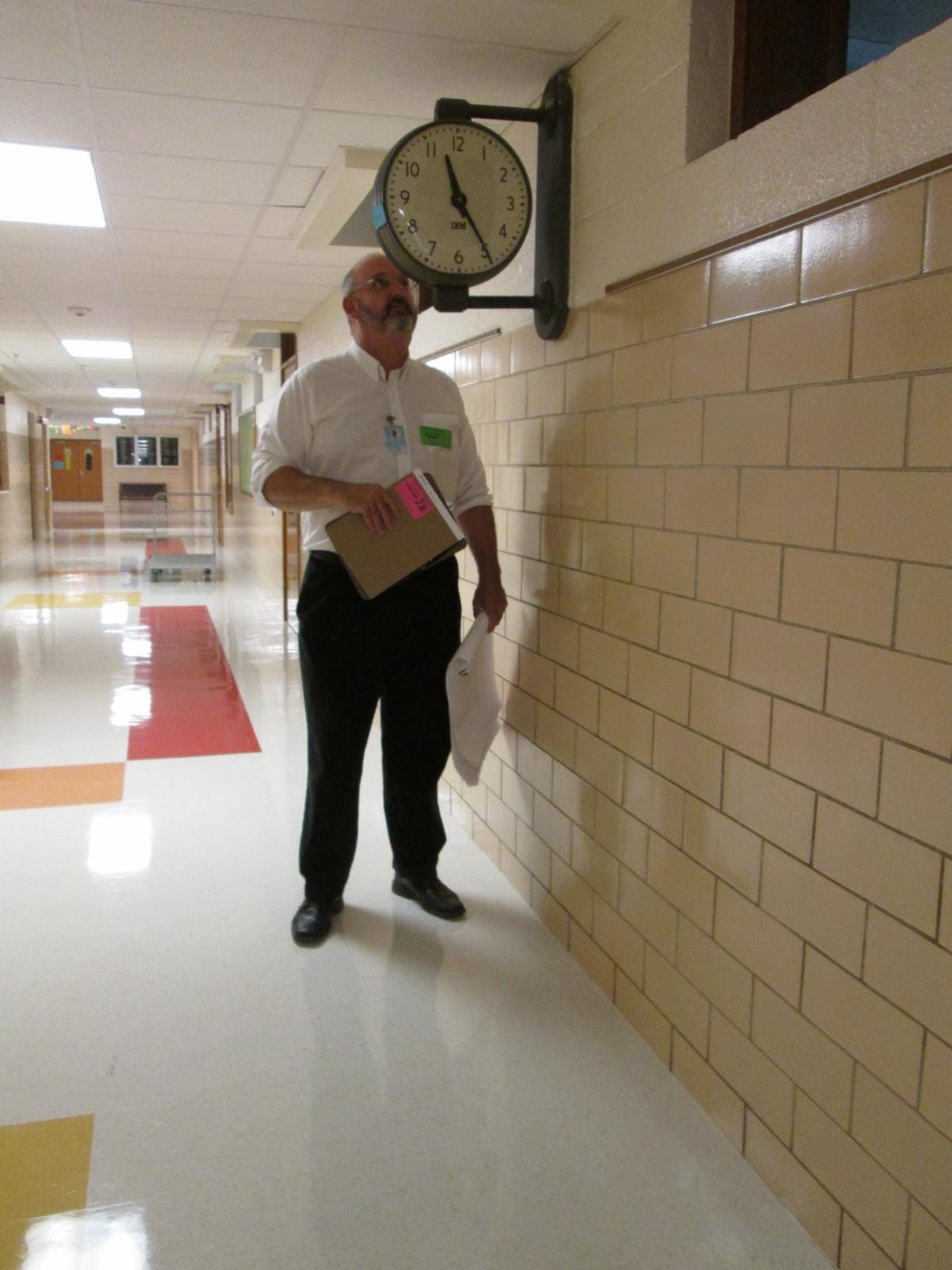
The photo above is showing a clock mounted on a wall in a corridor of a school and lower than 80″ a.f.f.. The clock is a hazard to people who are visually impaired because it protrudes more than 4″ onto the circulation path.
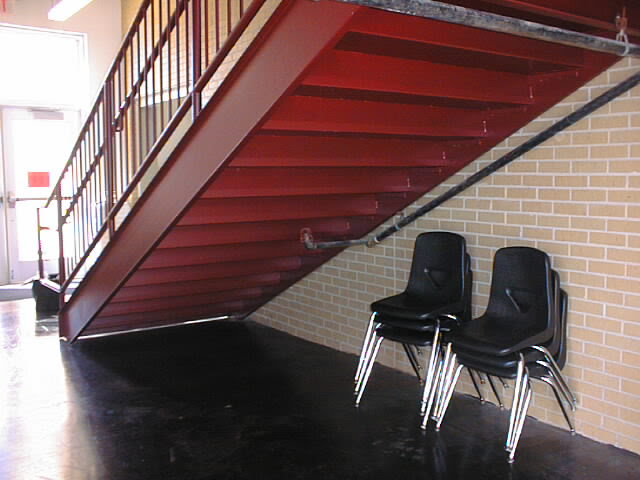
The photo above is showing stair with exposed risers and treads. There is no cane detection and a person who is visually impaired could bump their head on the edges.
There are some requirements that sometimes get mistaken for protruding objects. For example, there is a rule that forbids certain objects to overlap the clearance of the toilet in a restroom. Designers might think that the rule pertains to protruding objects and as long as the object within the clearance of the toilet is less than 4″ it is allowed to overlap.
That is not correct.. The protuding object rule, remember, has to do with persons who are visually impaired. The requirement at the toilet has to do with persons in wheelchairs where such objects would prevent them from easily transfer onto the water closet.
“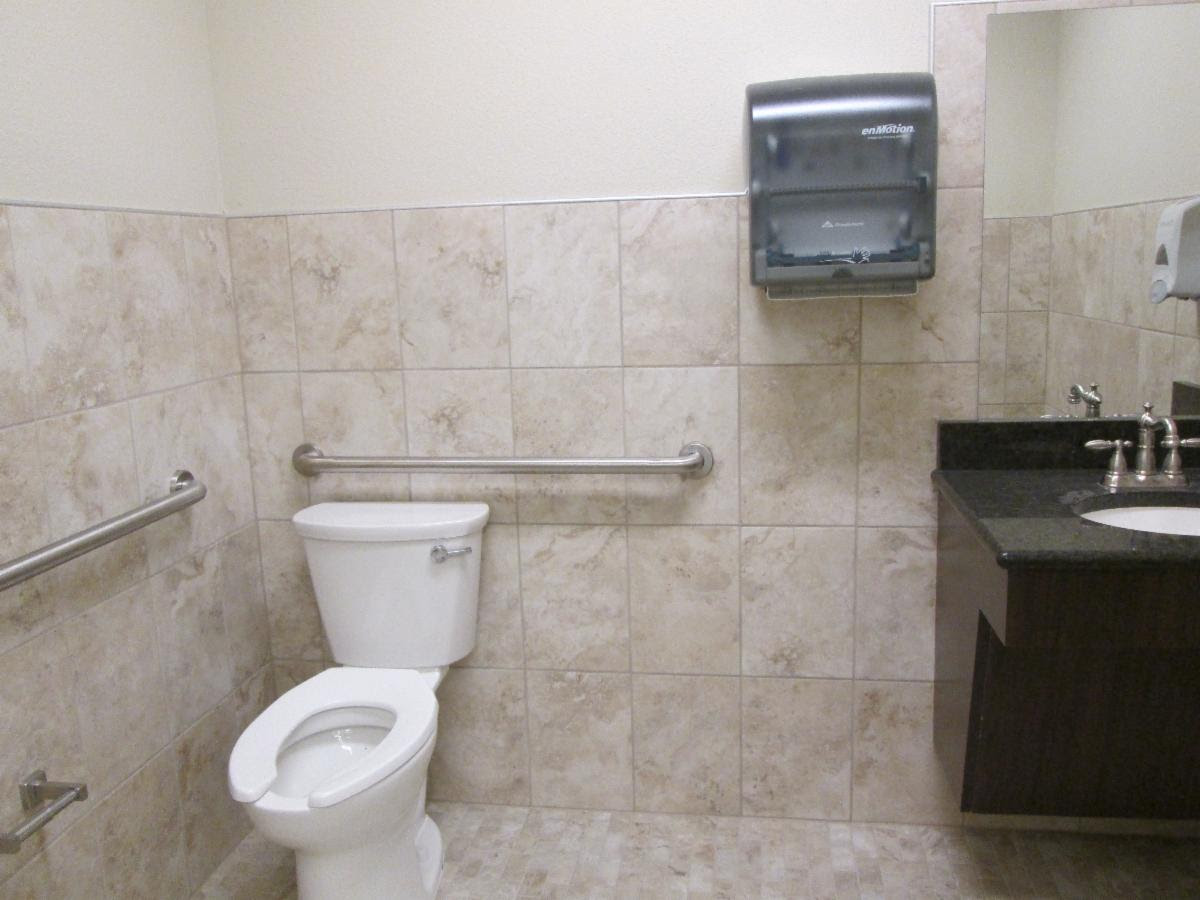
The photo above is showing a paper towel dispenser that is overlapping the clearance around the toilet. This is NOT a protruding object because it is not lcoated in a circulation path. The paper towel dispenser is located between the toilet and the lavatory which both act as cane detection away from the paper towel dispenser. This however is a violation of the overlap rule for toilets (ADA section 604.3.2)
Some Solutions
Below are some solutions to resolve the protruding objects.
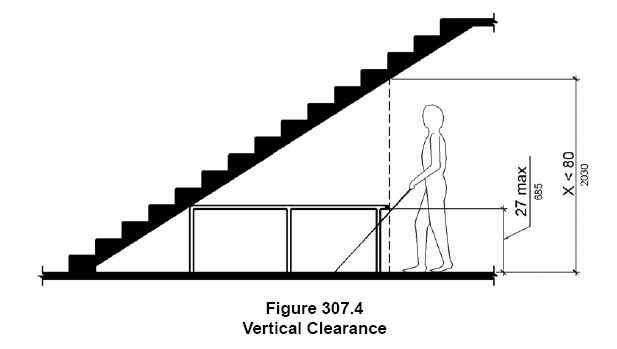
The figure above shows a way to provide cane detection by using a rail below an open stair
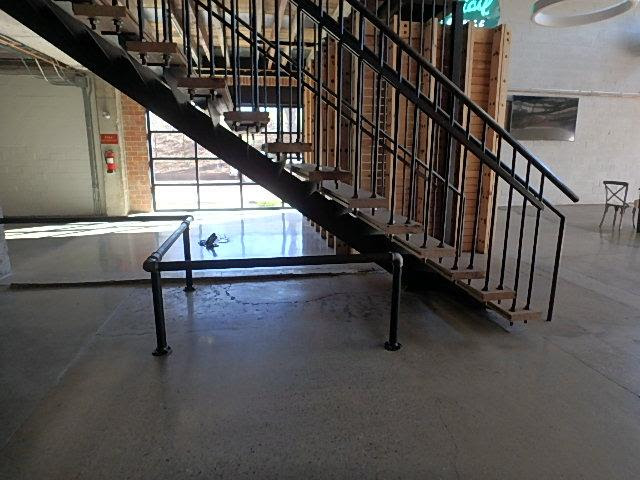
The photo above shows a rail below an open stair that acts as cane detection
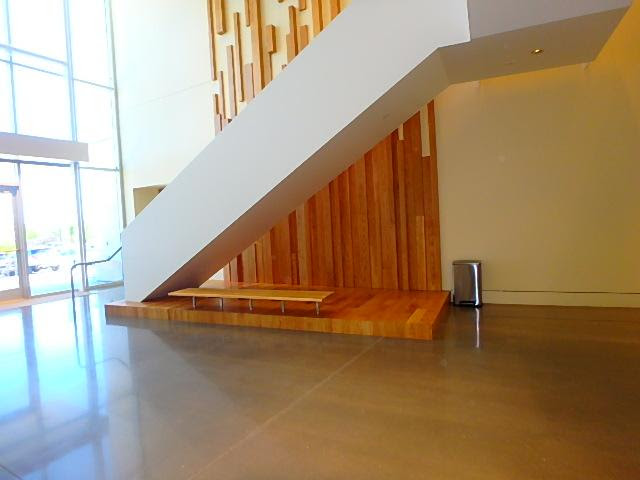
The figure above shows a way to provide cane detection by using a rail below an open stair
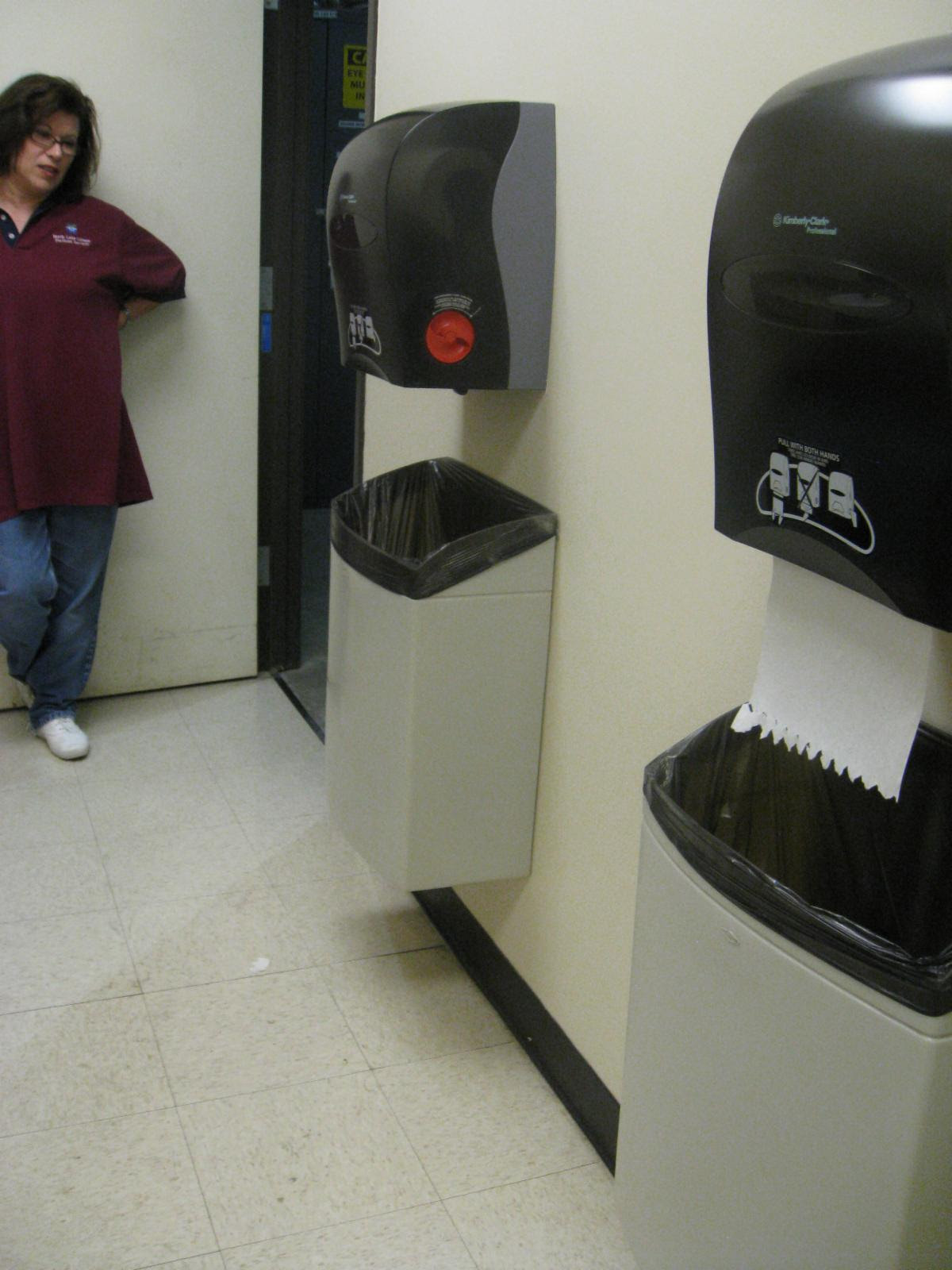
The photo above trash receptable mounted below the paper towel dispensers that are protruding more than 4″ onto a circulation path inside the restroom. This trash receptible reaches below 27″ a.f.f. which makes it cane detectable.
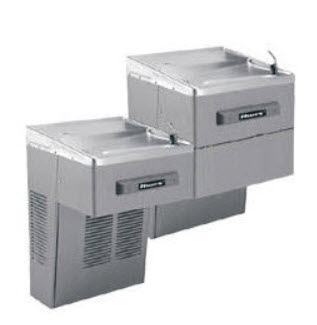
The photo above shows a cane detectable apron that is an accessory you can specify to be installed below the leading edge of the high drinking fountain. The cane detectable apron should be mounted exactly at 27″ a.f.f. so that it acts as cane detection and allows the wheelchair drinking fountain to have the required knee clearance.
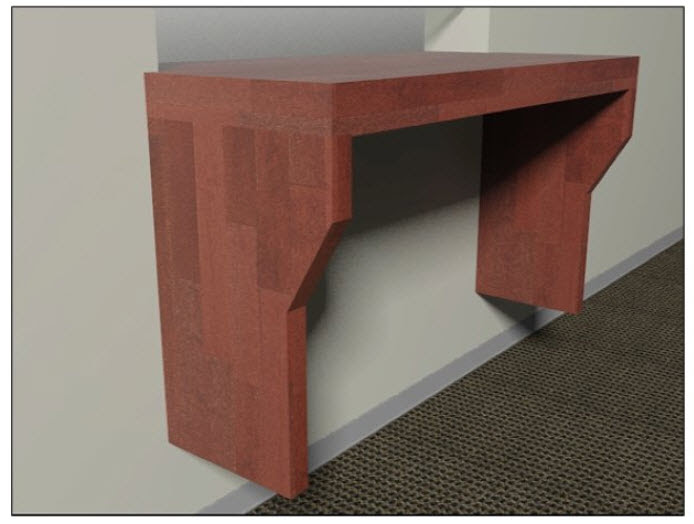
The photo above shows panels on either side of a wall mounted counter which acts as cane detection
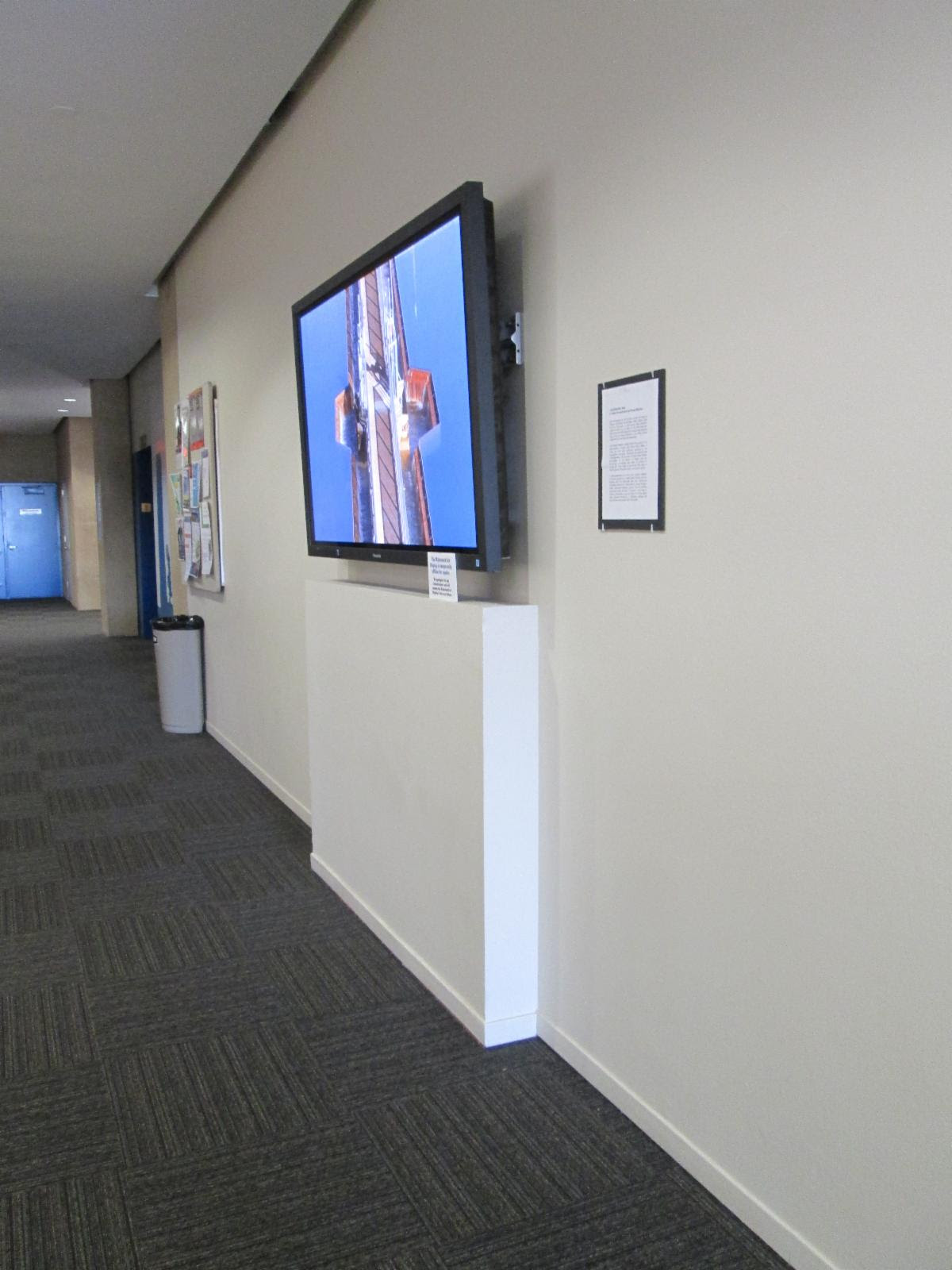
The photo above shows a furred out wall that acts as cane detection to the wall mounted TV located in a circulation path.
Friday, December 1st, 2023
This newsletter will be discussing the requirements for the 2010 ADA Standards for Accessible Design as well as the 2012 Texas Accessibility Standards. Other Standards and Codes might have different requirements
Accessible Means of Egress
Every once in a while I receive a phone call asking me about accessible exits. They wonder about the location of the exit, whether the door needs to be accessible, about stairs, stoops etc. My answer always confuses them:
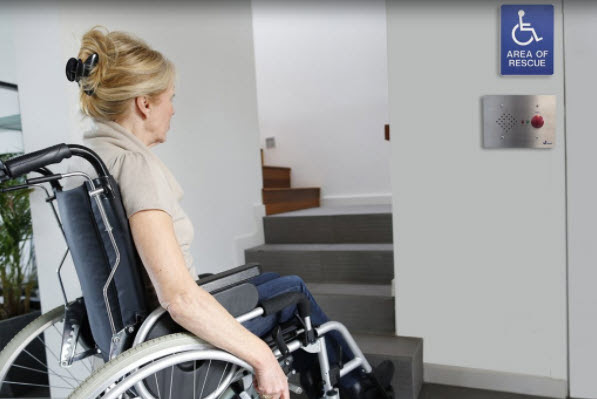
In section 207 of The 2010 ADA and 2012 TAS have the following requirements:
- Means of Egress shall comply with section 1003.2.13 of the IBC (2000 edition and 2001 supplement) or
- Means of egress shall comply with section 1007 of the IBC 2003 edition
That means that The ADA and TAS DO NOT have jurisdiction over the requirements for accessible means of egress. Only the AHJ will have oversight over the number and location of the accessible means of egress.
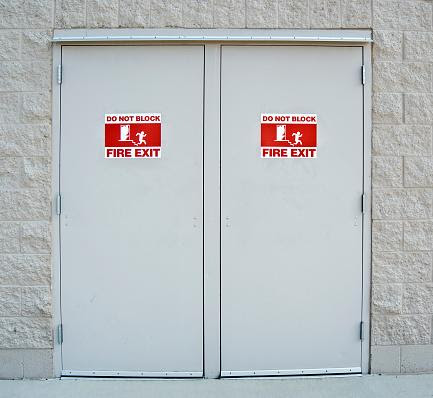
TAS and ADA do focus on entrances. So if an exit door is also an entrance then it would have to comply (if it is a required accessible entrance). The door, shown in the photo below, does not have door hardware to enter, so this would be a purely a means of egress and would not be required to comply on the exterior. There might be requirements depending on where it is located to be accessible on the interior if it was considered an entrance to the exterior (you would be “entering” the exterior)
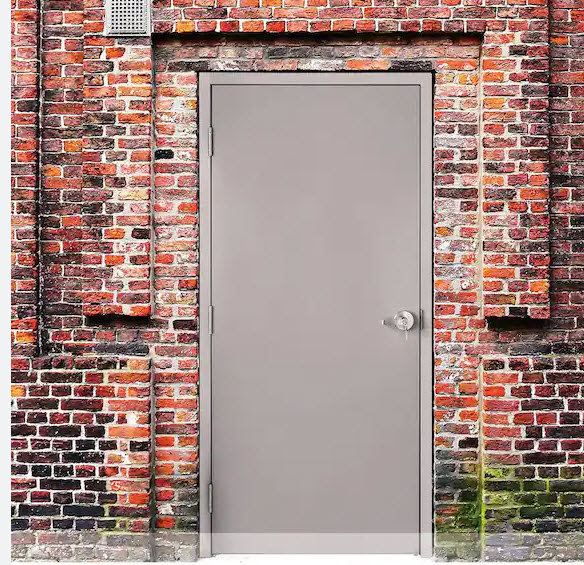
The photo shown above is an exit door that has hardware on the exterior. If this door is also an entrance then it will have to comply
Section 207 of the ADA and TAS has two exceptions that might not be the same as the IBC:
- The accessible means of egress can share the common path of egress if permitted by local building or life safety codes
- Areas of refuge shall not be required in detention and correctional facilities.
There is an advisory, not required but advisable that the ADA and TAS also have regarding the accessible means of egress:
Advisory 105.2.4 ICC/IBC.
International Building Code (IBC)-2000 (including 2001 Supplement to the International Codes) and IBC-2003 are referenced for means of egress, areas of refuge, and railings provided on fishing piers and platforms.
At least one accessible means of egress is required for every accessible space and at least two accessible means of egress are required where more than one means of egress is required.
The technical criteria for accessible means of egress allow the use of exit stairways and evacuation elevators when provided in conjunction with horizontal exits or areas of refuge. While typical elevators are not designed to be used during an emergency evacuation, evacuation elevators are designed with standby power and other features according to the elevator safety standard and can be used for the evacuation of individuals with disabilities.
The IBC also provides requirements for areas of refuge, which are fire-rated spaces on levels above or below the exit discharge levels where people unable to use stairs can go to register a call for assistance and wait for evacuation.
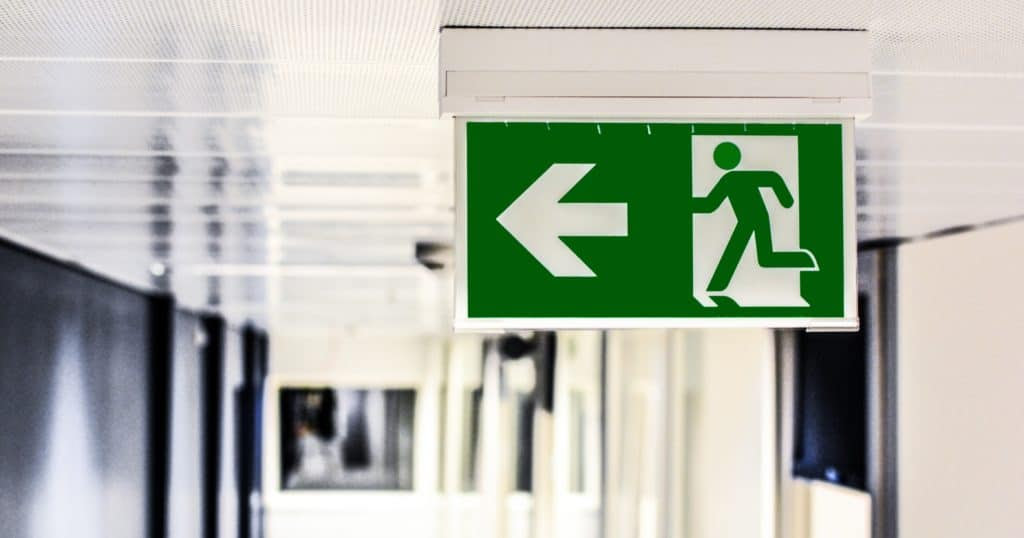
Signage at the accessible means of egress is also required by ADA and TAS. Those rules will not be covered in this newsletter, but can be found in section 216.4
“
 Abadi
Abadi 


