Author Archive

ANSI A117.1 vs. ADA

Monday, May 3rd, 2021

The 2010 ADA Standards for Accessible Design (The ADA for short) is sometimes used as a catch-all term for all requirements for designing for persons with dissabilities. What is sometimes misunderstood is that the ADA is a Civil Rights law with design guidelines for public accommodations and commercial facilities. But there are other laws and standards that govern how to design for persons with disabilities that are different from the ADA and still have to be followed. One of the standards are found in the building code. If a municipality has adopted Chapter 11 of the IBC that chapter references another Standards call the ANSI A117.1. The ADA and ANSI are very similar, but there are some differences. In this newsletter I will give you a few examples.

For the sake of this newsletter I wilil be discussing the 2017 ANSI A117.1 Standards. This may or may not be the Standared that has been adopted by the municipality you are designing under and you will need to verify which version you need to follow. Not all the versions have the same requirements.

304 Turning Space

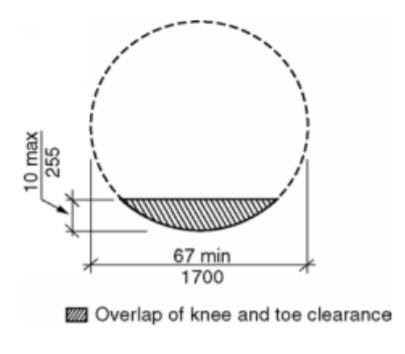
Both the ADA and ANSI A117.1 have requirements for the size of a circular turning space. They used to be the same (60″ diameter), but In the 2017 version of the ANSI the size increased to 67″ min.
Below is the new figure for the 2017 ANSI
604.5.2 Rear Wall Grab Bar

Both in the ADA and the ANSI the section that discusses the rear wall grab bars is 604.5.2 But the location of the grab bar is measured differently in the ANSI than in the ADA. this confuses most installers and we typically find ADA violations based on the assumption that they are both the same.

Note the figure below. It is from the 2017 ANSI A117.1 604.5.2

It shows that the rear wall grab bar is located in relation to the side wall. It should measure 6″ from the side wall to the inner edge of the grab bar and it should have an overall dimension of 42″ min. from the side wall to the outer edge.

This is figure ANSI A117.1 604.5.2 from the 2017 version

Note the figure below. It is from the 2010 ADA section 604.5.2

It shows that the rear wall grab bar is located in relation to toilet. It should also be 36″ long min. just like the ANSI, but we locate it from the center of the toilet so that there is 12″ min. from the center to the inner edge and 24″ min. from the center to the outer edge.
The ADA rear wall grab bar location has no relation to the side wall.
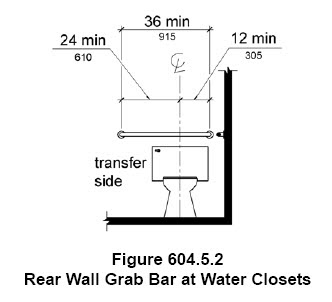
This is figure 604.5.2 from the 2010 ADA Standards. It shows the rear wall grab bar and its lcoation in relation to the toilet.

502 Parking

There are two sections that the ANSI has that the ADA does not: parallel parking and Electrical vehicle charging station parking.

502.9 Parallel Parking

The 2017 ANSI Standards has guidelines for parallel parking for on-street parking. It requires a vehicle space plus an access aisle parallel to the curb and a curb ramp or accessible route close to the spaces.
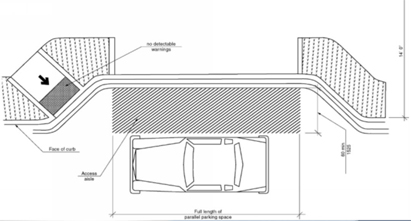
The figure 502.9.1 above shows on-street parallel parking

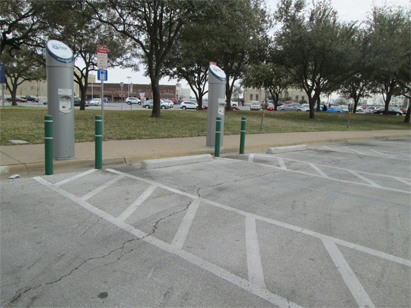
502.11 Electrical Vehicle Charging Stations

The 2017 ANSI Standards provide requirements for Electrical Vehicle charging stations. Some of them are

  • Operable parts should be within reach
  • There should be an access aisl adjacent to the parking space with clear floor sapce next to the unit
  • Any protection bollards, curbs and wheel stops should not be located so it obstructs the route or the reaching.
Alterations in areas containing a primary function

Monday, August 3rd, 2020

Introduction

The ADA Standards (and the Texas Accessibility Standards) states:
106.5.5 Alteration. A change to a building or facility that affects or could affect the usability of the building or facility or portion thereof. Alterations include, but are not limited to, remodeling, renovation, rehabilitation, reconstruction, historic restoration, resurfacing of circulation paths or vehicular ways, changes or rearrangement of the structural parts or elements, and changes or rearrangement in the plan configuration of walls and full-height partitions.
Normal maintenance, reroofing, painting or wallpapering, or changes to mechanical and electrical systems are not alterations unless they affect the usability of the building or facility.
When doing “alterations” in buildings you have two sets of requirements: Requirements for alterations (ADA Section 202.3) and requirements for alterations that occur in an area that contains a primary function (ADA Section 202.4)
If your alteration is in an area that is not a primary function, only the new things will have to comply. Some examples are doing renovation in bathrooms, break rooms, closets etc.
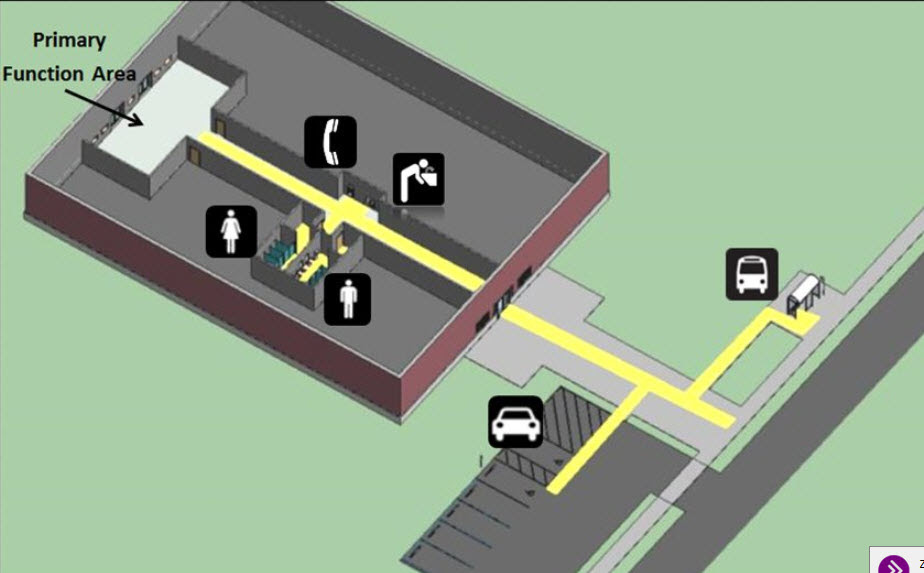
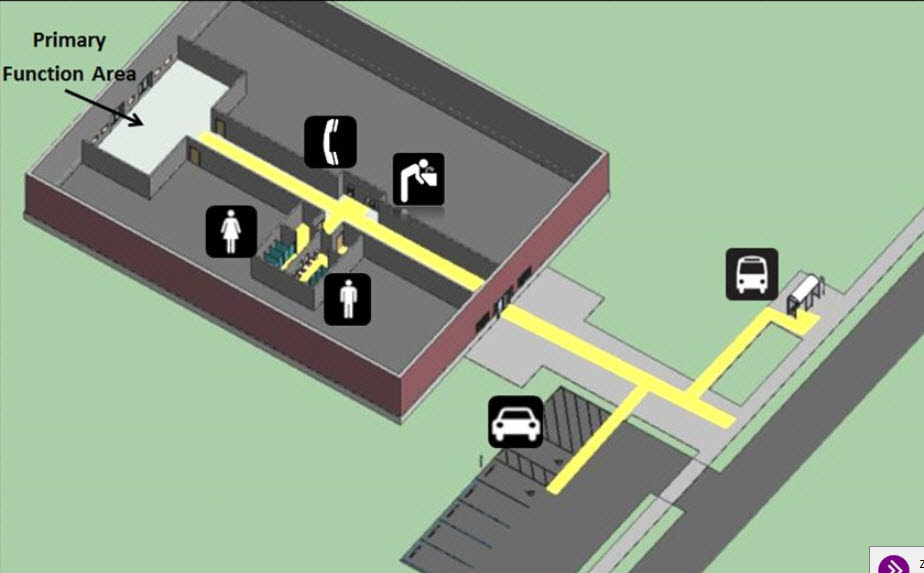
If your alterations are in an area that is considered primary function then all the new things must comply, but also the path of travel elements that serve the altered area including: accessible route, entrance, restrooms, drinking fountains and telephones that serve the altered area. In Texas they included parking that serves the altered area.
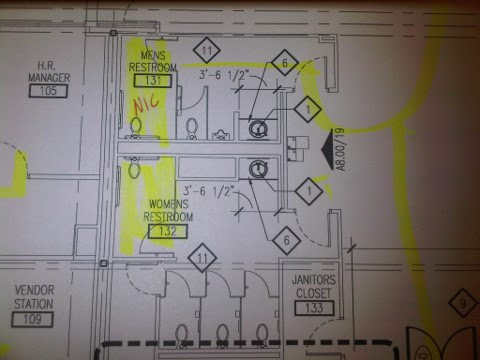
The yellow line in the figure above depicts the path of travel elements that must be compliant when an alteration occurs in an area that contains a primary function

Case studies

With the above information, let’s take a look at a few examples and what it would trigger:

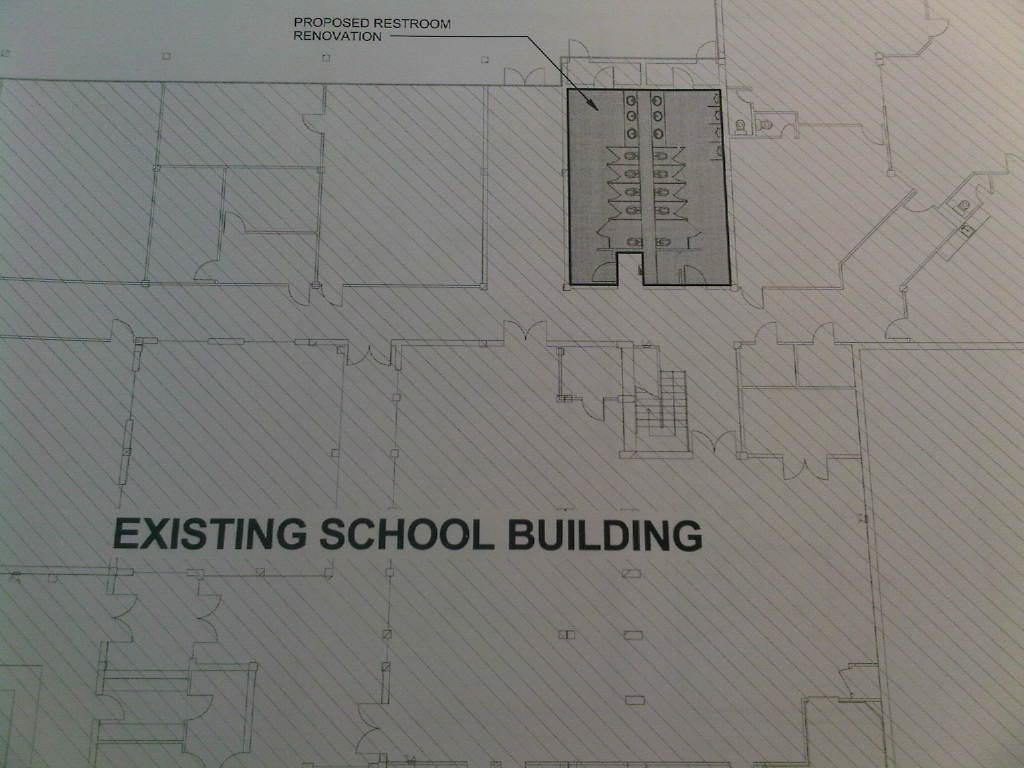
Case Study #1: What if we do an alteration in an existing school of an entire bathroom?

This is an existing school building where they were going to renovate the existing toilet room.
  1. Restrooms are not a primary function
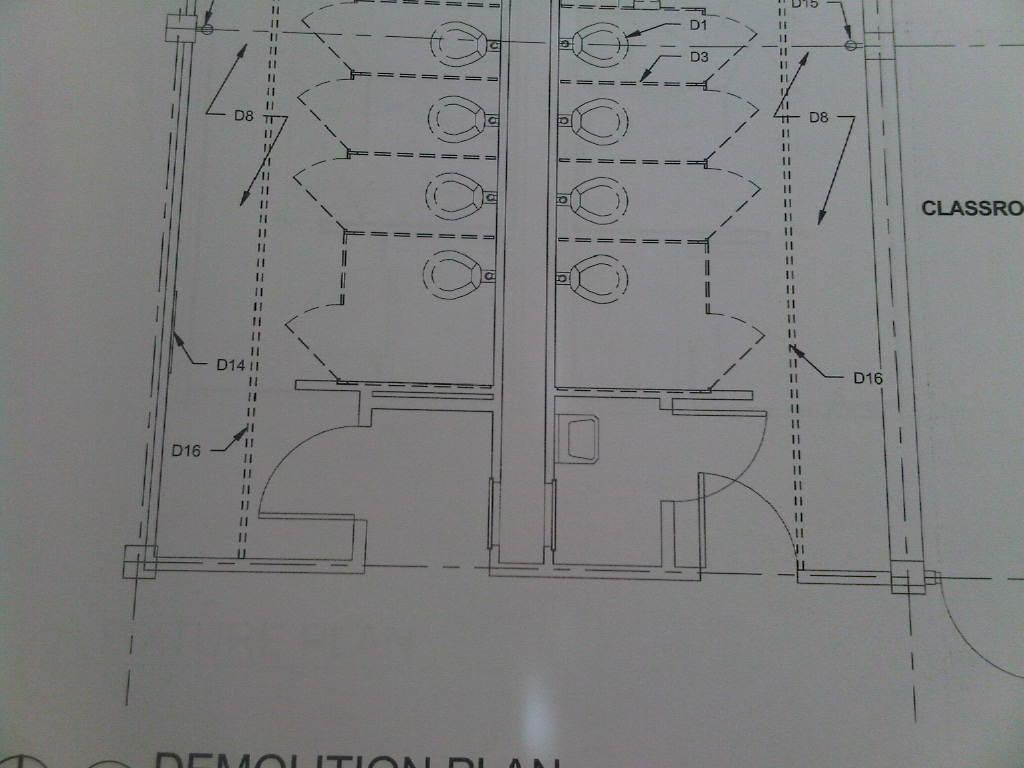
  2. They are demo-ing the entire restroom
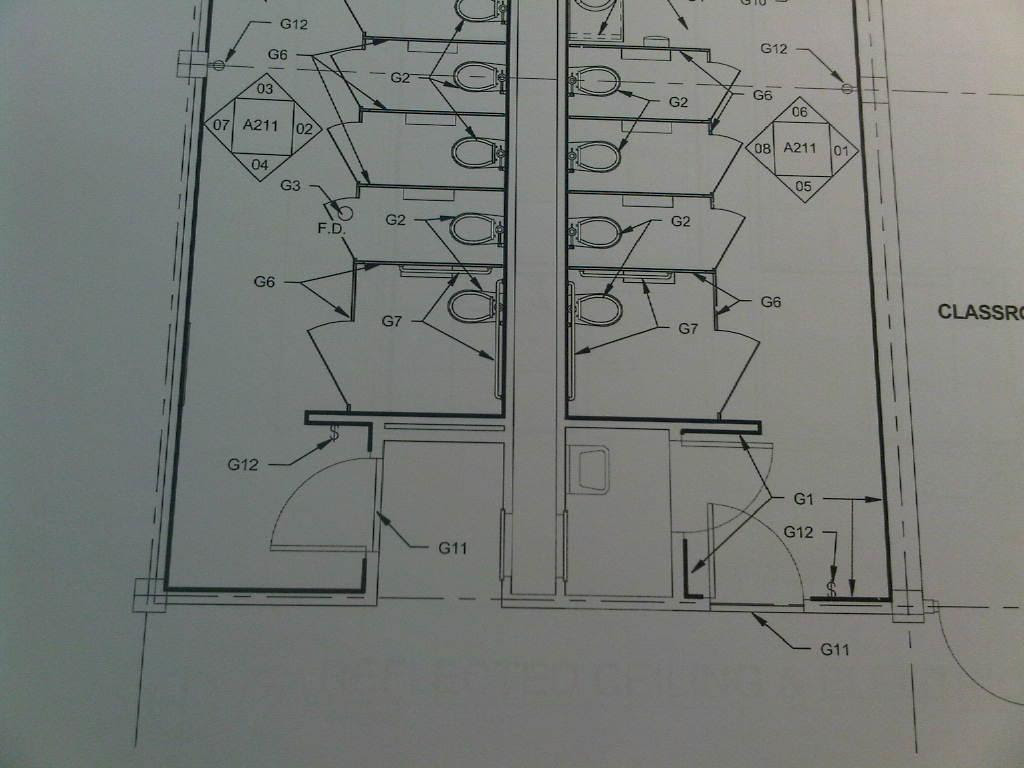
  3. They are installing new fixtures and new partitions.
Because the toilet rooms are not a “primary function” in the school, only the new elements installed would have to comply

Case Study #2: What if we only renovate one element in the restroom?

This is an existing restroom, but only the lavatory will be altered. Because the ADA allows element by element alteration, only the lavatory will have to comply. The rest of the restroom that was not altered will remain as is and will not be required to be brought up to compliance.

Case Study #3: What if only the toilet is altered?

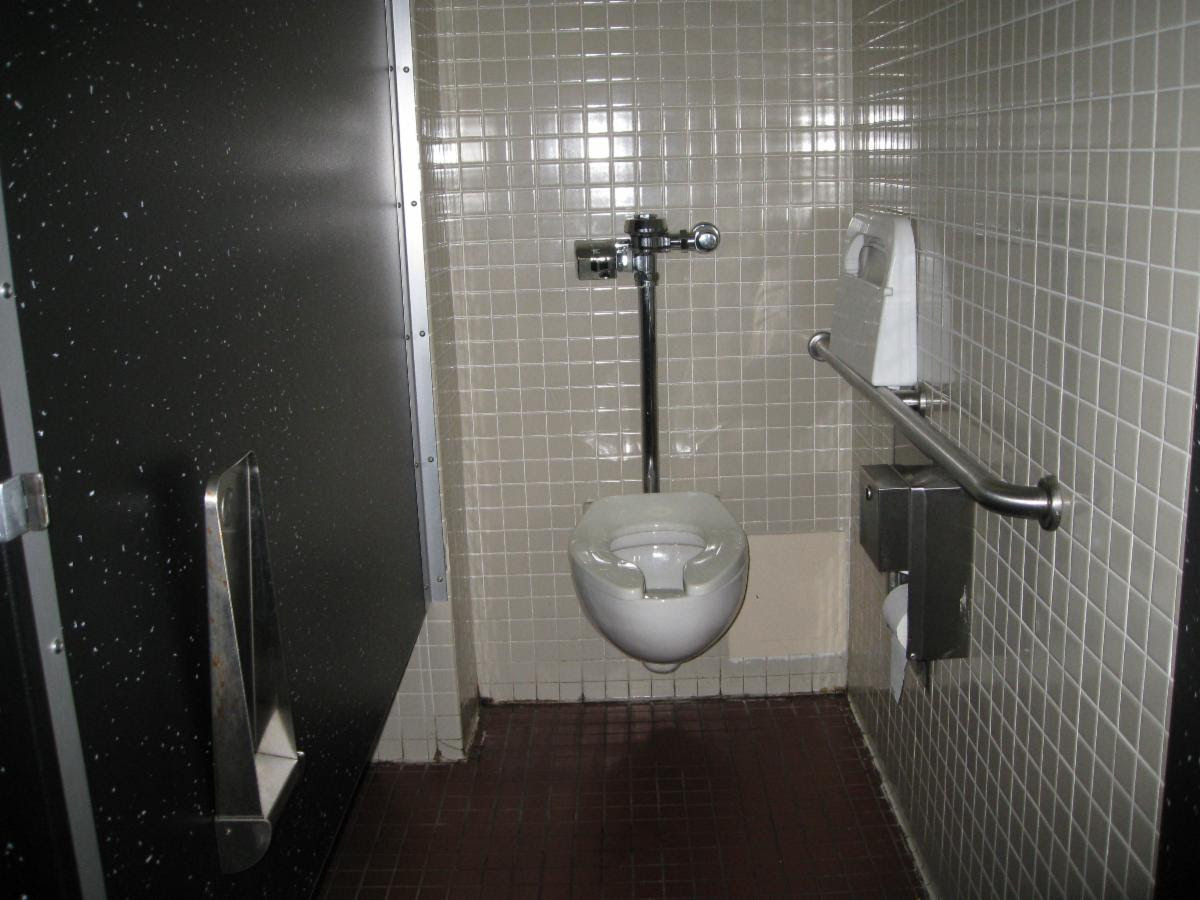
This one is a little more complicated. Just like with the lavatory, only the toilet would have to comply. But does that mean that it would also require compliant grab bars? What about compliant toilet paper dispenser? The answer is yes. Those are also elements that are part of the water closet.
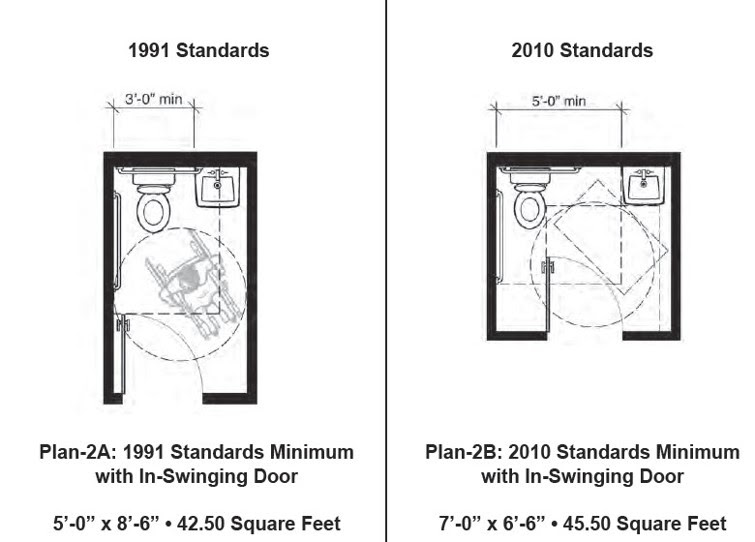
One gray area question is whether the clearance around the water closet part of the toilet? Would the clearance need to be 60″ wide? If the toilet room was built prior to 2012, then it is allowed to remain at 36″ clearance.
The image on the left is the 1991 ADAAG clearance at the toilet. The image on the right is the 2010 ADA Standards clearance at the toilet. If the toilet was built prior to 2012 (the year that the new standard became mandatory) then it is compliant.

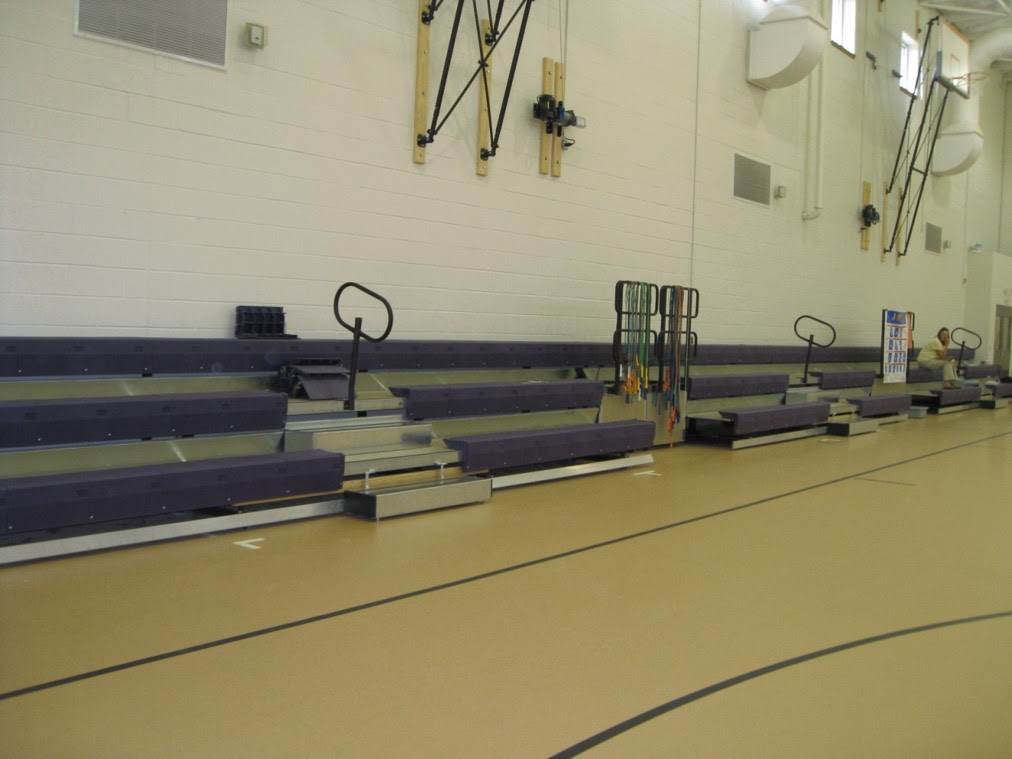
Case Study #4: What if new bleachers are installed in an existing gymnasium in the school?

  1. The gymnasium is a primary function
  2. The bleachers will have to comply
  3. The path of travel elements that serve the altered area must also comply

Case Study #5: What if we alter the floor at the gymnasium only?

  1. The gymnasium is a primary function
  2. The flooring must comply
  3. The path of travel elements that serve the altered area must also comply

Case Study #6

What if we paint the walls in the gymnasium only
  1. The gymnasium is a primary function
  2. Painting doesn’t affect the usability and therefore it is not an alteration
  • In Summary:

    •Existing buildings are not “grandfathered”. They must comply
    •Texas requires compliance at the time of construction
    •ADA requires compliance when it is readily achievable
    •Existing buildings that comply with 1991 ADAAG/1994 TAS are a safe harbor
    •Altered elements must comply
    •Altered elements in an area of primary function must comply, plus:
    •Accessible entrance
    •Accessible route
    •Accessible restrooms
    •Drinking fountains
    •Telephones
    •Parking

    Here is a presentation I did about the subject

Accessibility Experts and Architects Consider 30 Years of the ADA

Monday, August 3rd, 2020

The following is an excerpt from ArchitecturalRecord.com. Marcela Abadi Rhoads, owner of Abadi Accessibility is quoted in the article:

This month marks 30 years since President George H.W. Bush signed into law the Americans with Disabilities Act (ADA) on July 26, 1990. One of the most sweeping pieces of civil rights legislation in the country’s history, its guidelines and protections have changed the way we work, learn, and move through space. For architects and planners, it has meant a complete shift in thinking about accessibility and inclusive design. Now, on this landmark anniversary, experts weigh in on how far we have come and what a more equitable future might look like with the help of ADA.

Read the article in its entirety here.

ADA’s 30th Anniversary Edition

Thursday, July 2nd, 2020
ADA’s 30th Anniversary
30 years ago July 26th 1990 the Americans with Disabilities Act was passed into law. The ADA is a civil rights law that prohibits discrimination against individuals with disabilities in all areas of public life, including jobs, schools, transportation, and all public and private places that are open to the general public. The purpose of the law is to make sure that people with disabilities have the same rights and opportunities as everyone else. This momentous occasion gave a new freedom to persons with disabilities. The freedom to work, the freedom to participate in all aspects of our society and primarily the freedom to achieve maximum personal independence!
But even though the ADA has been around for 30 years, we still have so much more to learn. This newsletter will explain a few misunderstood regulations in the 2010 ADA Standards for Accessible Design and we will try and clarify them for you.
Also, since COVID-19 there are new ways that people in general are interacting with their environment and how this might affect persons with disabilities.
Parallel Parking
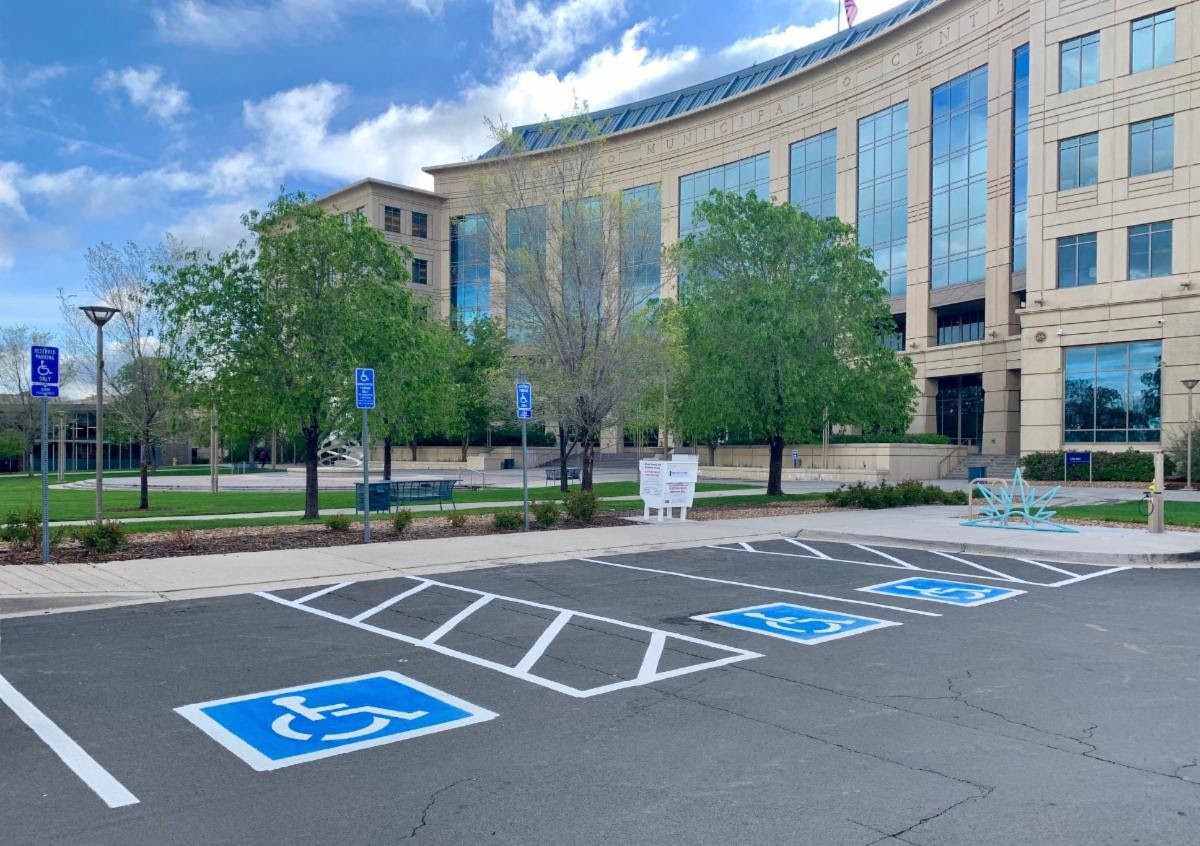
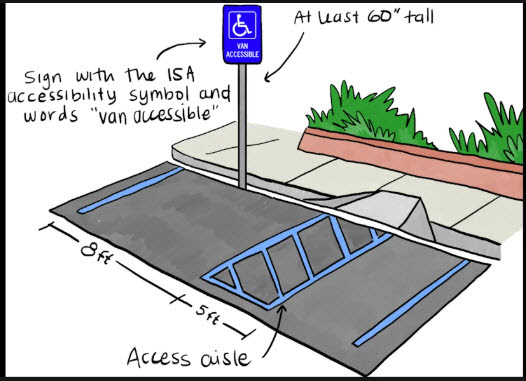
The ADA Standards do not specifically require that accessible spaces be perpendicular instead of parallel, but perpendicular parking spaces are preferred at facilities located on sites because most allow users to park facing in or out depending on the side that the access aisle is needed.
The parking spaces shown above are compliant per the ADA section 502.
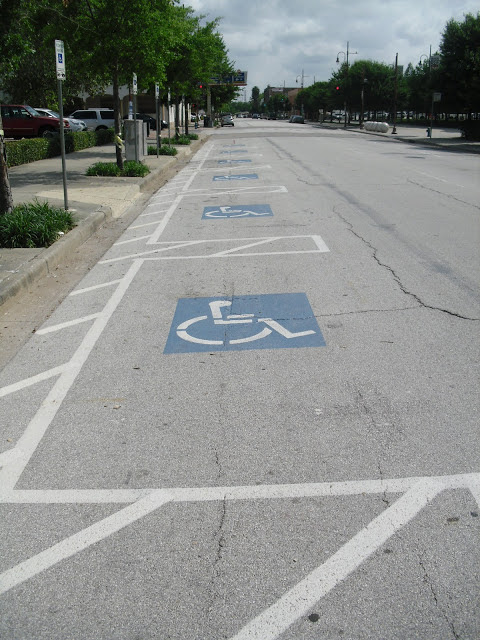
If accessible parking spaces at facilities located on sites (as opposed to those located along public streets) are parallel, they must fully comply with all applicable requirements, including those for access aisles and for van spaces.
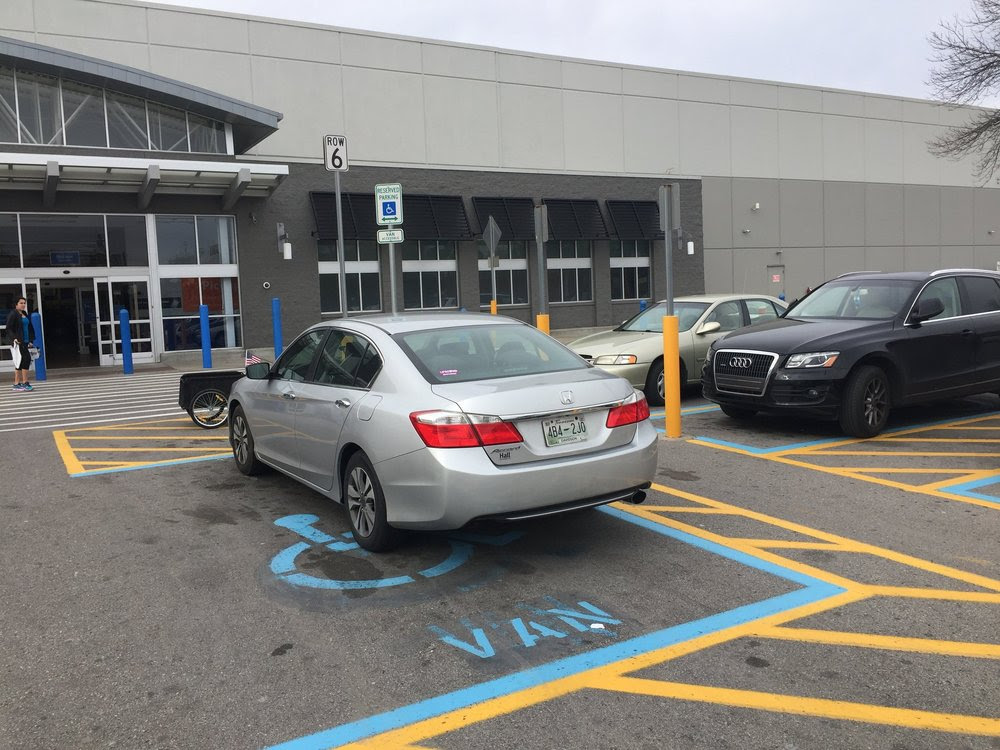
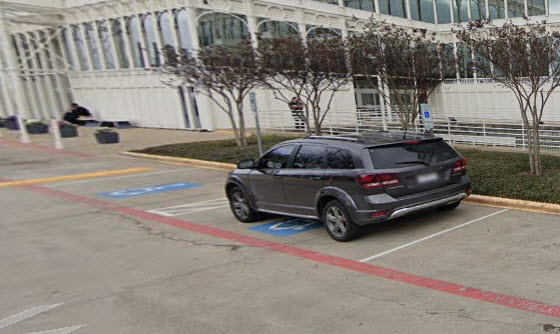
The images above are parallel parking that only has the access aisle in the front of the space rather than the side, so these are not compliant.
If the parallel parking is located in the public right of way, municipalities and the Department of Transportation have provided requirements. The US Access Board has written guidelines for Public Rights of Way (PROWAAG) that gives guidance on how to achieve accessible parallel parking, but this has not been adopted as law yet.
How COVID-19 protocols affect persons with disabilities
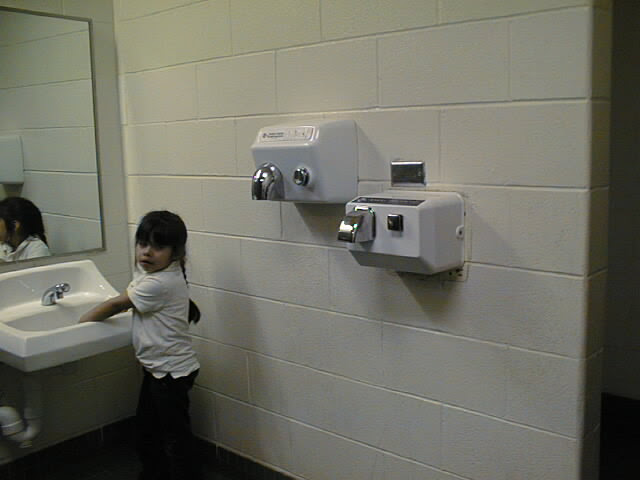
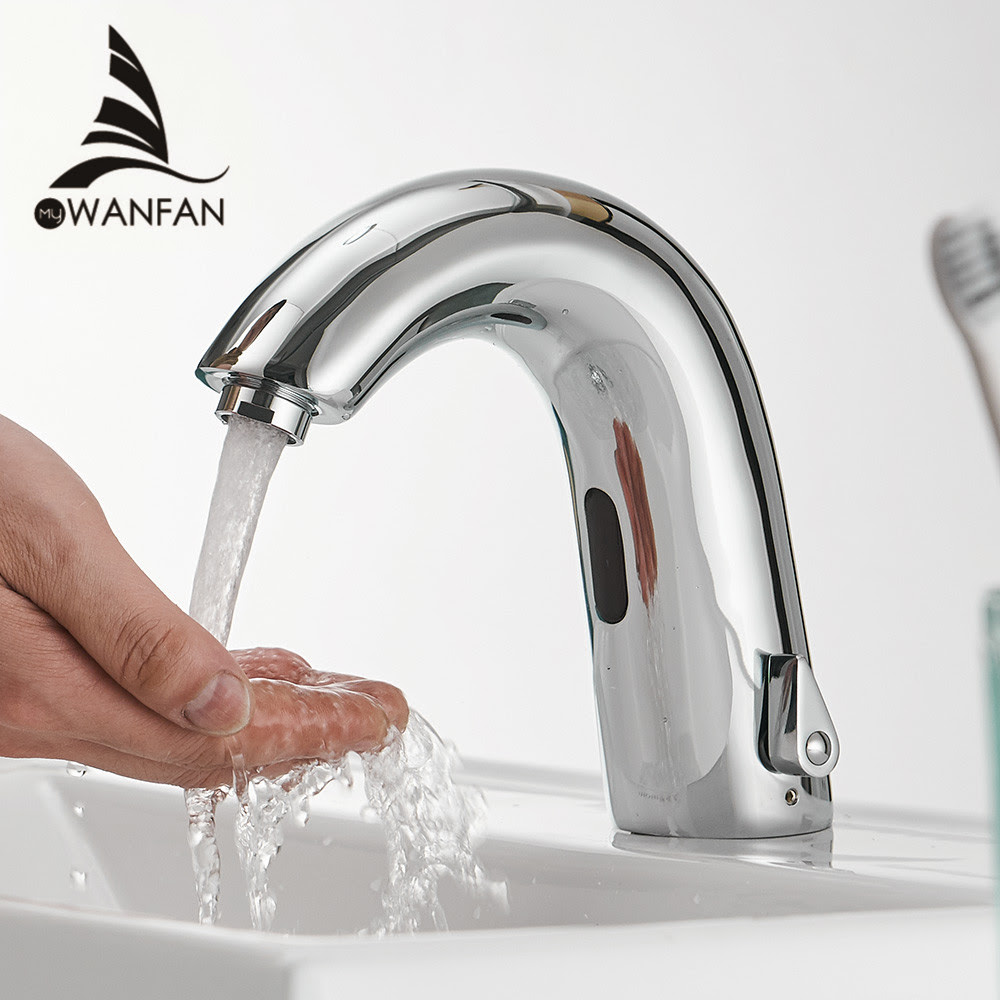
This new virus which some experts say spreads through touching surfaces, has made many people nervous to touch their environment. Public restrooms are locations where many surfaces could have the virus. So hands free operation have started to become more popular.
Hand dryers and automatic faucets are popular for hands free operation
The toilet accessories should be mounted so that they are within reach, are not protruding objects and will operate per the Standards require.
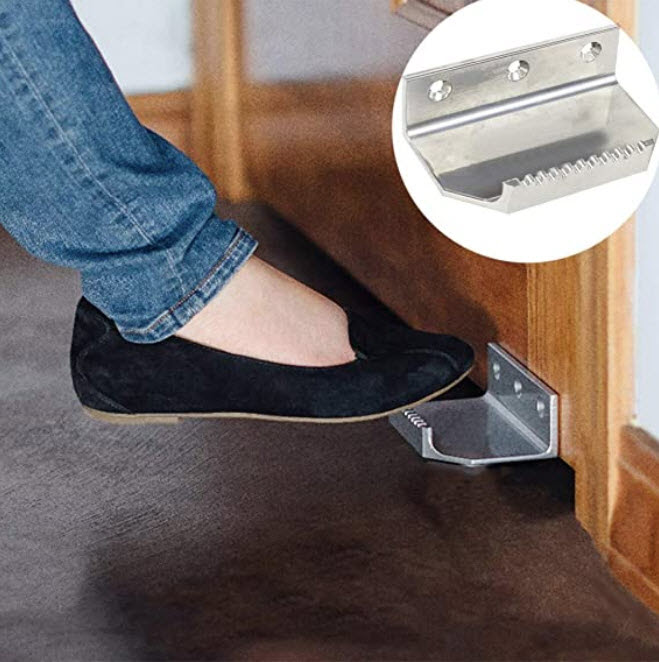
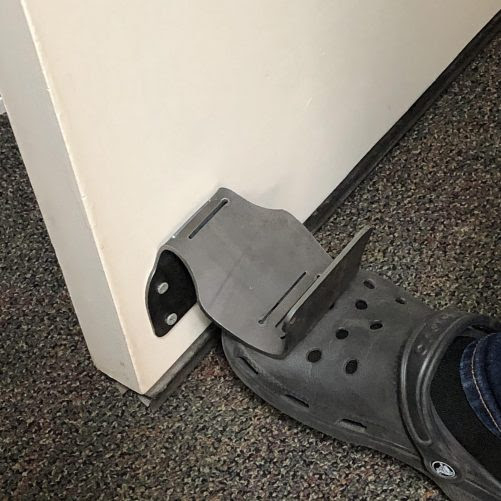
One accessory that is beginning to be used more and more are foot openers. These are attachments located at the bottom of the door which allows the door to be opened using your foot.
These are acceptable only on the pull side of the door. If they are located on the push side, they would violate the “Smooth Surface” rule
2010 ADA Standards 404.2.10 Door and Gate Surfaces. Swinging door and gate surfaces within 10 inches (255 mm) of the finish floor or ground measured vertically shall have a smooth surface on the push side extending the full width of the door or gate.
Staying safe during COVID-19 era should also take into consideration persons with disabilities.
Stay safe everyone!

Accessible Hotels: Common Mistakes

Friday, May 1st, 2020

Transient Lodging: Common Mistakes

Being all cooped up at home due to the Covid19, made me nostalgic for traveling and staying at hotels.  So I thought I would dedicate this newsletter to that topic!  After the ADA became a law, people with disabilities were able to also enjoy staying in hotels with friends and family.
As an accessibility specialist, I review and inspect many hotels for ADA compliance.  One of the most common mistakes that I see is that the corporation that owns the hotels has a “standard” that they want to adhere to.  This may be for the type of fixtures they install, or the aesthetic or certain amenities they provide.  Sometimes the “corporation” may not understand the ADA standards and they will select fixtures that are not compliant with the ADA.
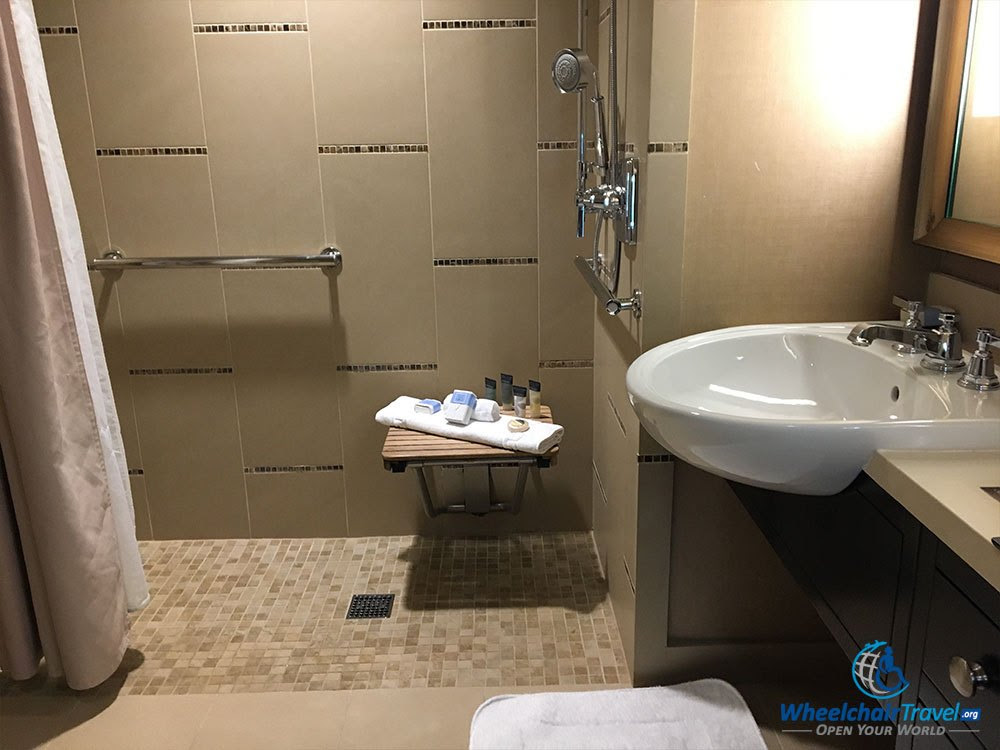
as I will explain in the next entry, the showers are not always designed correctly for ADA
Today I will focus on some of those “corporate standards” that I find during my inspections that are not compliant with the ADA or other accessibility standards.

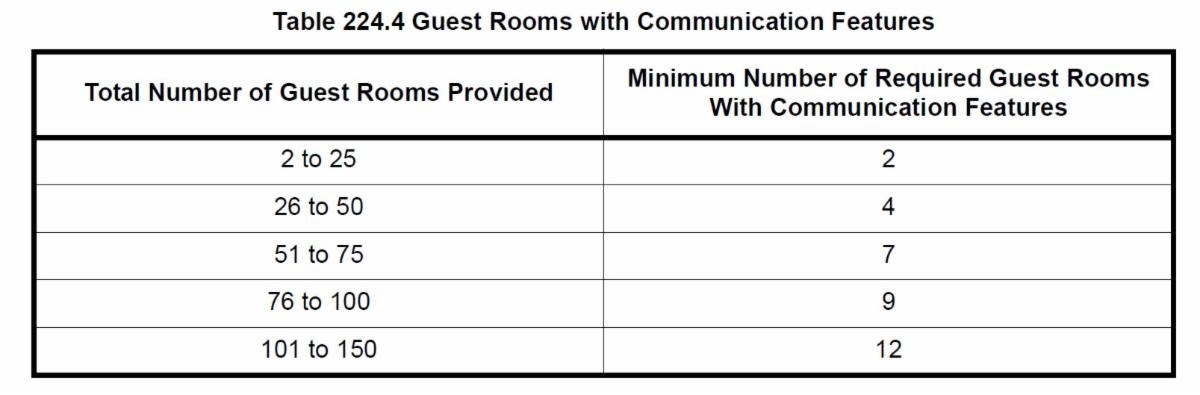
Minimun number of guest rooms with communication features

One of the common mistakes I see is the lack of understanding about guest rooms that must have communication features. These are rooms for people who are hearing impaired or sometimes for guest who are visually impaired.
The table below shows the amount of rooms that are required to be available with communication features:
 
#ADAFact:  At least one guest room (but no more than 10%)  is required to provide  both mobility features and communication features as described in the 2010 ADA
That means that you can’t have all your guest rooms with communication features in the mobility rooms.  But you are required to provide at least one of the rooms with both communication and mobility features.
In the 1991 ADAAG this was not required and some establishments made all the rooms with communication features the same as the rooms with mobility features.  Communication features must be available as soon as the guest arrives.  It is no longer allowed to have a device at the front desk for the guest’s to request.
The drawing above shows some examples of communication features


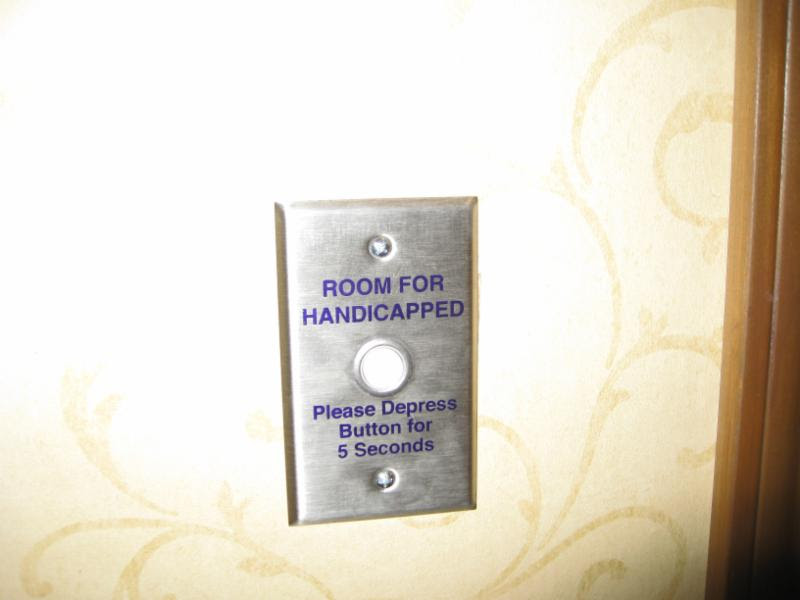
this is a hard wired notification device for the hearing impaired.
There typically is more communication rooms required than mobility rooms, and therefore some would be exclusively rooms with communication features.  Designers must be careful to make sure that they are providing 90% of the rooms with communication features without mobility features.

Hand Held Shower Units and Adjustable Rods

In guest rooms that are required to have mobility features, the bathrooms within the room must comply.  One of the common mistakes I see are hand held shower units.  The ADA requires that all accessible showers and tubs have hand held shower units.  The units must be located where  a person in a wheelchair or other mobility devices can reach it and use it.
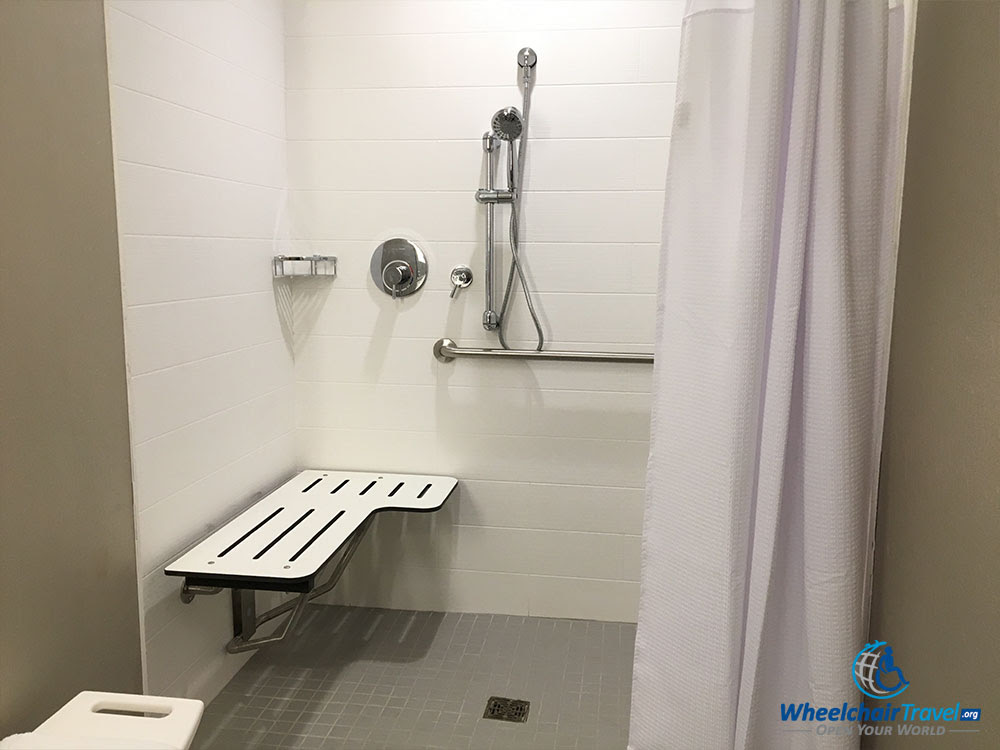
this is a roll in shower and the hand held unit and control are within 27_ from the seat wall
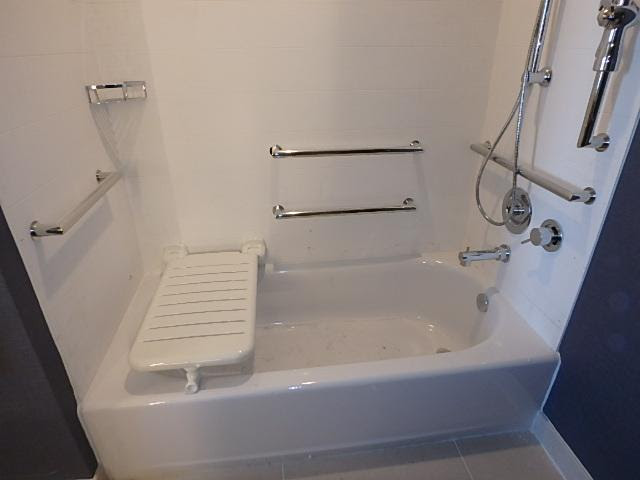
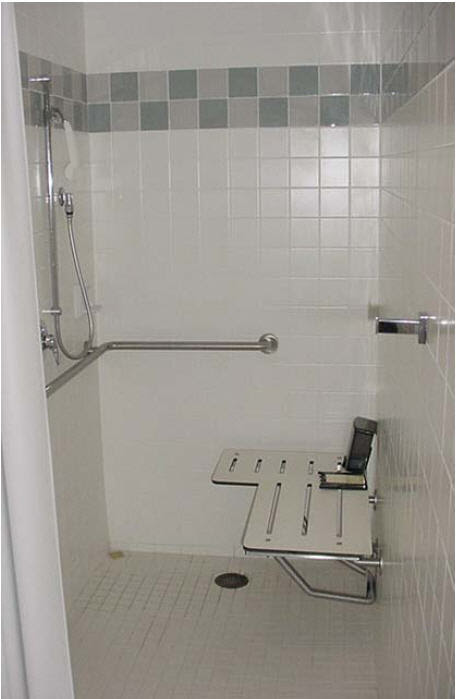
In a roll in shower it must be no farther than 27″ from the seat wall.  In a transfer shower it is located right in front of the seat and in a tub it is located at the control wall.
in the tub the hand held shower unit is at the control wall
this is a transfer shower and the hand held device is also at the control wall
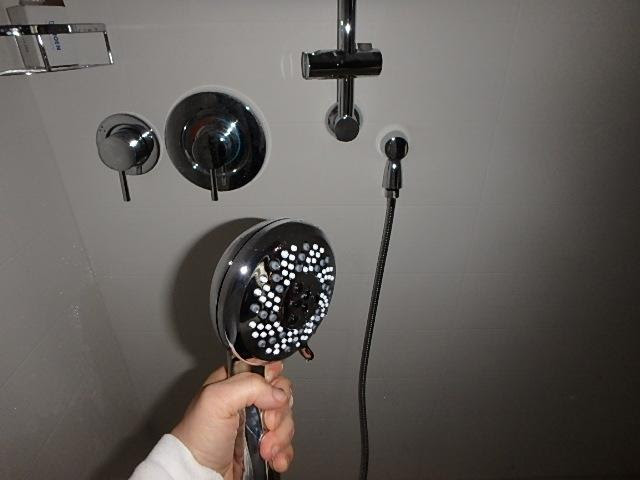
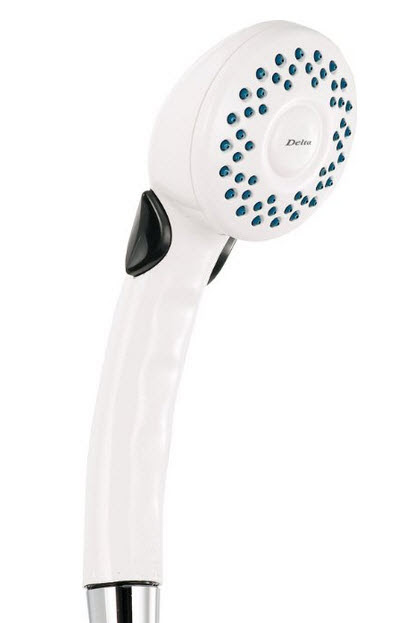
One thing that gets missed is the fact that the hand held shower unit MUST have an on/off control with a non-positive shut off directly on the unit.  Most of the ones I see installed, have different spray settings, but no on/off control.
this hand held unit only controls the spray but it does not turn off the shower unit when being held
This unit has the on/off controls on the unit
A non-positive shut off is also required.  What that means is that if a person who is using the shower unit needs to turn it off, the water will not be completely off but will trickle a bit.  This will prevent the pressure to be built up and will not over spray once it gets turned back on.

Wish you were here…..

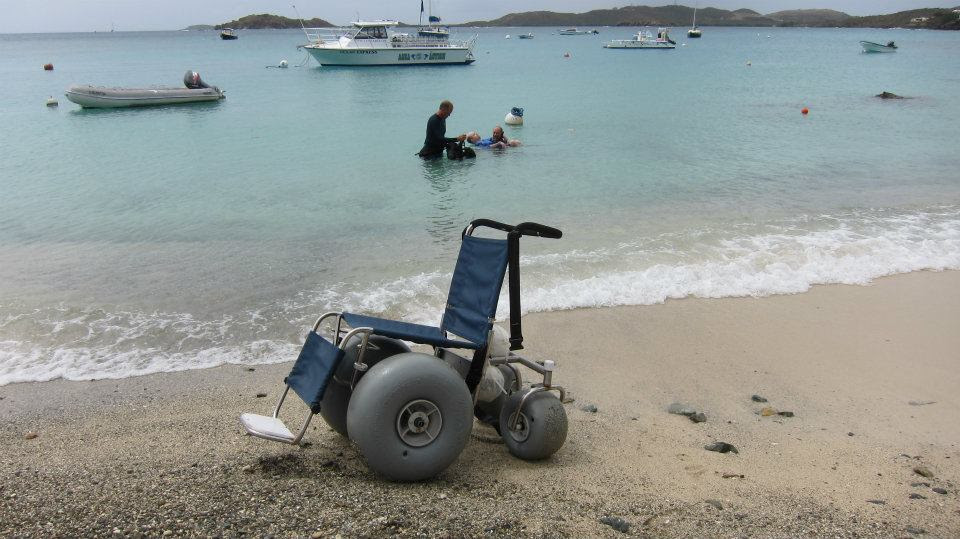
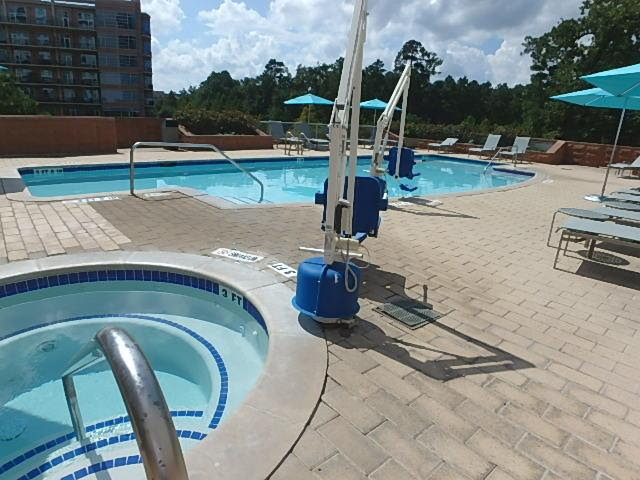
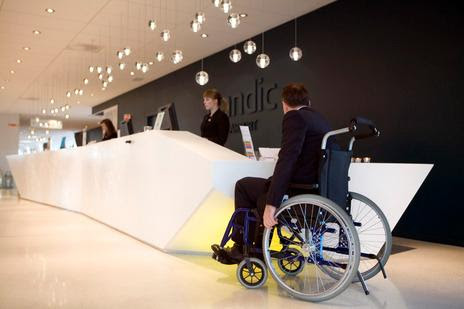
Pools, fitness rooms, guest laundry, saunas, golf or any other sports, lobby, restaurants, bars, reception desks all must be accessible.  I will devote another newsletter for those specifically….but for now, enjoy the nice images and imagine you are all there!  Stay safe!

Some Resources I used for this Newsletter:

I found this very interesting website for people with disabilities who travel.   The Wheelchair Travel: The Good and Bad of ADA Hotel Bathrooms

April 2020: Inspector’s Corner

Wednesday, April 1st, 2020


I haven’t shared in a while some errors that I find during my inspections.  This newsletter will highlight a few that I thought would be helpful for you to see.
Objects within the clear floor space of the Water closet
 
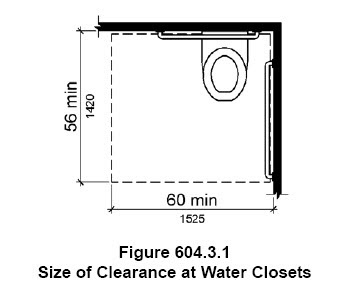
One of the gray areas of the Standards is the rule that a clear floor space of 60″x56″ min. at the water closet is required, and that it must be “clear” of certain objects.
604.3.1 Size. Clearance around a water closet shall be 60 inches (1525 mm) minimum measured perpendicular from the side wall and 56 inches (1420 mm) minimum measured perpendicular from the rear wall.
 
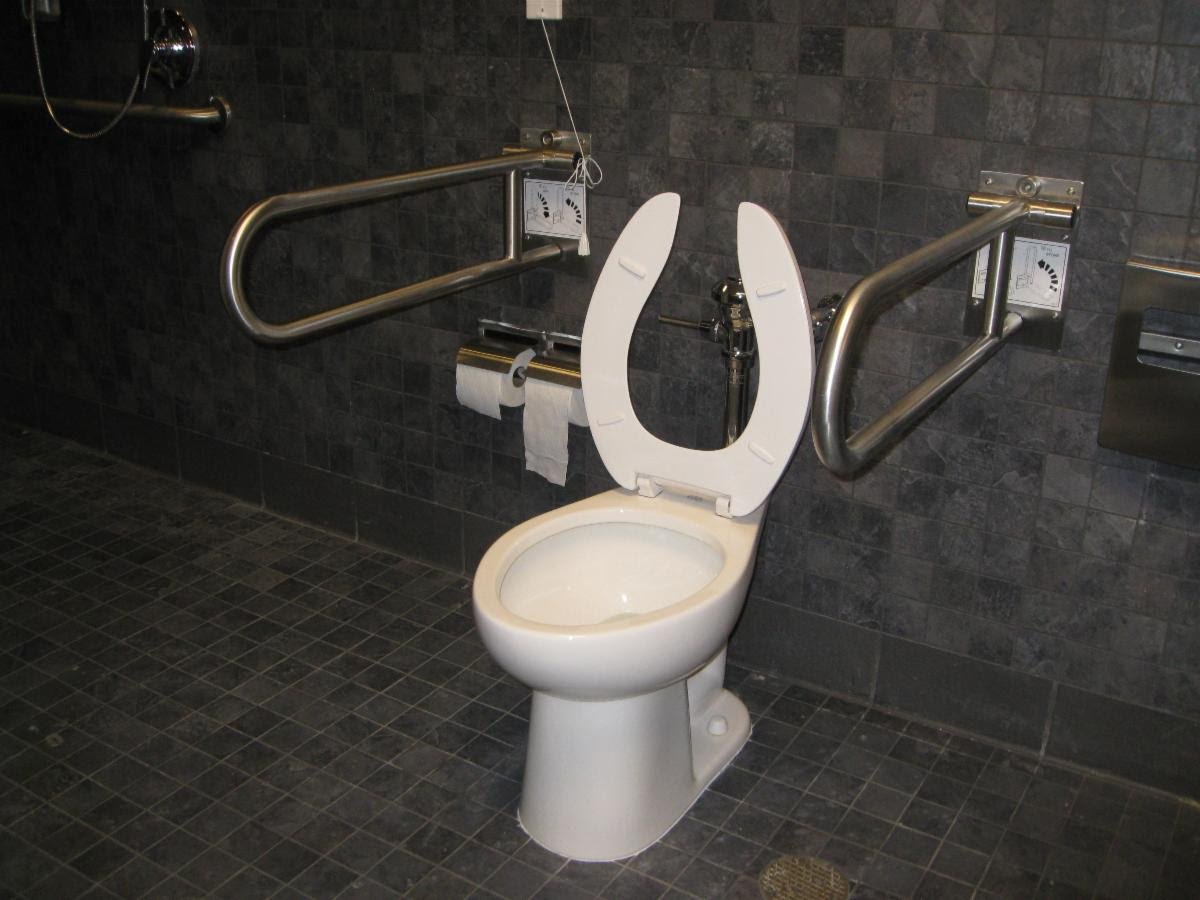
Paragraph 604.3.2 it gives you a list of the objects and elements that ARE allowed to overlap the clear floor space.  I have highlighted the word “dispensers” because there is a difference of opinion on whether it means “associated” dispensers or any dispenser.  TDLR has decided that the word dispensers are the ones associated with the toilet.  So in essence only the toilet paper dispenser would be allowed to overalp.  Here is the Technical Memo that explains their position
604.3.2 Overlap. The required clearance around the water closet shall be permitted to overlap the water closet, associated grab bars, dispensers, sanitary napkin disposal units, coat hooks, shelves, accessible routes, clear floor space and clearances required at other fixtures, and the turning space. No other fixtures or obstructions shall be located within the required water closet clearance.
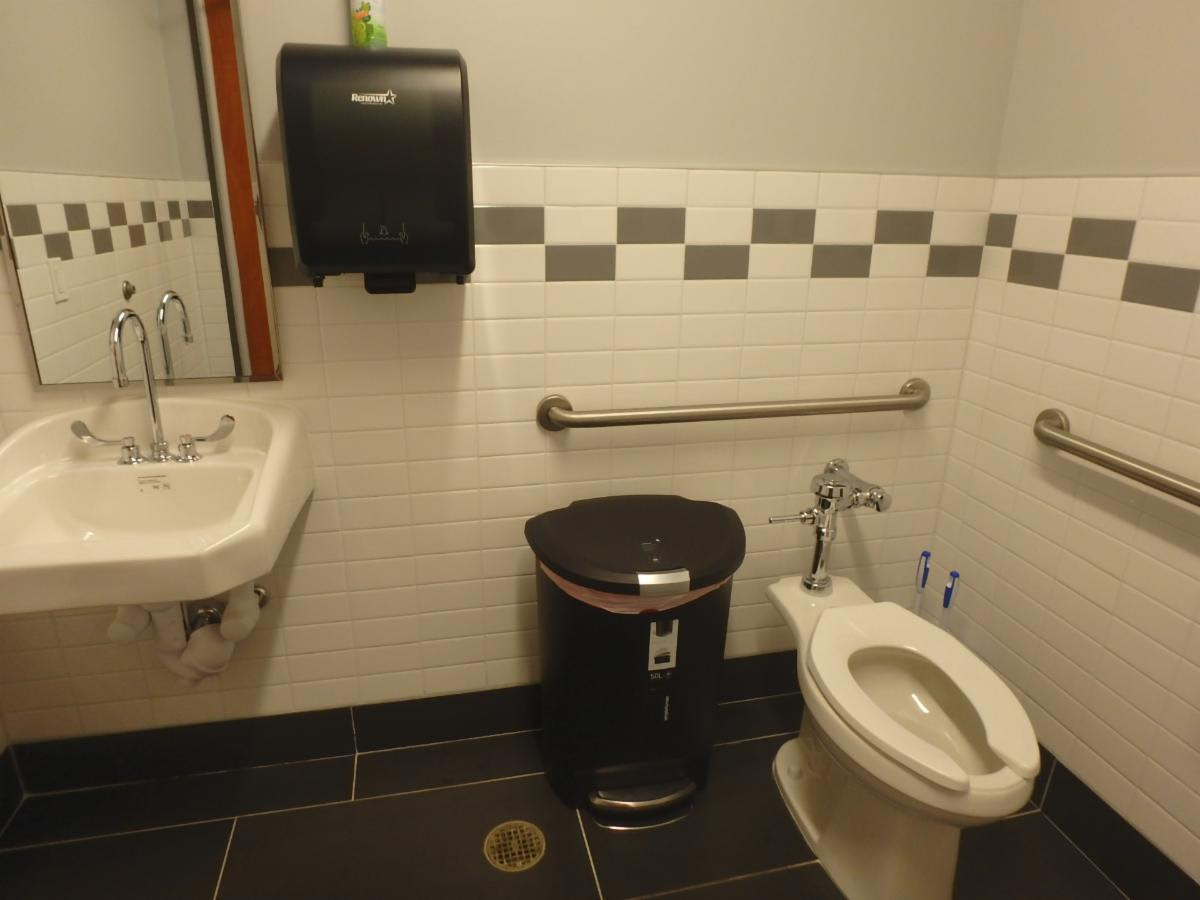
This interpretation becomes problematic in tight spaces like single user restrooms where there is not enough wall spaces to locate a paper towel dispenser. Especially if we want to locate it close to the lavatory.  The photograph below shows a typical single user restroom that has the paper towel dispenser overlapping the clear floor space of the toilet.
Low reach ranges
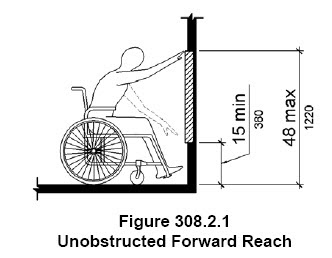
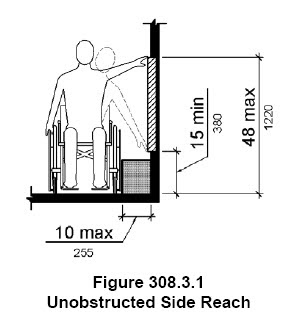
Most of us keep in mind the high reach ranges of 48″ a.f.f. maximum that the ADA requires.  But many of us forget that the guidelines are also for low reaching.
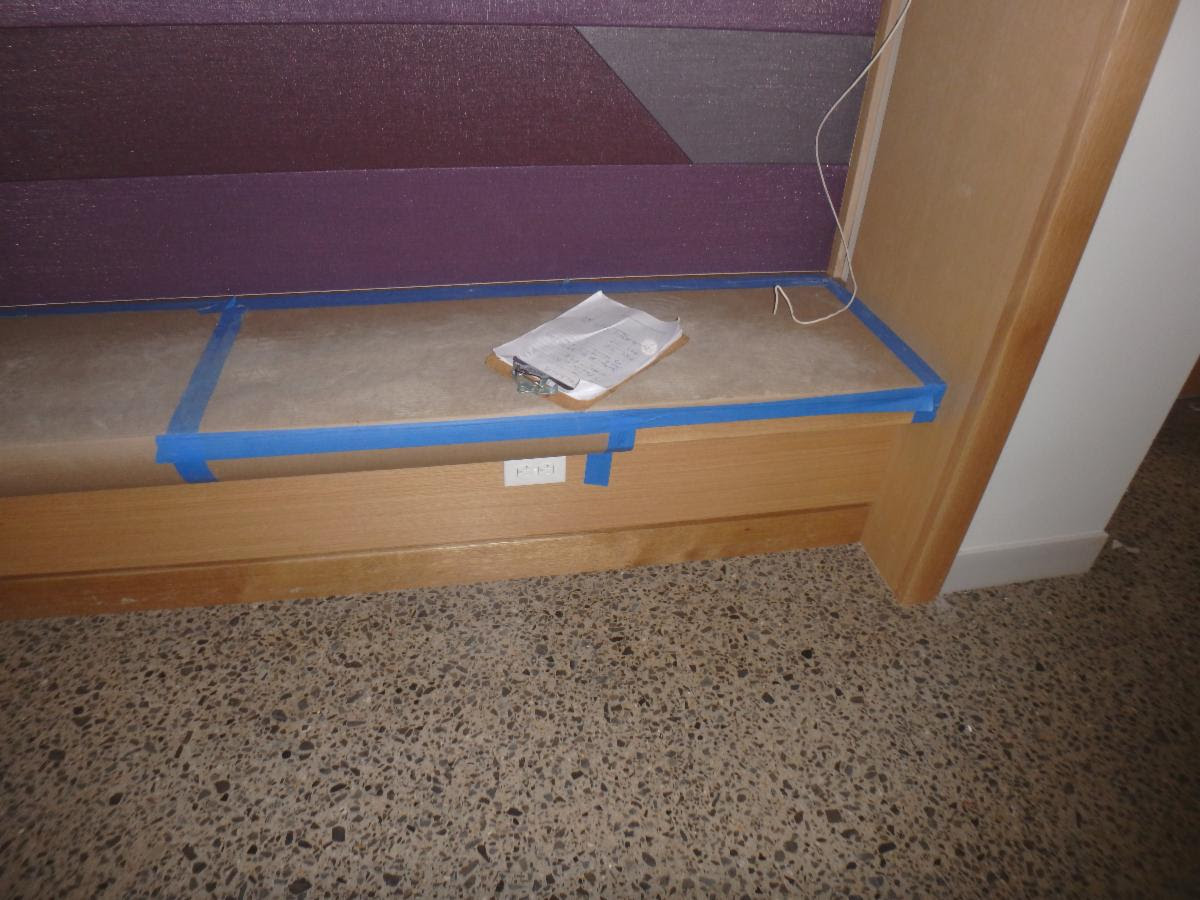
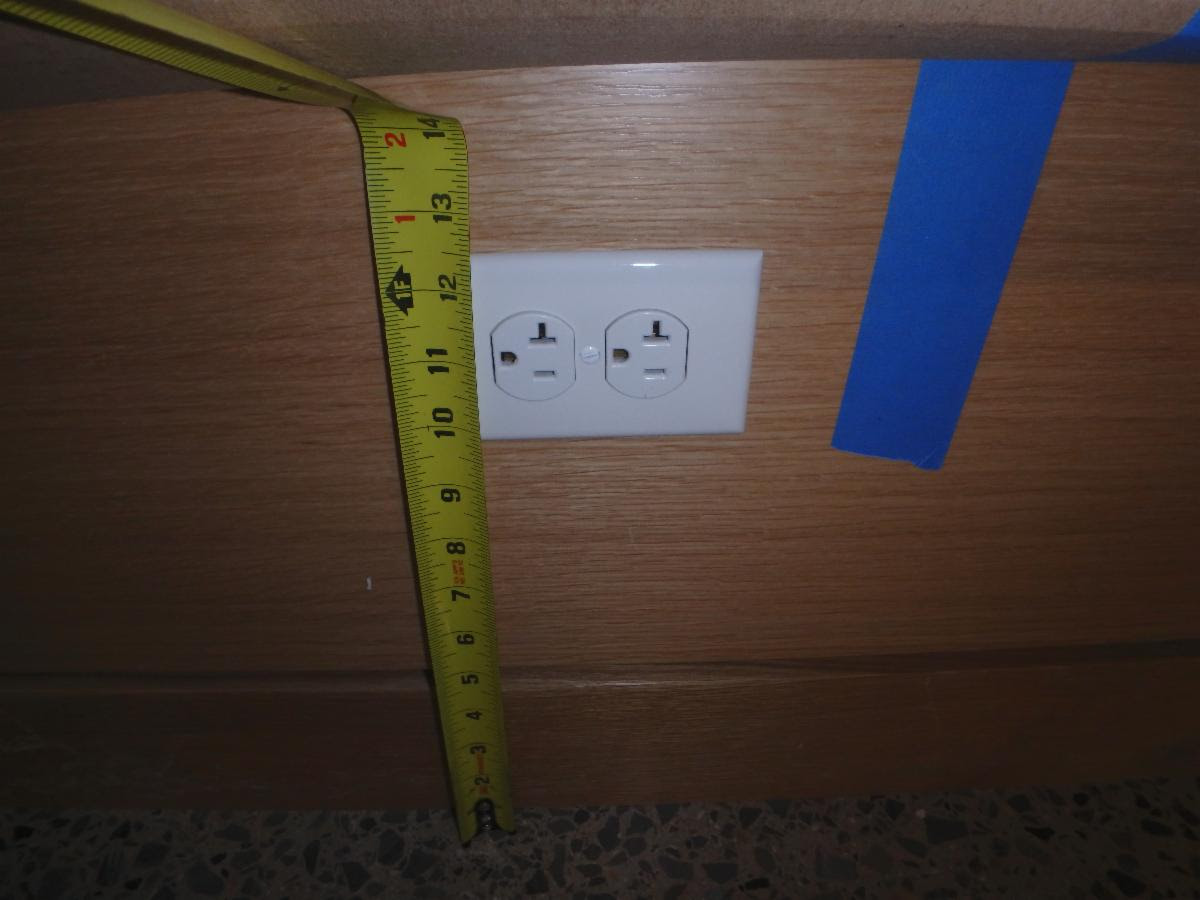
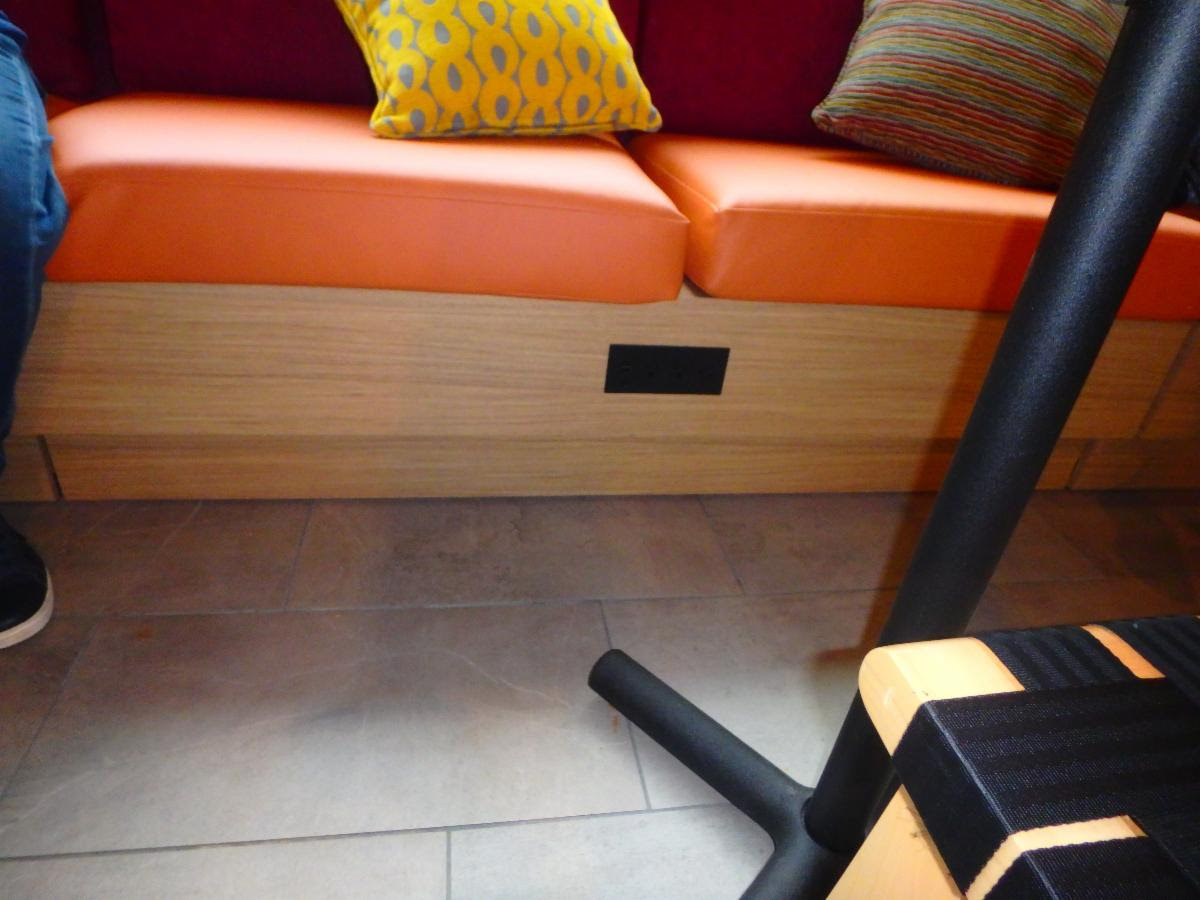
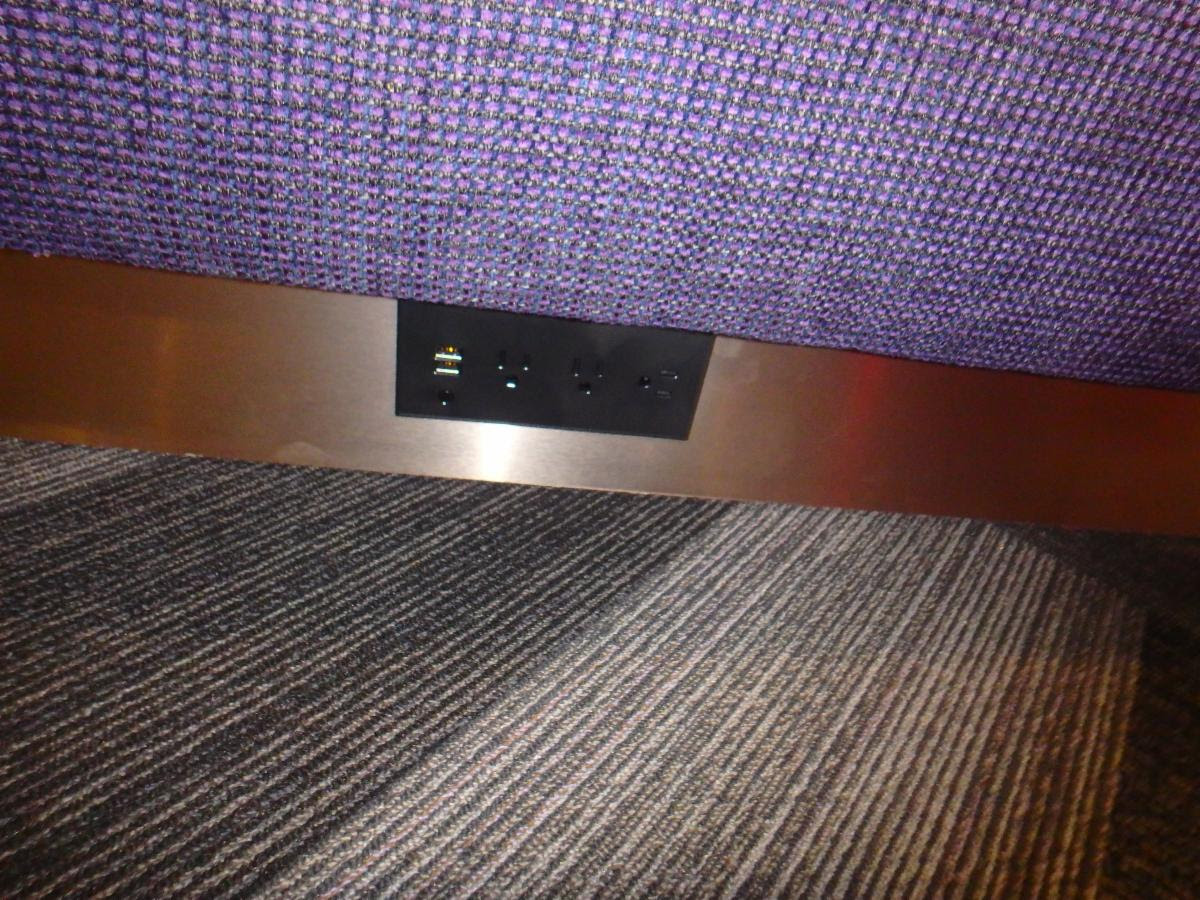
For a person in wheelchairs the lowest they can reach is 15″ a.f.f.  .    New designs in universities and hotels and even restaurants, the facilities are providing “charging” stations in the fixed seating and table areas.  But many of them are located lower than 15″ a.f.f.
this is a bench at a university corridor that provides outlets for charging
the outlet is 11″ a.f.f.
this seat is located at a hotel lobby. Outlet is also less than 15 inches a.f.f.
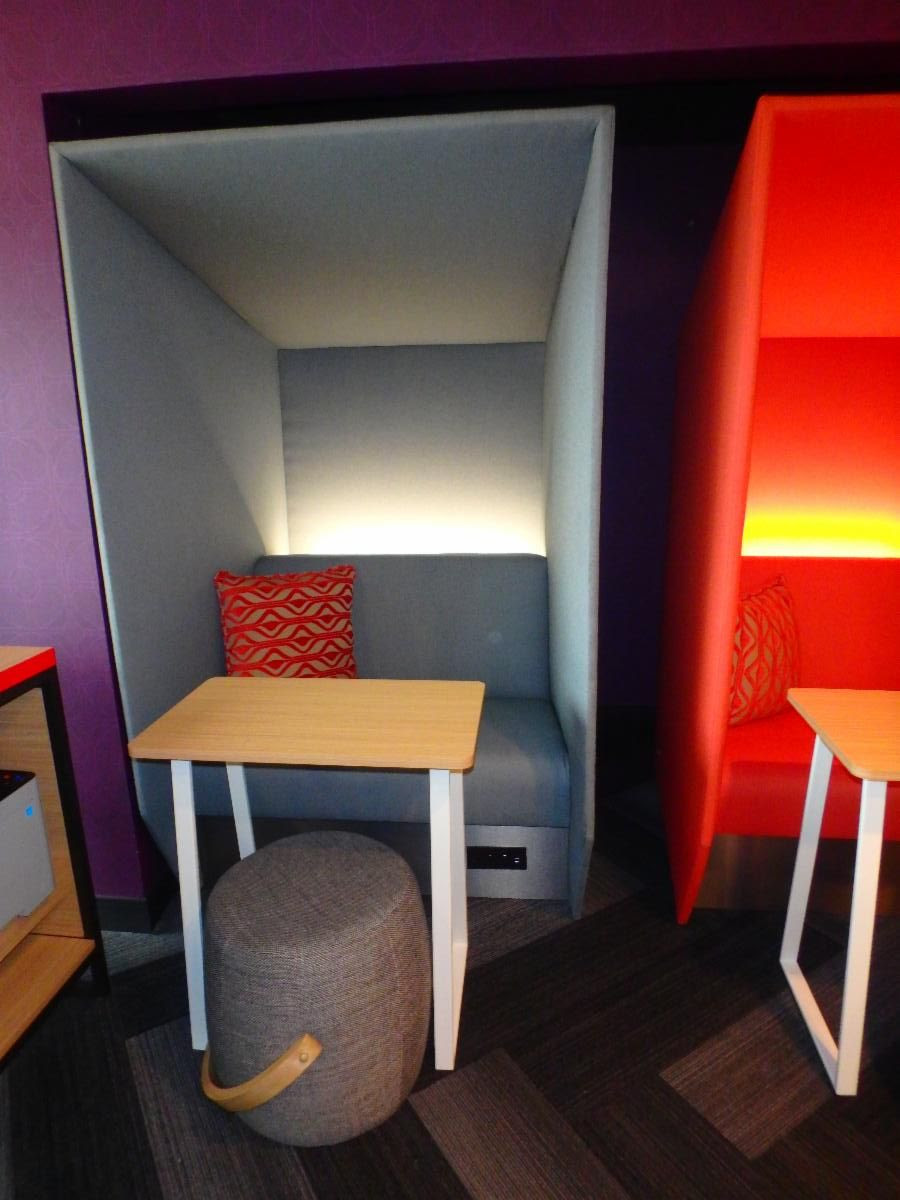
this is a cubby at a hotel lobby with a charging outlet lower than 15 inches a.f.f.
low outlet
Showers at Fair Housing units
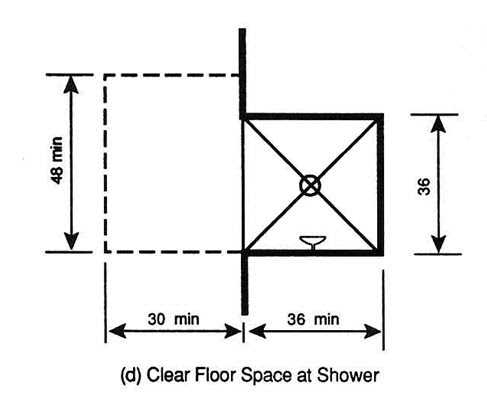
The ADA allows a roll in shower to be 30″x60″ in size.  But fair housing is a little different.  They require a minimum of 36″ x 36″ to be provided at showers if the shower is the only bathing facility in the unit.
Page 7.58 Fair Housing Design Manual states:
Shower as Only Bathing Fixture
In both Specification A and B bathrooms, when a stall shower is the only bathing fixture in the covered dwelling unit it must be at least 36 inches x 36 inches in size.
 

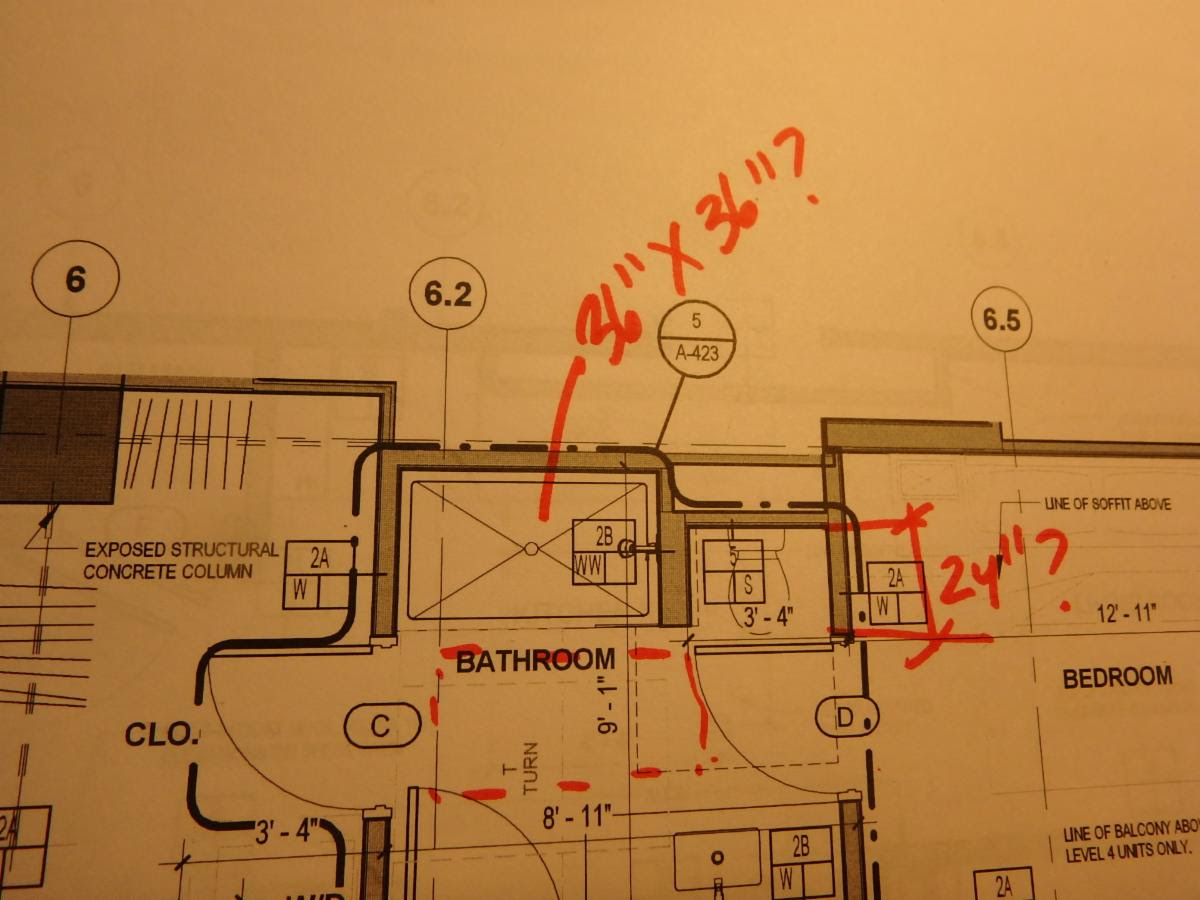
This is overlooked because we are so used to the ADA letting us have a smaller depth.  So I have found that in residential dwelling units of multi-family housing projects of Independent Living facilities, they miss that requirement if the shower is the only fixture in the unit.

plan of reviewed drawings showing no dimensions at the shower
shower at the unit
less than 36 inches at the shower
Need CEUs

Due to Covid-19 our face to face classes have been suspended for a while, but there are still  online courses you can take.  For those and  other resources on the ADA, TAS and other Accessibility issues, visit our website Resource Page

You can also invite us to give virtual classes.  We are here to help!
Stay Safe and Stay Healthy!

Variances

Tuesday, March 3rd, 2020
In a perfect world all architectural barriers that prevent persons with disabilities to access and use facilities would be eliminated.
But we live in an imperfect world where buildings were not designed for accessibility prior to the guidelines being published.  Buildings were built in existing sites that had constraints that may not allow easy access.  Or maybe mistakes were made during construction which prevents access.
When buildings and facilities cannot easily be made accessible there are avenues that a building owner can use to postpone the corrections or to get permissions from an AHJ (Authority having jurisdiction) to no have to remove the barrier per the standards but possibly find a different solution.  This is sometimes achieved through a “variance” process.
This newsletter will speak about the process in Texas on variances.  It could apply also to the ADA, although the DOJ does not grant variances.  They expect compliance when it is “readily achievable”.

When is a variance allowed?

 
Existing buildings that were built before 1991 which is when the ADA Standards were first published, typically are not accessible.  In order to make them compliant with the current standards it might take some structural changes which may not be easily achieved or it may be cost prohibitive.  The ADA was passed so that persons with disabilities could be included in our society.  It was not meant to make building owners to go bankrupt trying to do make them accessible.  The ADA Standards and other State guidelines have mechanisms in place that allow building owners to request that a standard be waived in certain circumstances.
In the Standards there are some prerequisites that if present could be used to make the case to an AHJ that the standard could not be followed:
Disproportionality.
Alterations made to provide an accessible path of travel to the altered area will be deemed disproportionate to the overall alteration when the cost exceeds 20% of the cost of the alteration to the primary function area.
all elements shown by a yellow line must be accessible. If they are not and bringing them up to compliance costs more than 20_ of the total cost of construction then it could be considered disproportionate


Technically Infeasible

With respect to an alteration of a building or a facility, something that has little likelihood of being accomplished because existing structural conditions would require removing or altering a load-bearing member that is an essential part of the structural frame; or because other existing physical or site constraints prohibit modification or addition of elements, spaces, or features that are in full and strict compliance with the minimum requirements.

 
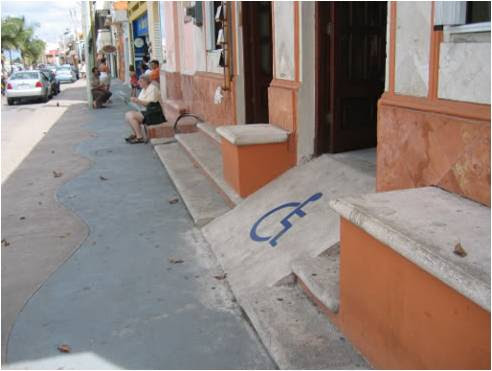
Making this historic building entry accessible is an example of technical infeasibility

Exception for structural impracticability.

(i) Full compliance with the requirements of this section is not required where a public entity can demonstrate that it is structurally impracticable to meet the requirements. Full compliance will be considered structurally impracticable only in those rare circumstances when the unique characteristics of terrain prevent the incorporation of accessibility features.
Making the sidewalks accessible when they are next to this street would be structurally impracticable

Technically Infeasible

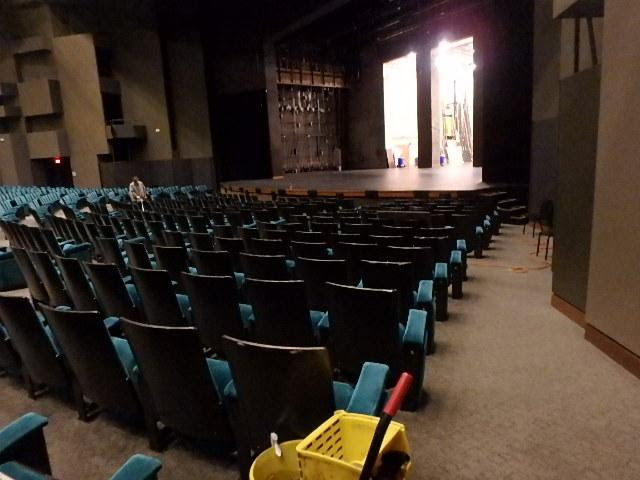
One of my review projects was of a high school that was built in 1955.  It had an auditorium with stadium seating where they were going to install a control booth within the seats.  That alteration would then require that the entire seating area be brought up to 2010 ADA compliance, including vertical an horizontal dispersion.  In order to make it happen, the foundation would have to be altered as well.
the school auditorium
A variance was requested due to technical infeasibility.  The AHJ did grant them a variance to postpone making the seats accessible.
An old building had small gang toilet rooms where they were not able to make a larger accessible toilet compartment due to the plumbing code requirements.  The building owner asked for  a variance to add a single user restroom in lieu of updating the existing multi-user restroom.  The variance was granted with the idea that when it was readily achievable they would bring the existing restroom up to compliance.
the existing multi-user restroom could not be brought up to compliance with the 2010 ADA

When the ADA Standards conflict with other codes

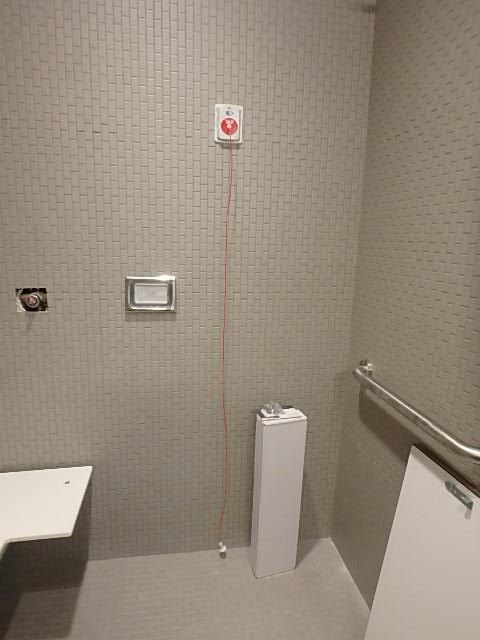
In new construction there are times when the ADA conflicts with other codes and standards.  One of those examples is in a hospital which requires the installation of an emergency call pull chord close to the floor.  This requirement comes from the DSHS Standard Title 25, Chapter 133(L)(ii) which requires that the chord be positions within 6″ from the floor.  This is not compliant with the reach range requirements of the ADA which requires a 15″ a.f.f. min. for reaching.
The emergency pull was lower than 15″ a.f.f. that is required by the ADA
The building owner requested a variance based on the fact that both standards could not be met at the same time.  They got the variance.
My last example is also at a hospital.  The DSHS Title 25 Chapter 33 require an assisted bathing room.  This bathing room does not meet the ADA requirements for an accessible restroom.  It would be technically infeasible to meet both standards.  A variance was granted.
assisted bathing room
In Texas, TDLR allows the building owner to apply for a variance using the attached form.  It may not take too long, but be prepared for a month or two before you receive a ruling.  You may also appeal their ruling if you think you may not have provided enough information.
TDLR will most of the time provide a “postponement” rather than an approval (although it is a technically an approval).  This is because they would like for the barrier to be removed and therefore leave it open ended so that when it is readily achievable then it can get it corrected.

Circulation Paths

Monday, February 3rd, 2020

There are a few of requirements in the 2010 ADA Standards that speak about  ways that people get around.  Some are described as either  “circulation path”,  “path of travel”,  “accessible route” or “vehicular path”.  Those all speak about either a car, wheelchair or pedestrian means of getting different places.  In my experience, there is a misunderstanding about the difference between “circulation path” and “path of travel” and “accessible route”.

Path of Travel and Accessible route are mainly describing the “unobstructed” path that a wheelchair user would take.

But a circulation path is speaking about a path where any pedestrian would use to get around.  As it pertains to Americans with disabilities, this term is used for persons who are visually impaired, but are still able to walk.
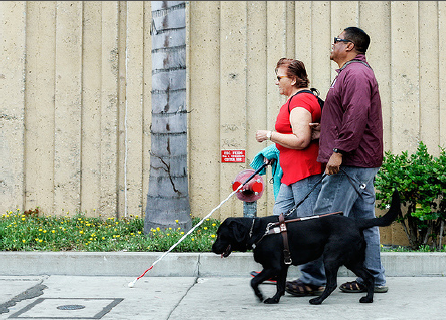

The idea is that a person who cannot see very well cannot detect certain hazards along the path that he will take to find his way around (i.e. the circulation path).  This newsletter will discuss this concept and will give examples of some “circulation paths”

Protruding Objects

When a person who is visually impaired is walking to find their way, that is a description of his or her “circulation path”.  Since they cannot see, we are required to make sure there are no hazards along their path.  Those hazards are any objects located along the circulation path that are mounted higher than 27″ a.f.f. or lower than 80″ a.f.f. and projects more than 4″ onto the path.
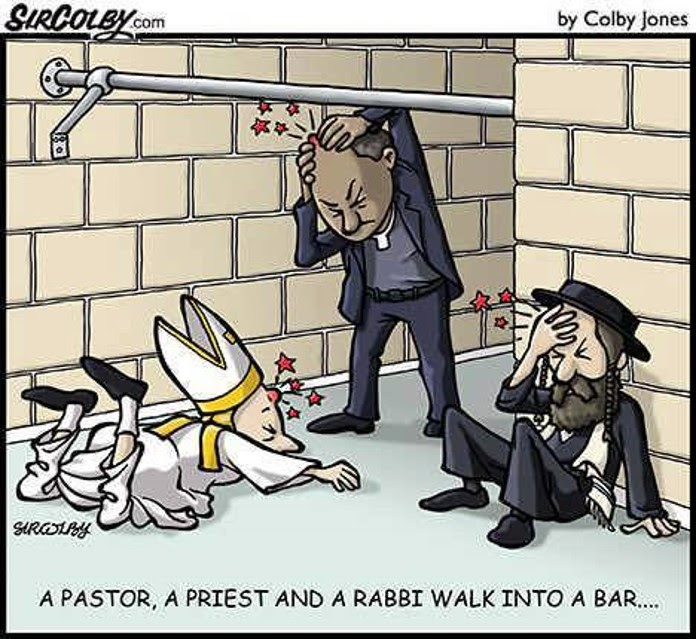
….because the bar is a protruding object

A protruding object, cannot be detected by a cane which is one of the ways that a person who is visually impaired finds their way. Here is a video by the US Access Board that explains this topic.

Circulation Path

What becomes confusing for people is the other terms in the standard.  What is a circulation path?  What is an accessible route?  What is a path of travel?  A circulation path is different than an accessible route.  An accessible route is solely for people in wheelchairs.  It must be a certain width and should be located so that people in wheelchairs can use it without much effort.

A circulation path, on the other hand,  can be used by anyone.  It describes the path that a person who can walk will be taking.  And that can really be anywhere that leads you from one place to another.  Below are some examples:

The obvious circulation path is a corridor.  That is what most people think of when they see the words “circulation path”.  Along a corridor, make sure the sconces are not mounted lower than 80″ a.f.f. if they are deeper than 4″.

A corridor is a circulation path.

A circulation path can be anywhere where people are walking.  So from one side of the bar shown below to the other side is a circulation path and the counter should not project more than 4″ onto it.
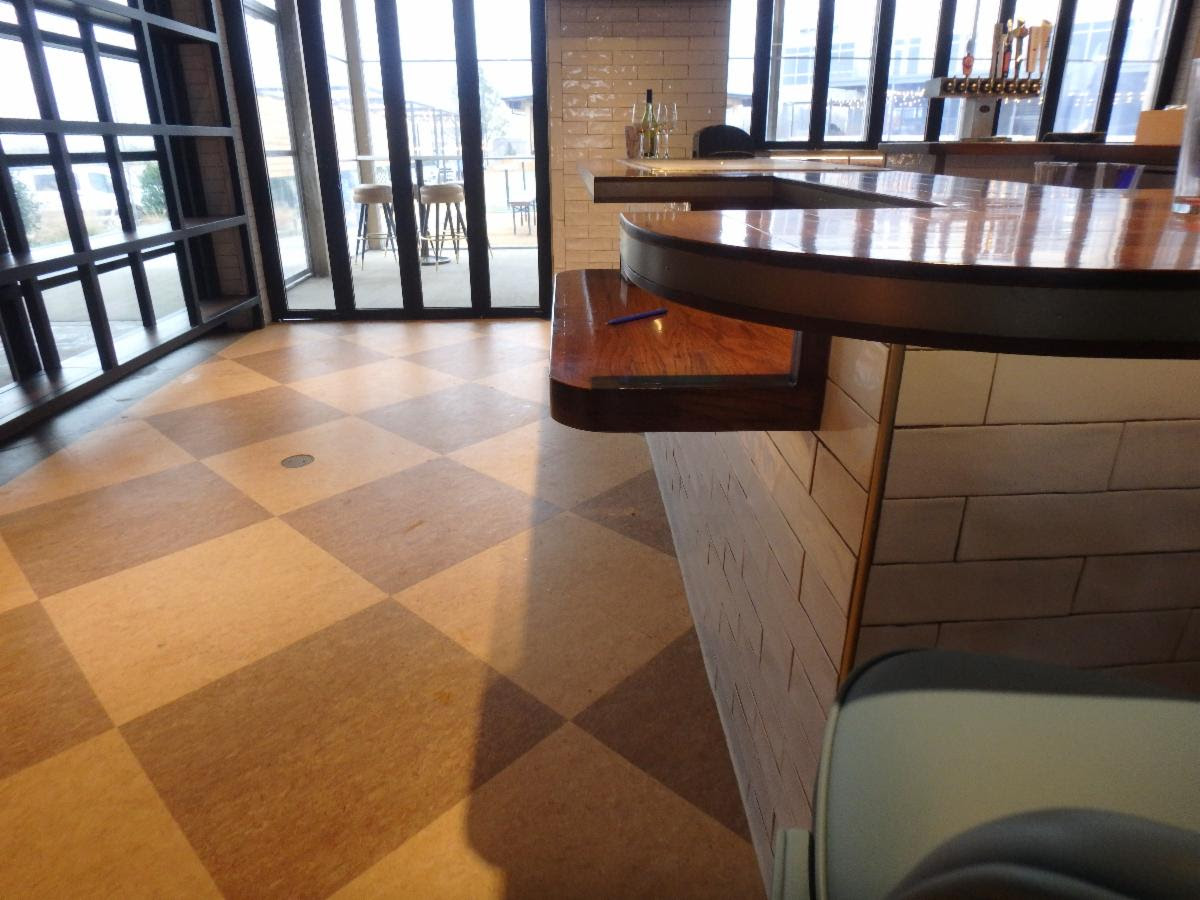
The bar top projects more than 4″ onto the circulation path between one side of the bar to the other.

The path to the restroom door is a circulation path.  The paper towel dispenser is mounted along that path and it is deeper than 4″, therefore it is a protruding object.
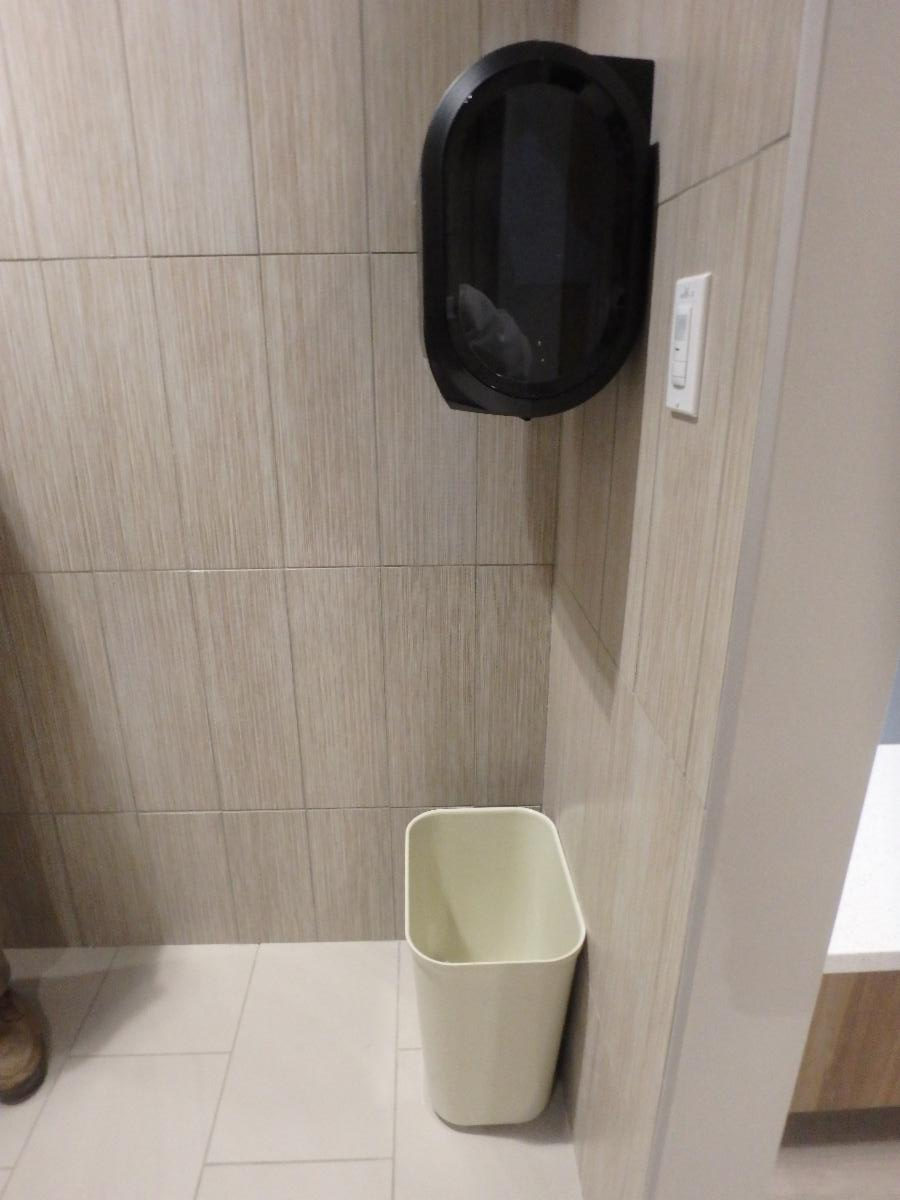
The paper towel dispenser in the restroom is located along the circulation path.

The circulation path to the desk has a display cabinet that projects more than 4″ onto it.
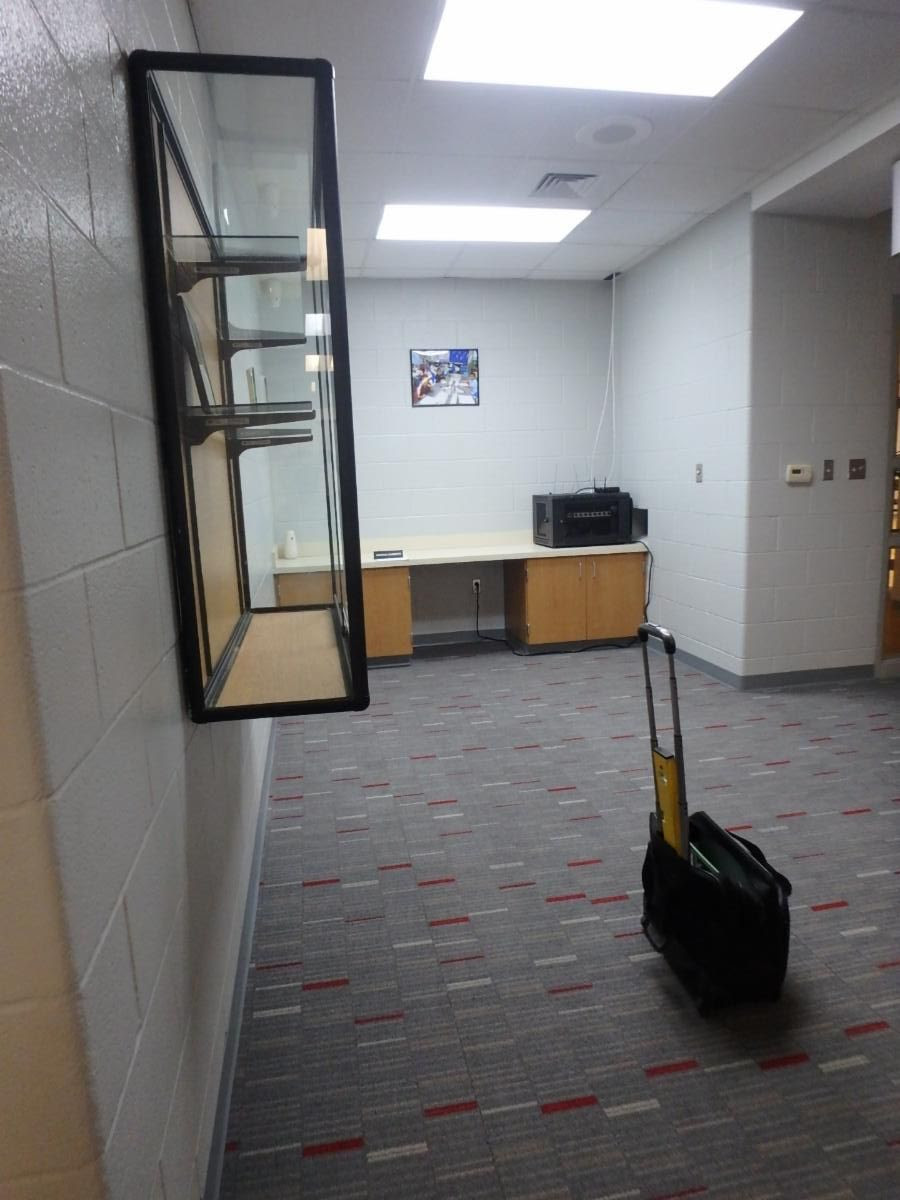
The display case is located in the circulation path to the desk.

The path to the restroom door is considered the circulation path. The drinking fountain is located on the circulation path of that door and it is a protruding object.
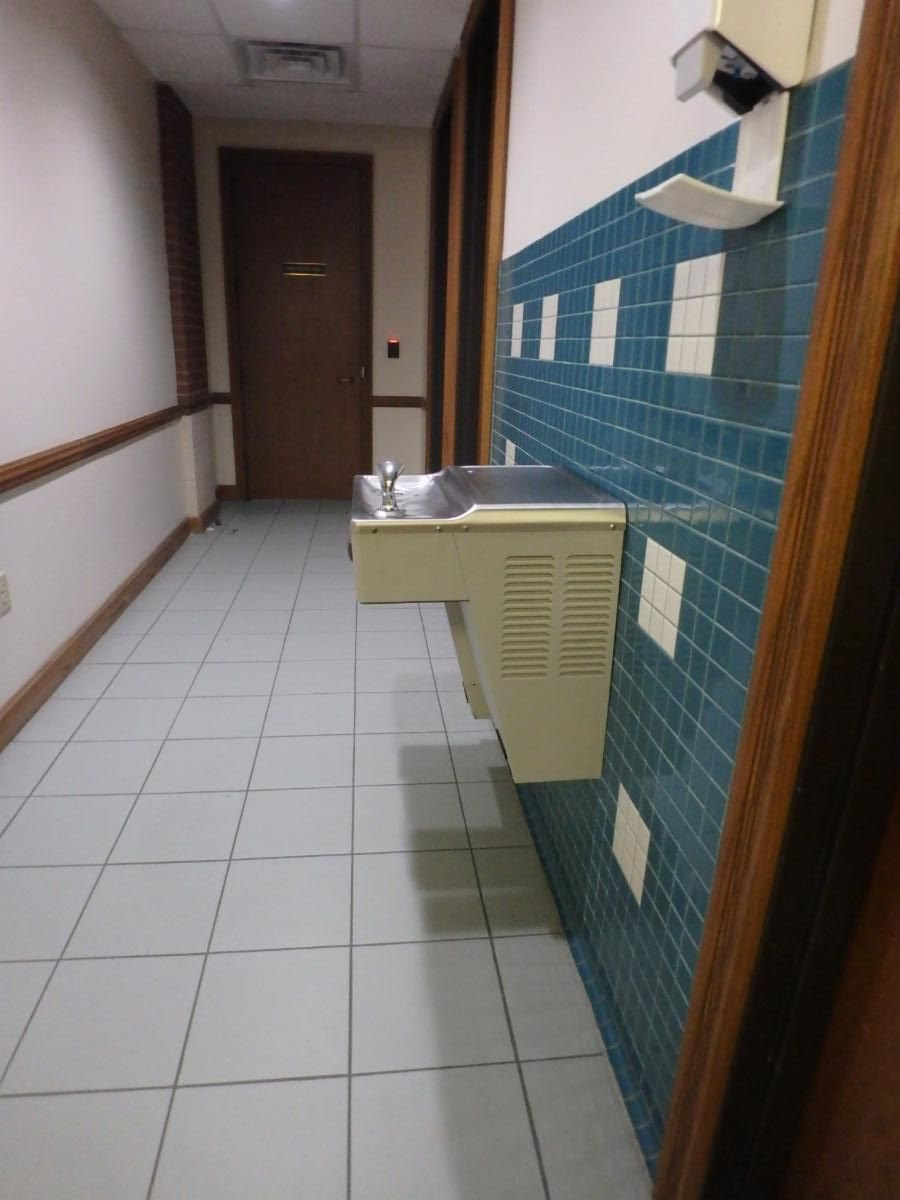
The drinking fountain projects more than 4″ onto the circulation path to the restroom door.

The drinking fountain in the photo below is also located along the circulation path too the restroom door.  It is partially recessed, but since the bottle filler is not the same depth as the drinking fountain it does not provide cane detection.
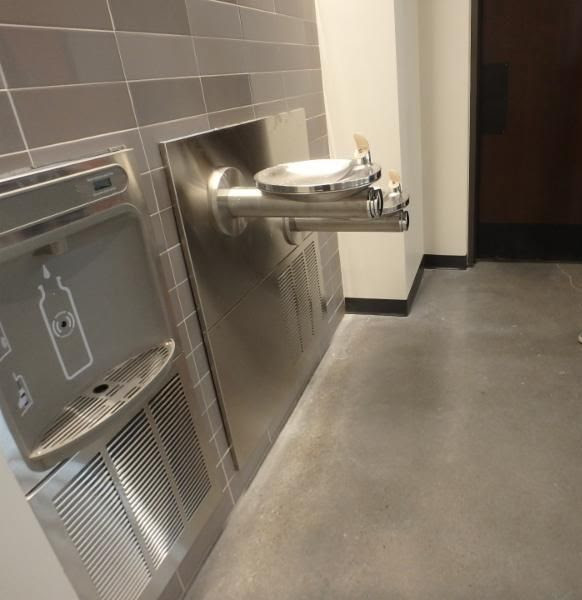
The drinking fountain is located along the circulation path to get to the door beyond.

The circulation path to the lavatory has a hand dryer projecting onto it.
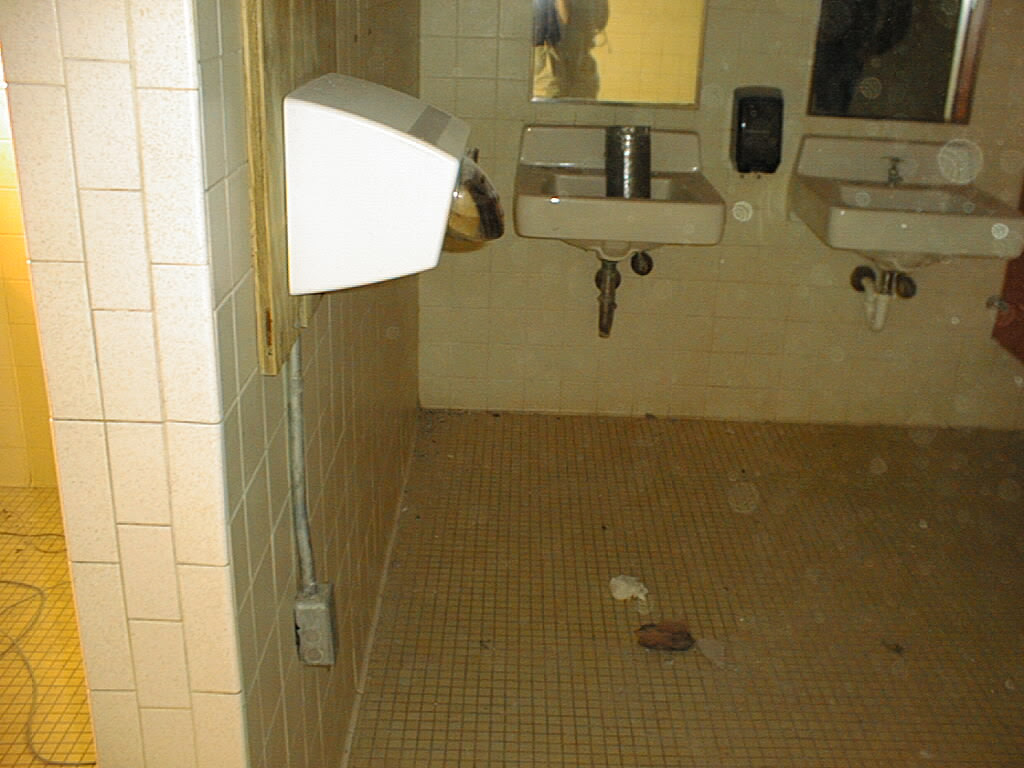
The path to the lavatory is the circulation path.

Any place in a plaza where people walk is part of a circulation path.  The sculpture is located within the circulation path and the angled parts come down to less than 80″ a.f.f. and are considered protruding objects.
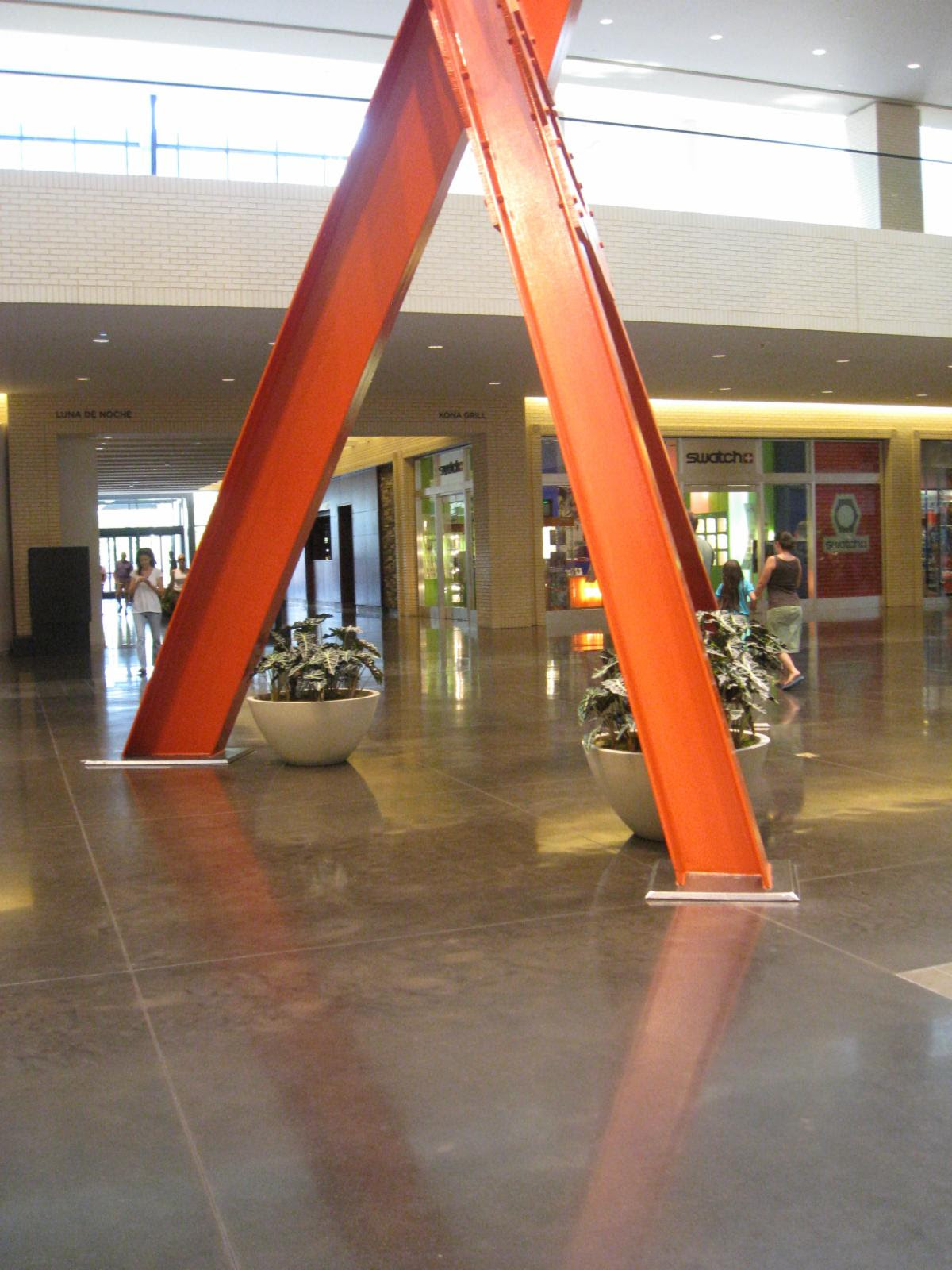
The planters were added at each angle as cane detection.

When discussing circulation paths, keep in mind that although an accessible route is a circulation path because that is where wheelchairs will go, a circulation path is not an accessible route.  A circulation path is where ANYONE can go.  There may be many more examples of circulation paths, so let’s keep them free from hazards and protruding objects.

Clear Widths Along an Accessible Route

Friday, January 3rd, 2020
As most of us know, the minimum clear widths along an accessible route that the ADA requires are 36″ minimum clear.  But there are times when are allowed to be narrower or required to be wider.  This newsletter will explain those instances.

Clear Width Reduction


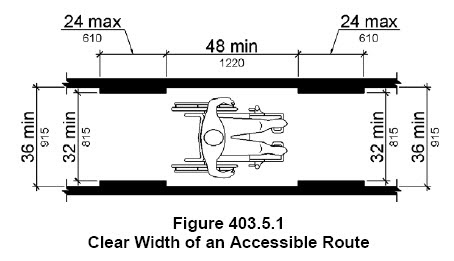
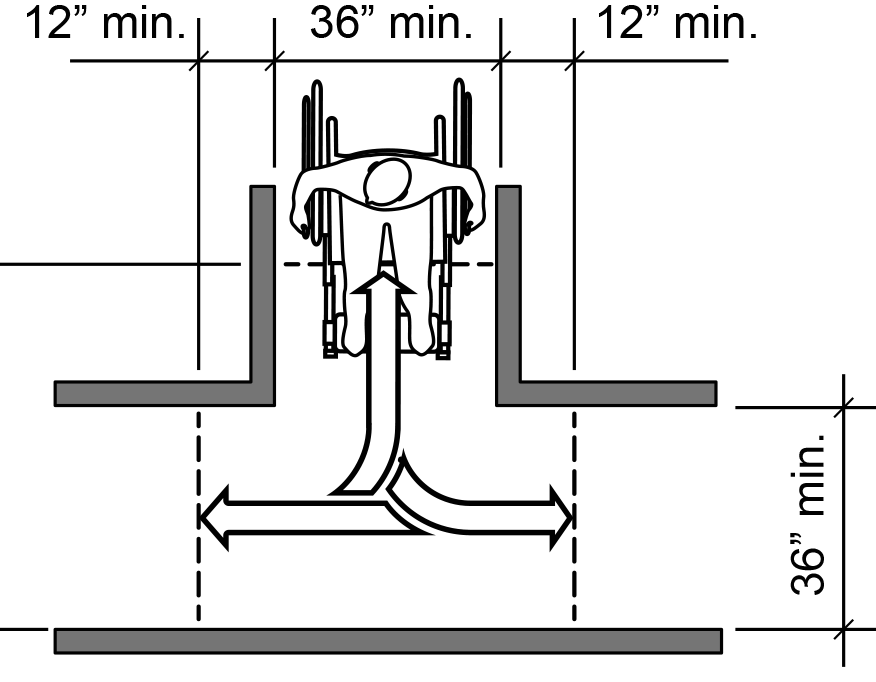
In the 2010 ADA guidelines, section 403 gives us a figure to follow which explains that the 36″ wide clear width can be reduced to 32″ clear as long as the distance that you travel through the narrower width is no more than 24″ deep.
403.5.1 Clear Width. Except as provided in 403.5.2 and 403.5.3, the clear width of walking surfaces shall be 36 inches (915 mm) minimum.
 
EXCEPTION: The clear width shall be permitted to be reduced to 32 inches (815 mm) minimum for  a length of 24 inches (610 mm) maximum provided that reduced width segments are separated by  segments that are 48 inches (1220 mm) long minimum and 36 inches (915 mm) wide minimum.

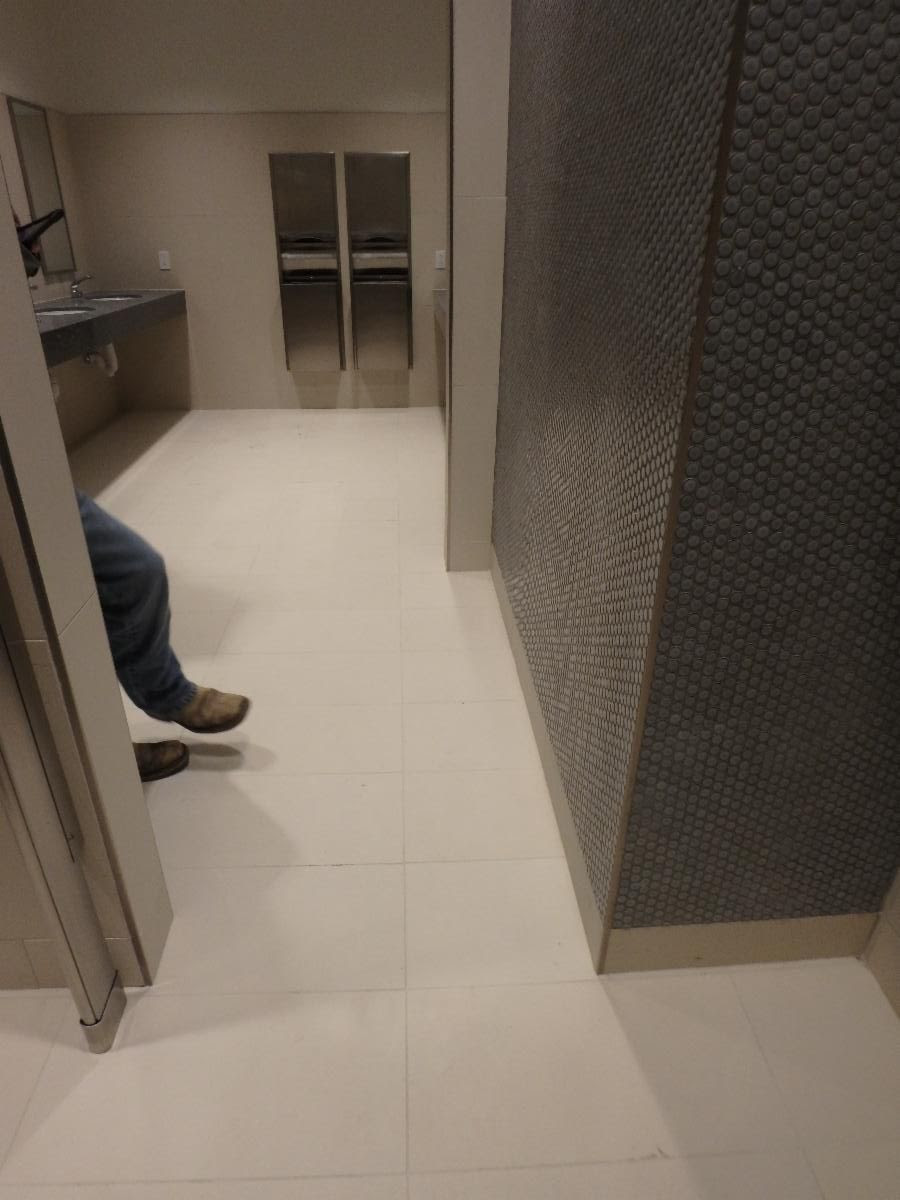
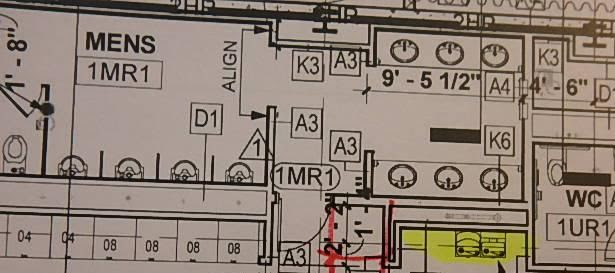
But do both sides of the path need to be 24″ long the way it is shown in the figure above?  Could one side be a wall or even a longer cabinet or obstruction?  I was inspecting a restroom and found that condition.  There was a cased opening to enter the toilet compartment area.  One side of the cased opening was 8″ deep and the other side was the restroom wall which was longer than 24″.

This is the photo of the cased opening along the route to the sinks
This is the plan of the cased opening (where it says “Align”) which part of it is 8″ on one side and longer than 24″ on the other side. The opening was less than 36″ wide.
The guidelines allow this.  As long as one side of the path is no more than 24″ long and it goes back to 36″ wide, it will be an acceptable condition.

Clear width at the approach to a toilet compartment


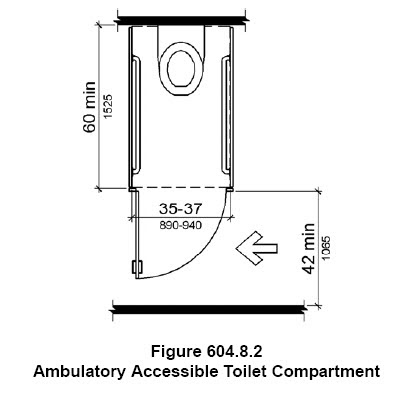
A clear path to a toilet compartment (both wheelchair and ambulatory) should  also have a  36″ minimum clear width.  Except that at the approach to the door it must increase to 42″ in width
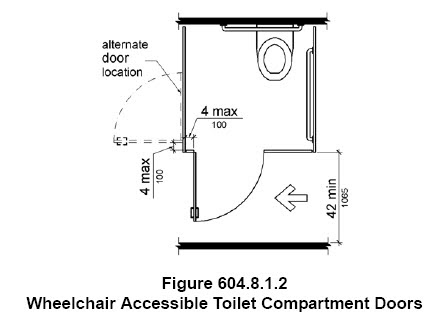
604.8.1.2 Doors. Toilet compartment doors, including door hardware, shall comply with 404 except that if the approach is to the latch side of the compartment door, clearance between the door side of the compartment and any obstruction shall be 42 inches (1065 mm) minimum

The standard is giving us requirements for the door clearance only.  The path to the toilet compartment is still required to have a 36″ minimum clear width.  But the space to open the toilet compartment door and the  maneuvering clearance (if the approach is on the latch side) must have a  42″ minimum clear width between the door and the obstruction


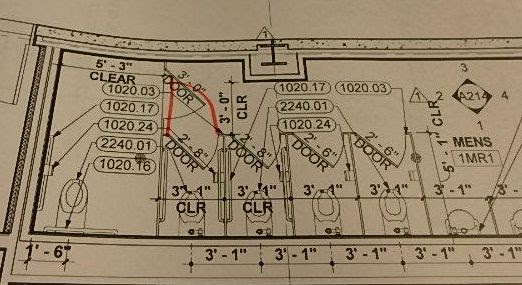
This photo shows the plan view of a path to the ambulatory toilet compartment.

In the plan view above you can see a furred out column in front of the toilet compartments.  That fur out is located within the door maneuvering clearance of the ambulatory toilet compartment and it reduces the 42″ required width to 36″

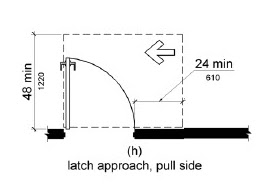
This figure above shows the door maneuvering clearance at the latch side approach.  A toilet compartment door will only require 42″ of clear width not 48″ like a standard door.

Passing space


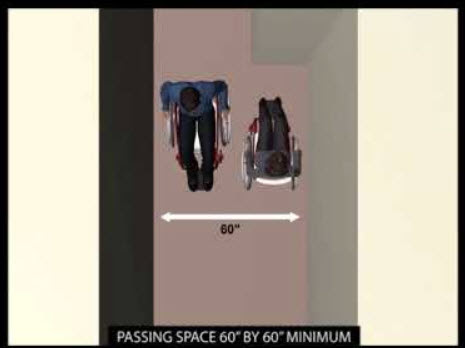
Along an accessible route you are required to have 36″ clear width.  This width is required to be widened to 60″ every 200 feet.  This is to allow people in wheelchairs and pedestrians to pass each other.
403.5.3 Passing Spaces. An accessible route with a clear width less than 60 inches (1525 mm) shall provide passing spaces at intervals of 200 feet (61 m) maximum. Passing spaces shall be either: a space 60 inches (1525 mm) minimum by 60 inches (1525 mm) minimum; or, an intersection of two walking surfaces providing a T-shaped space complying with 304.3.2 where the base and arms of the T-shaped space extend 48 inches (1220 mm) minimum beyond the intersection
Here is a video from the Access Board that explains it

Clear width at turns


When a wheelchair makes a ninety degree turn, a 36″ minimum clear width is allowed.

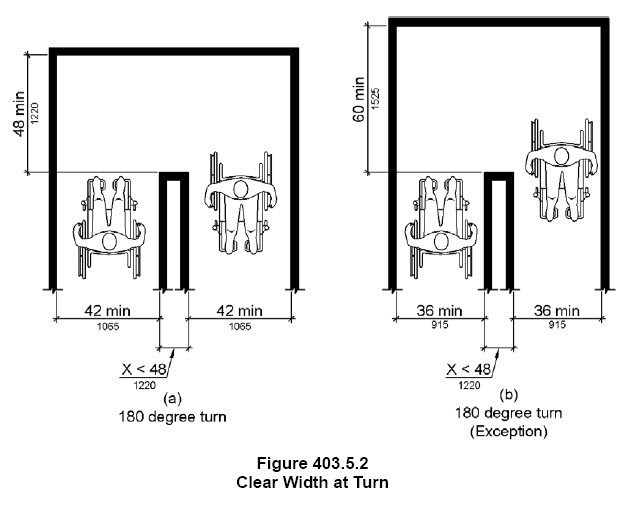
But when a wheelchair is required to make a 180 degree turn, like in a narrow corridor, or maybe in a queue line or library stacks, then the width will have to increase from 36″ to 42″ depending on what size the element they are turning around is.

403.5.2 Clear Width at Turn. Where the accessible route makes a 180 degree turn around an  element which is less than 48 inches (1220 mm) wide, clear width shall be 42 inches (1065 mm)  minimum approaching the turn, 48 inches (1220 mm) minimum at the turn and 42 inches (1065 mm) minimum leaving the turn.
 
EXCEPTION: Where the clear width at the turn is 60 inches (1525 mm) minimum compliance with  403.5.2 shall not be required.
For instance if the space that they are turning around is 60″ in depth, then the clear width can be 36″ min.  If the space is 48″, then the clear width will have to increase to 42″
This video will give you some guidance on turning and wheelchair clearances


About the ADA and TAS. What you might not know?

Monday, December 2nd, 2019
After almost 20 years in my business I am still learning things about the ADA and TAS.  I want to share with you some things that might not be so apparent when you read the standards.

Location of Work Surface in a Residential Kitchen

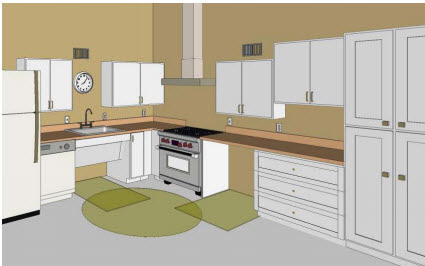
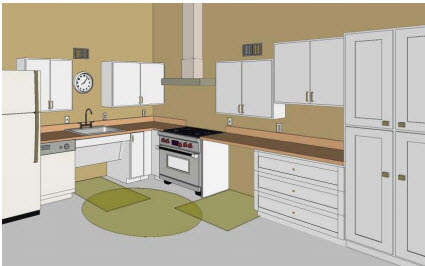
When designing a residential kitchen that will be used by the public (e.g. a an assisted living resident room, a kitchen in an emergency personnel facility, an apartment for a resident hall director or RA etc.) the appliances that you choose will have to be compliant with the ADA and TAS.   One of the requirements is typically missed or overlooked.  It is the one pertaining to a work surface in a “residential kitchen”.
804.3 Kitchen Work Surface. In residential dwelling units required to comply with 809, at least one 30 inches (760 mm) wide minimum section of counter shall provide a kitchen work surface that complies with 804.3
804.6.5.1 Side-Hinged Door Ovens. Side-hinged door ovens shall have the work surface required by 804.3 positioned adjacent to the latch side of the oven door.
804.6.5.2 Bottom-Hinged Door Ovens. Bottom-hinged door ovens shall have the work surface required by 804.3 positioned adjacent to one side of the door.
 
Where a work surface is required and the kitchen has an oven, the work surface needs to be located adjacent the oven.


Keep in mind, this only applies to “residential” kitchens….not all kitchens.  So a break room or common use kitchen not located in a residential dwelling unit (as defined by the ADA) does not require a work surface.

Clearance vs. Clear Floor Space

There are two concepts that are sometimes thought to be interchangeable in the ADA and TAS:  “Clearance” and “Clear Floor Space”.  Section 305 lists the requirements for “Clear floor space” .  Clear floor space is required adjacent beds, under counters, lavatories, sinks, at operable parts for reaching, inside platform lifts, at drinking fountains, at toilet room fixtures, at washer and dryers, at saunas and steam rooms, at ATM, at signage, at work surfaces, at jury boxes and adjacent exercise equipment.

Some of the requirements are listed below from Section 305:

305.2 Floor or Ground Surfaces. Floor or ground surfaces of a clear floor or ground space shall comply with 302. Changes in level are not permitted.

EXCEPTION: Slopes not steeper than 1:48 shall be permitted.

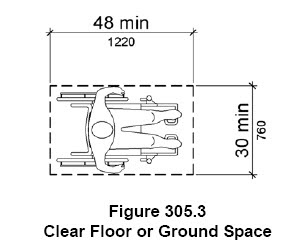
305.3 Size. The clear floor or ground space shall be 30 inches (760 mm) minimum by 48 inches (1220 mm) minimum.


Any time that the words “clear floor space” is found in the Standards these are the requirements that must be followed.  Some of those instances will be at the clear floor space to reach objects, a clear floor space at wheelchair seating in assembly areas or clear floor space at toilet rooms.

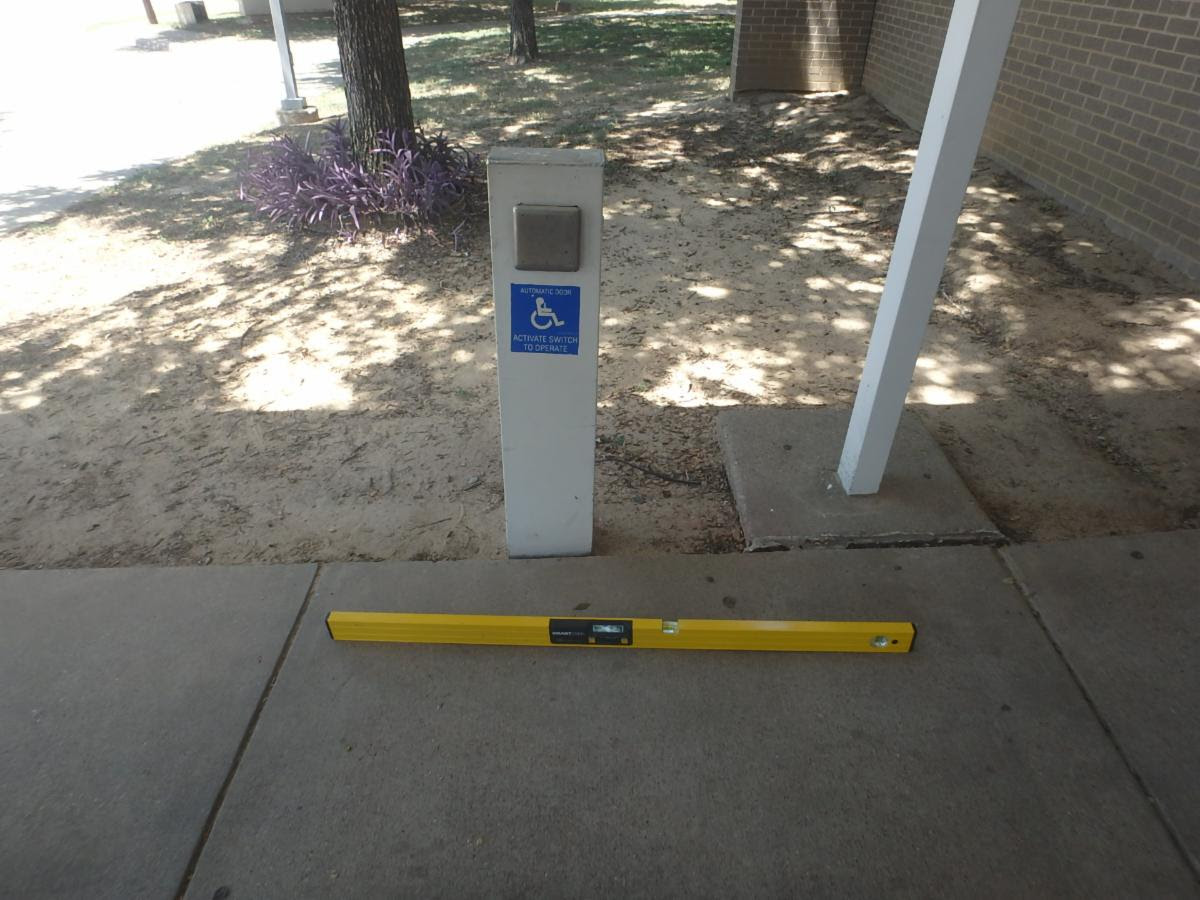
A clear floor space is required at the push button. The clear floor space needs to have a slope no steeper than 1:48 . This clear floor space is steeper.

Clearance

What sometimes gets conflated are the “clearance” at plumbing fixtures like toilets, showers and tubs. “Clear floor space” is defined, but “clearance” is not….except to describe its size and location.

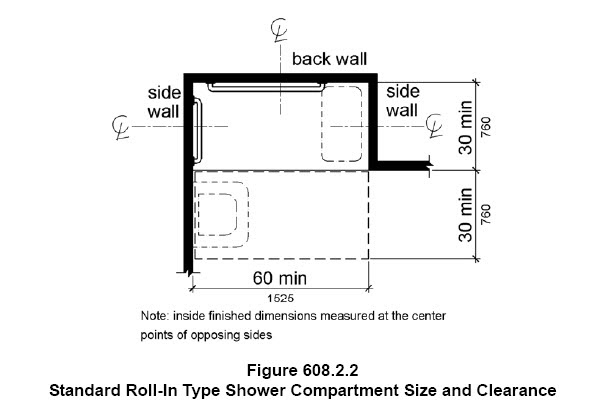
608.2.2.1 Clearance [at roll in showers]. A 30 inch (760 mm) wide minimum by 60 inch (1525 mm) long minimum clearance shall be provided adjacent to the open face of the shower compartment.
 

The clearance is mentioned to let us know what size we need to provide and where it should be located…but it does not mention slope.

Unlike the clear floor space where a slope cannot exceed 1:48, a clearance at the shower for example is not defined.  So the clearance at the roll in shower can have a slope that exceeds 1:48
 
This roll in shower has a slope up to the shower pan which is acceptable (although may not be recommended)