 Abadi
Abadi 



In science classrooms there are many elements that students will use to learn. There are elements that are required to comply in order to provide equal access to students with disabilities.
This newsletter will provide examples of some elements that will have to comply
Science Room Tables and Sinks
Science classrooms with built in or fixed tables for students should provide 5% of the tables with accessible elements as required by ADA section 902: These are considered “work surfaces” for use other than employees
226.1 General. … In addition, where work surfaces are provided for use by other than employees, at least 5 percent shall comply with 902.
- Height should be no higher than 34″ a.f.f.
- A knee and toe clearance complying with section 306
- Reachable elements on the counter
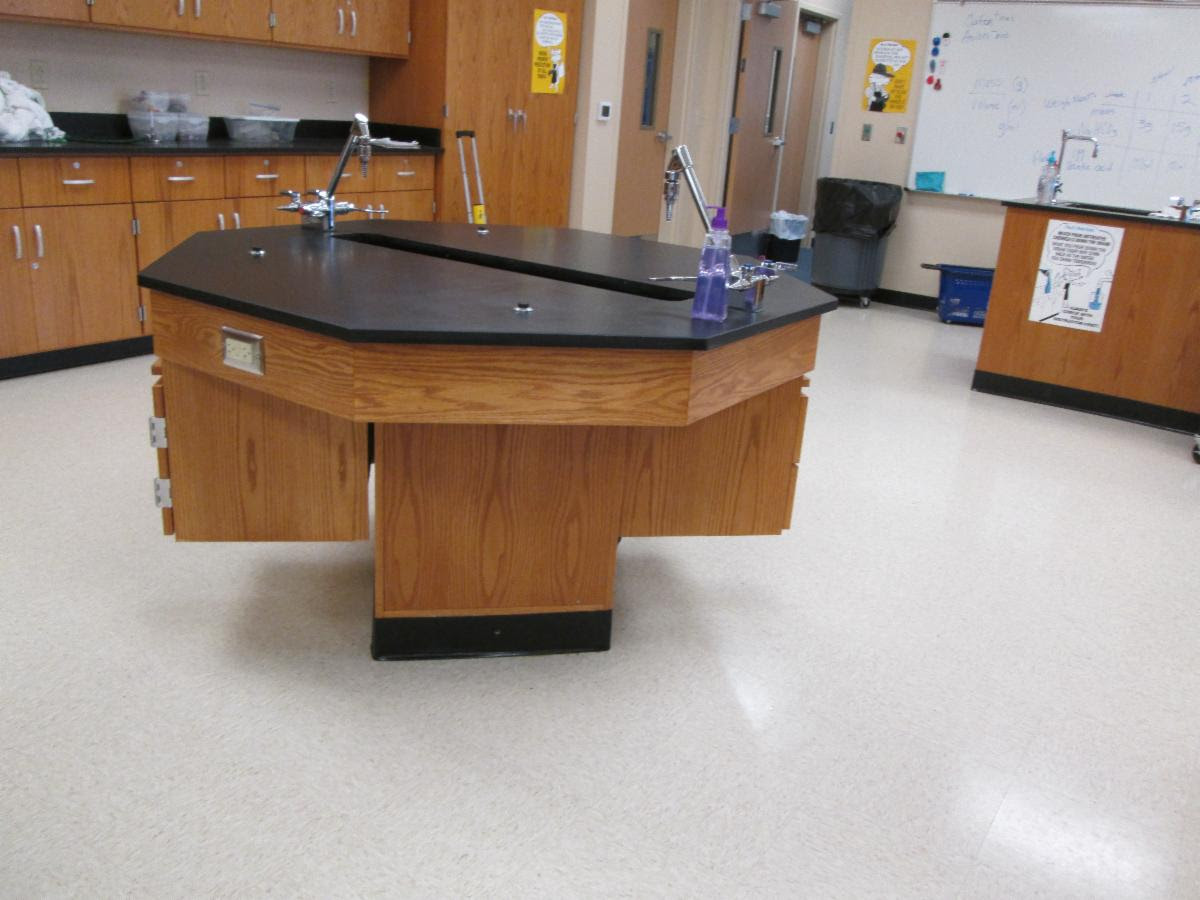
This photo shows an accessible science lab table at a high school
Some of the science classrooms might have separate sinks which will also must have 5% of each type of sink with accessible elements as required by section 606:
212.3 Sinks. Where sinks are provided, at least 5 percent, but no fewer than one, of each type provided in each accessible room or space shall comply with 606.
- Height should be no higher than 34″ a.f.f.
- A knee and toe clearance complying with section 306
- Reachable elements like faucets and other elements
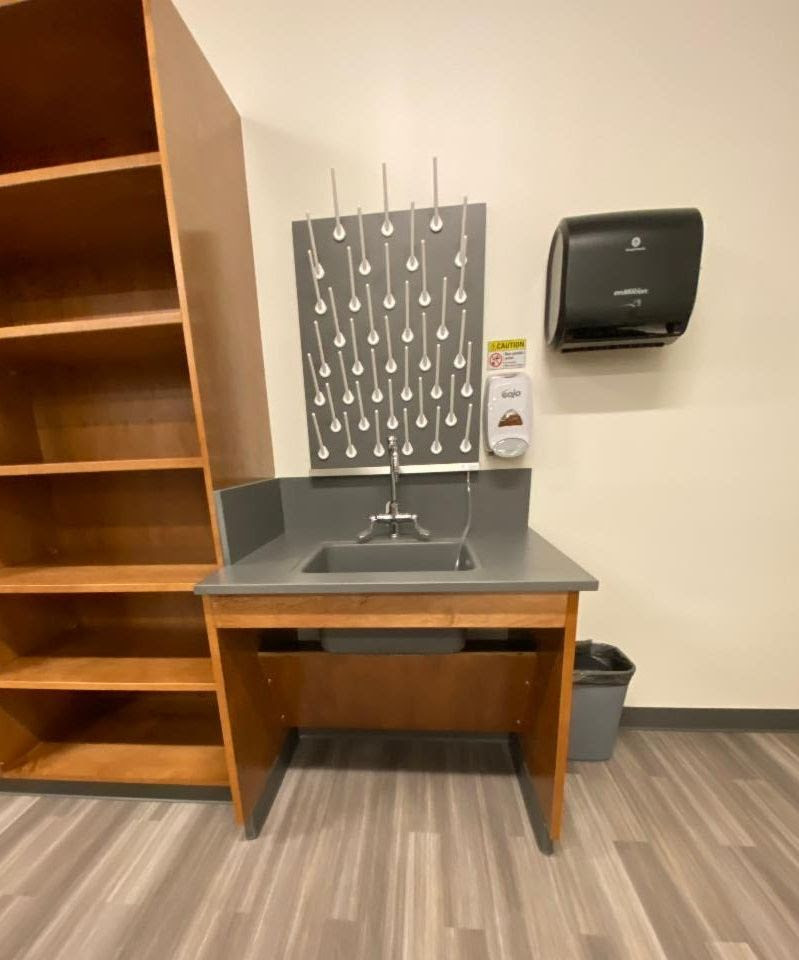
This photo shows an accessible sink at a science lab
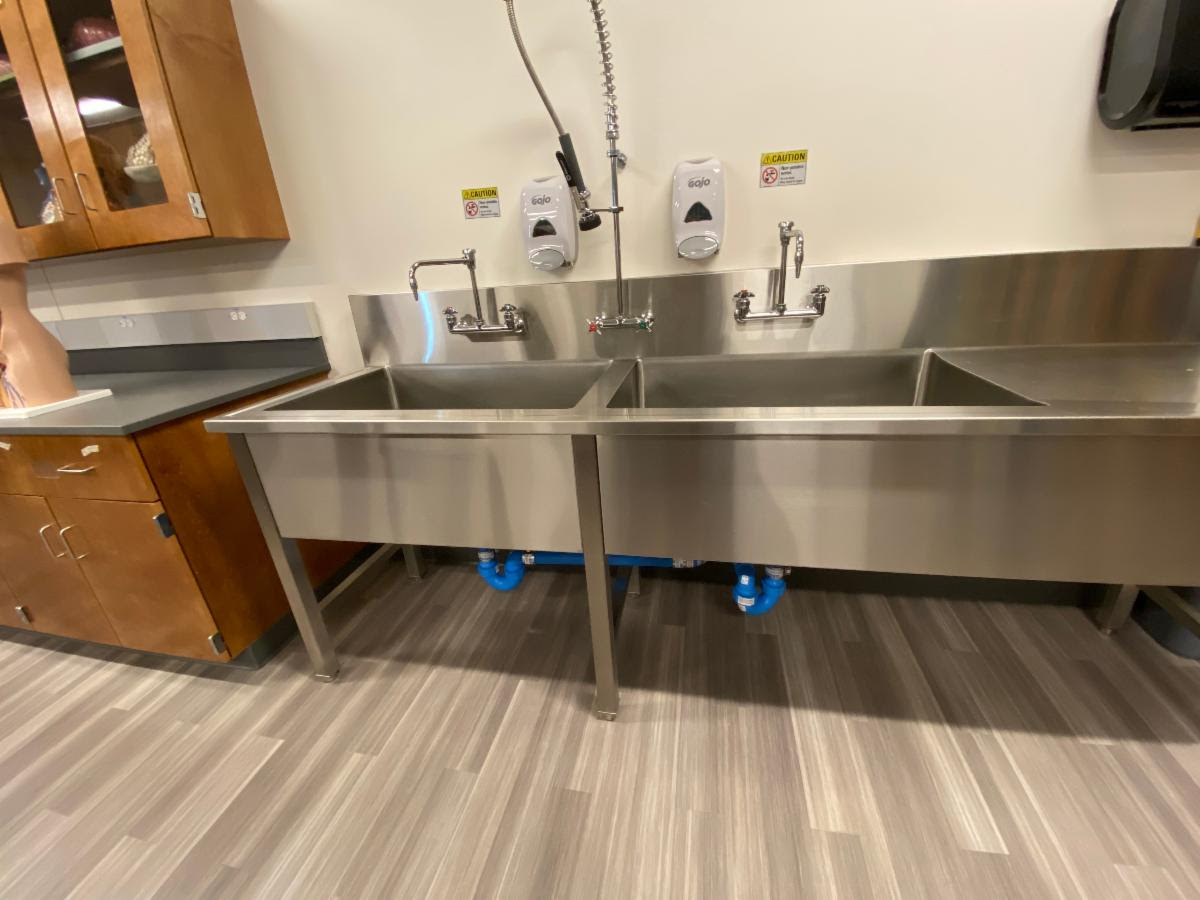
This photo shows a different type of sink in the classrooms but it does not meet the requirements for knee clearance or reach ranges.
BEAKER DRYING RACK
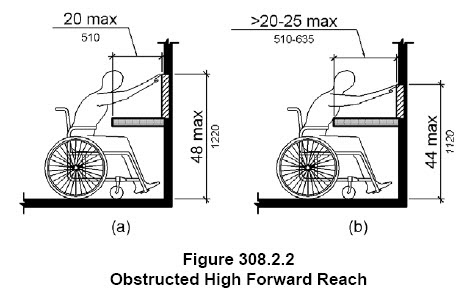
The science labs might also have drying racks for scientific supplies which will also require that they be accessible. They should be located so that they are within reach range as required by section 308
The reach can either be a forward approach over an obstruction or a side reach over an obstruction as shown by the figures
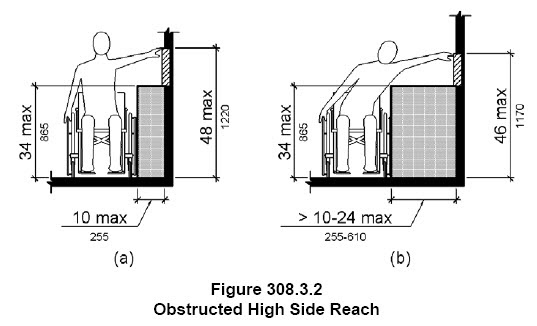
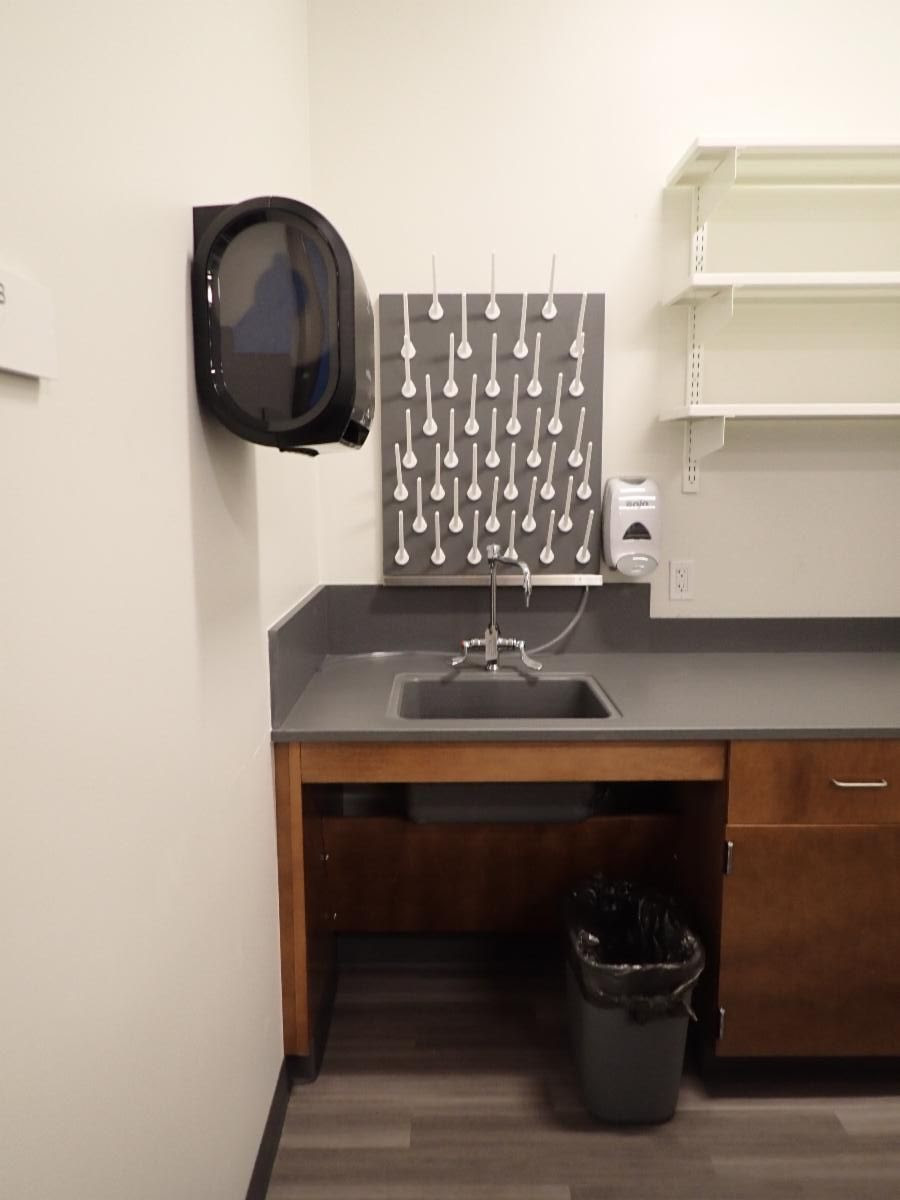
This photo shows a beaker drying rack behind a sink
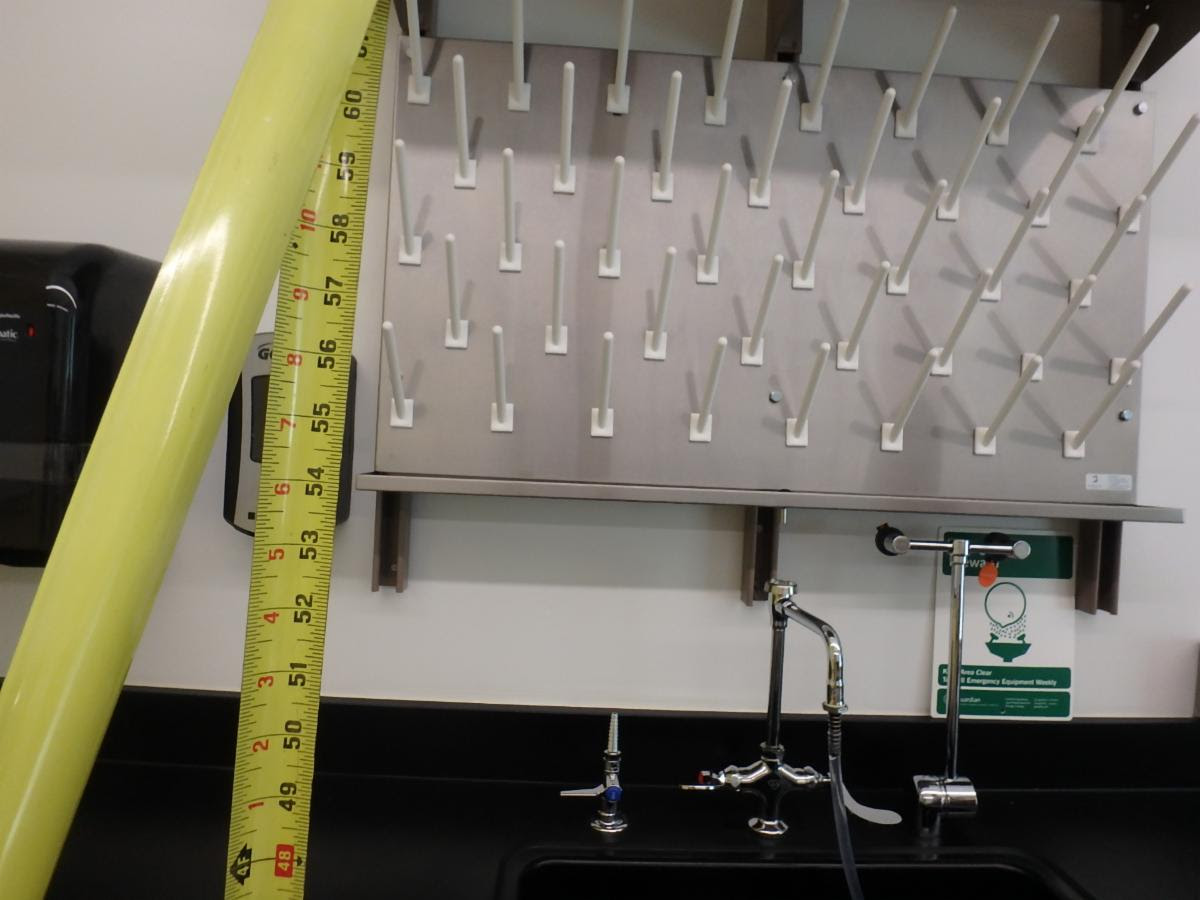
This photo shows that the beaker drying rack is mounted at 56″ a.f.f. which is higher than the required 44″ a.f.f. forward approach over an obstruction
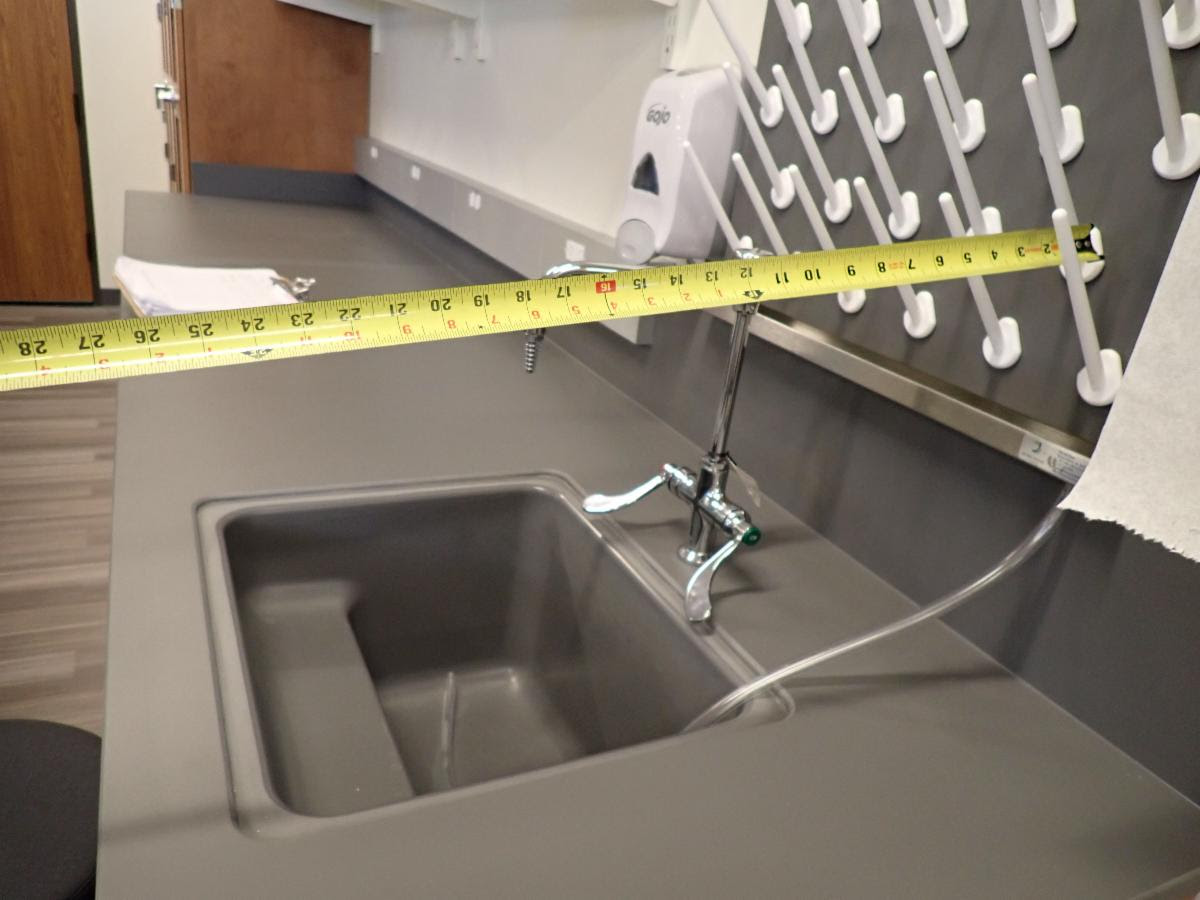
This photo shows that the beaker drying rack is 26″ away from the edge of the counter and too far to be within reach
LAB EQUIPMENT AND EYE WASHES
Labs sometimes will have equipment for students to use such as fume hoods and eye wash stations. All operable parts will have to be within reach as required by section 308. The reach can be either be a forward reach or a side reach. Labs may also have emergency eye washes that will also require that they be within reach range.
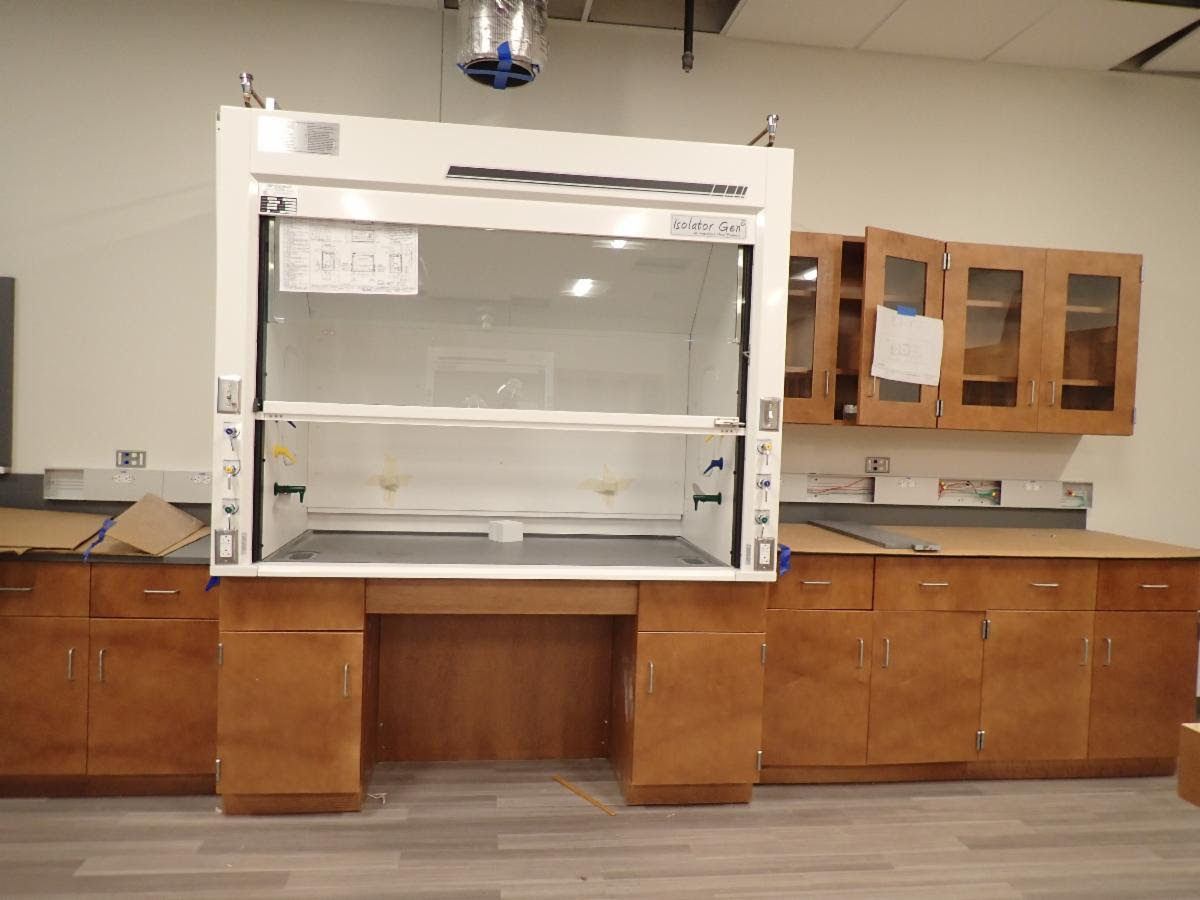
The photo shows a fume hood. It also shows a knee space. There is no requirement for the fume hood to have a knee space or for the counter to be at 34″ a.f.f. maximum. The controls need to be within reach and if the counter was less than 34″ a.f.f. the controls would be within the 48″ a.f.f. maximum reach range.
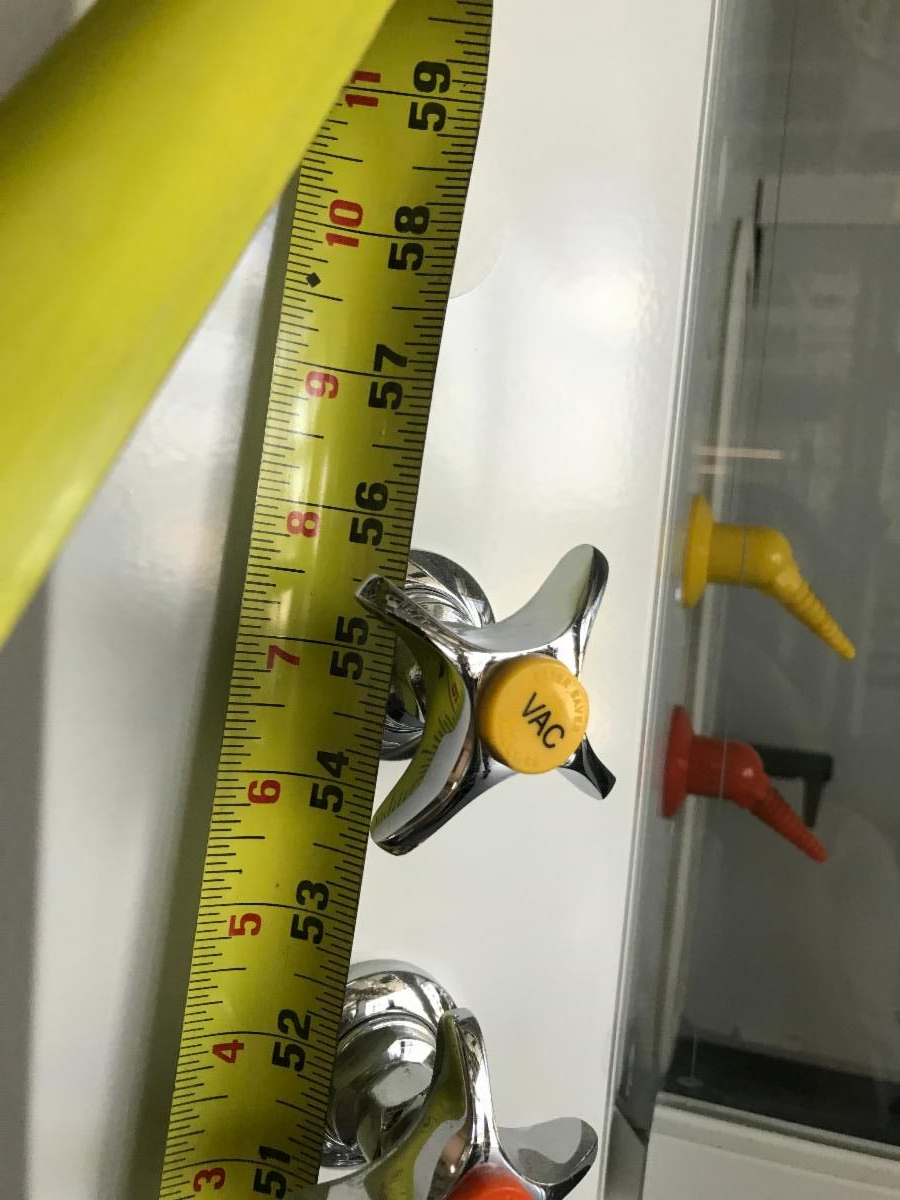
The controls at the fume hood are mounted higher than 48″ a.f.f. The photo shows them at 56″ a.f.f. In addition, the type of operation requires twisting of the wrist which is also not accessible.
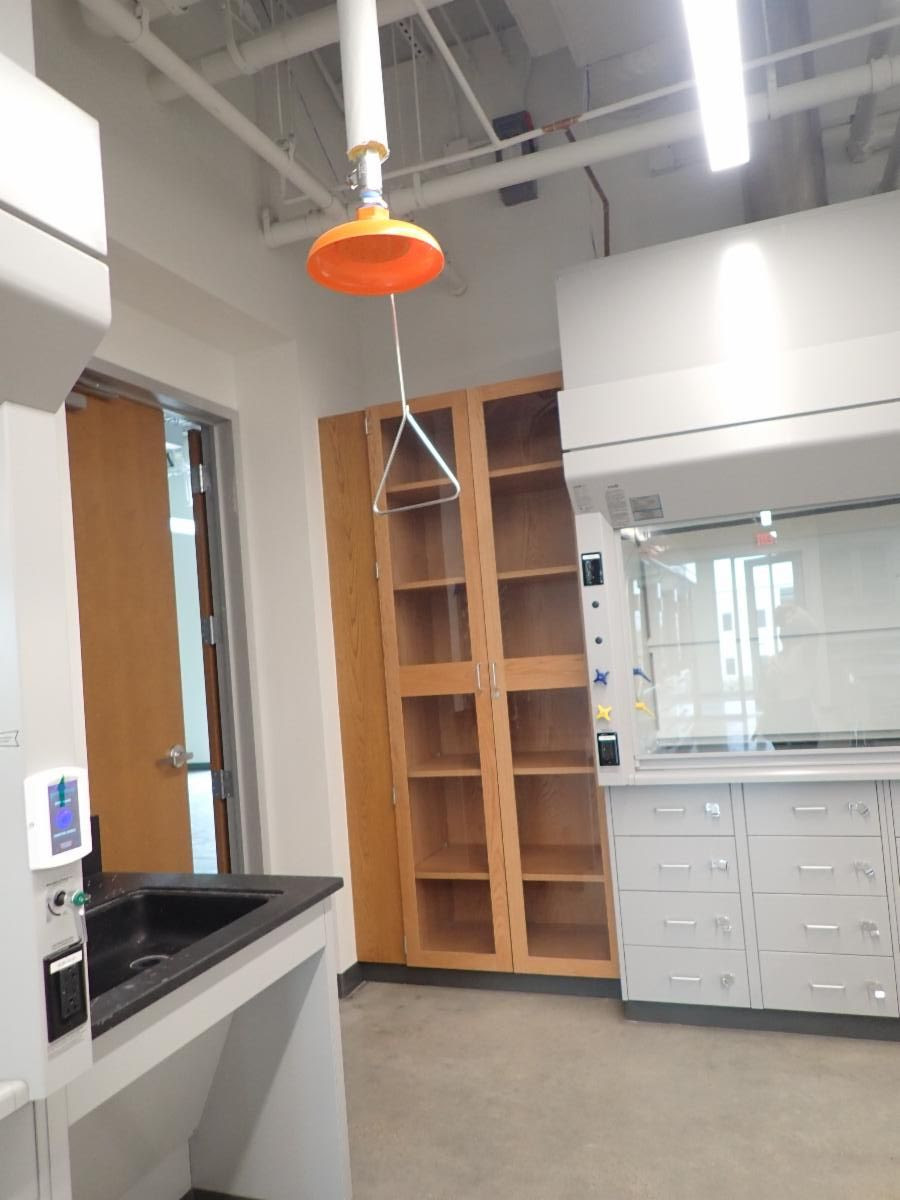
The lab shown in the photo has an emergency eye wash with a handle mounted higher than 48″ a.f.f.
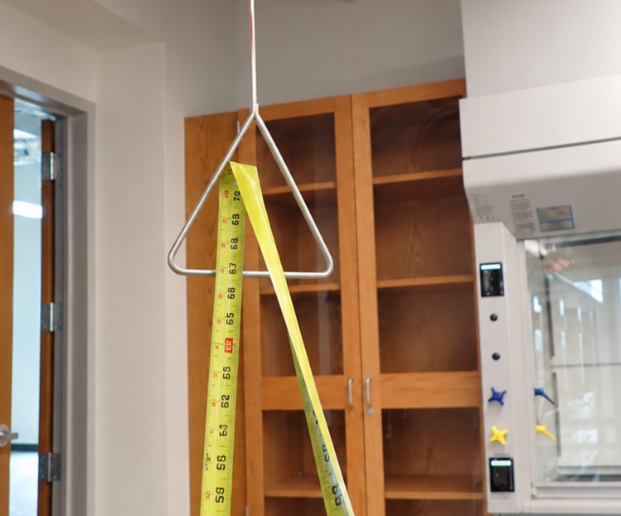
The eye wash handle is mounted at 63″ a.f.f.