 Abadi
Abadi 


Accessible Restrooms
Posted on - Monday, December 1st, 2025How many restrooms must comply with the ADA standards? In new construction, the answer is ALL OF THEM. There are some exceptions that you may take if needed. This newsletter will explain what is required at multi-user restrooms, single user restrooms and private restrooms. In addition we will discuss staff vs. public restrooms and restrooms for children and when you can take the exceptions.
How many restrooms are required?
ADA section 213 gives the minimum requirements for restrooms. The ADA requires that ALL new restrooms provided in the facility comply with the Standards and Guidelines.
213 Toilet Rooms
213.2 Toilet Rooms and Bathing Rooms. Where toilet rooms are provided, each toilet room shall comply with 603. Where bathing rooms are provided, each bathing room shall comply with 603.
All multi-user restrooms on each floor. Even if there is an exception for needing an elevator, the new restrooms on floors that are NOT accessed by elevator must comply.
Staff restrooms must comply. They are not considered “private” unless it is for one person and accessed through their office.
Restrooms for children must comply. Except for children 2 and younger.
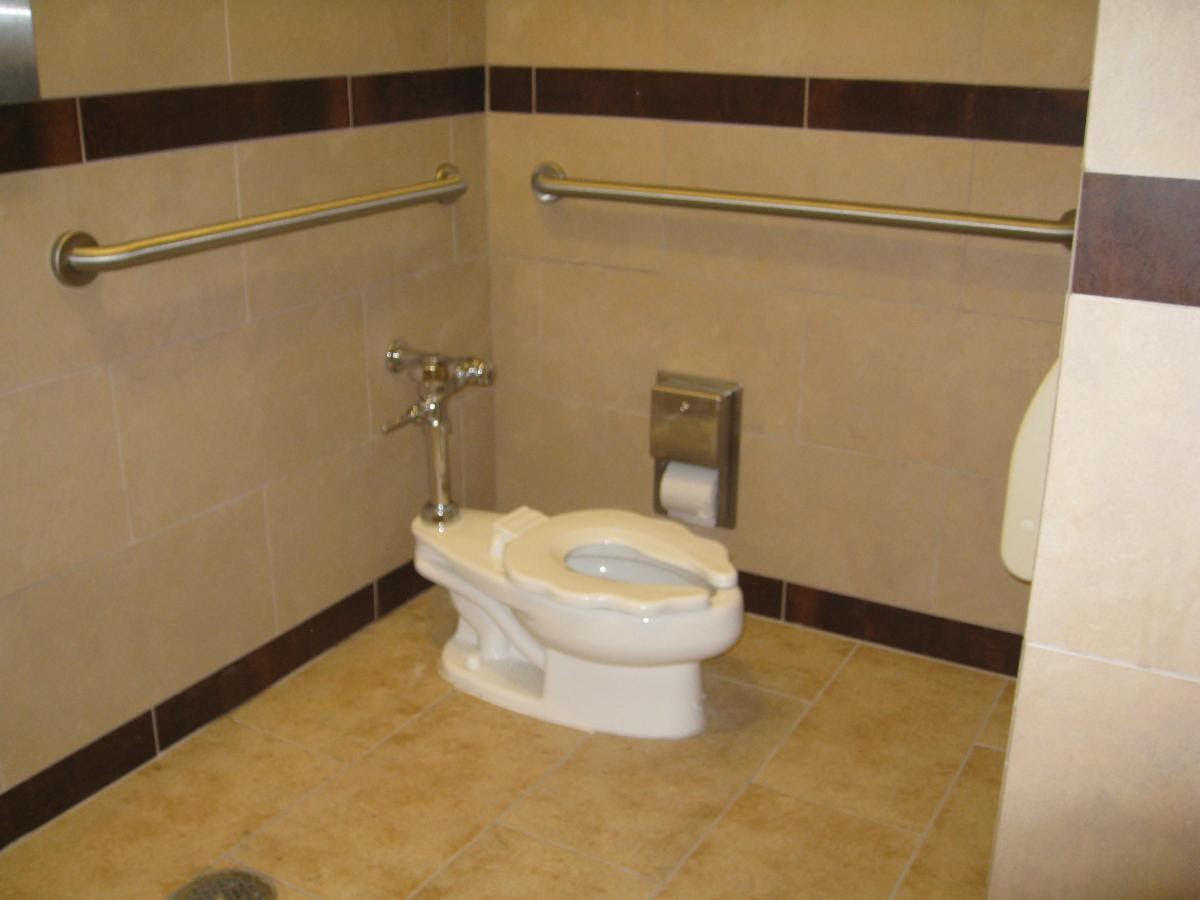
Toilet and restrooms for children are not exempted. They must comply but have different requirements for heights of elements than adults. Clearances and lengths of elements are similar
So what are the exceptions?
In multi-user (gang) restrooms where multiple toilet compartments and urinals are provided: A minimum of one water closet, one urinal, one lavatory must comply.
213.3.1 Toilet Compartments. Where toilet compartments are provided, at least one toilet compartment shall comply with 604.8.1. In addition to the compartment required to comply with 604.8.1, at least one compartment shall comply with 604.8.2 where six or more toilet compartments are provided, or where the combination of urinals and water closets totals six or more fixtures.
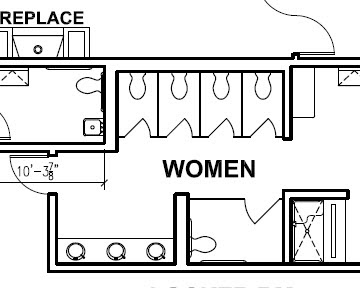
The drawing above shows women’s multi-user restrooms with toilet compartments. Per 213.2.1 only one must comply
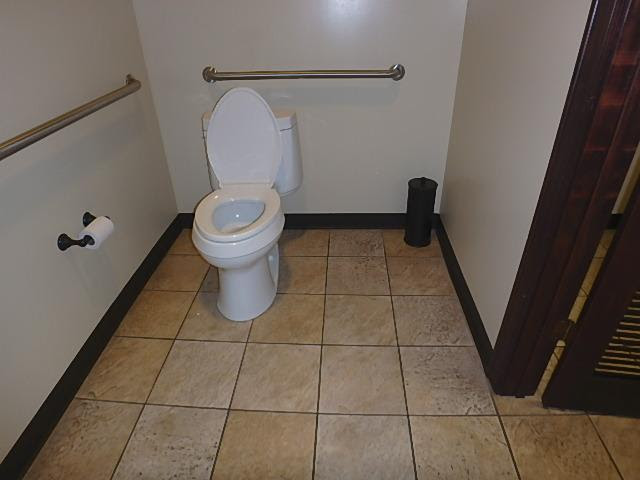
The photo above is of a toilet compartment that has toilet compartment walls from floor to ceiling.
Another exception is for alterations. If there is a compliant single user restroom that is compliant located in the same area as the non-compliant multi-user restroom it will be allowed to be used instead.
1. In alterations where it is technically infeasible to comply with 603, altering existing toilet or bathing rooms shall not be required where a single unisex toilet room or bathing room complying with 213.2.1 is provided and located in the same area and on the same floor as existing inaccessible toilet or bathing rooms.
In a historic building, only one toilet room of each sex must comply.
2. Where exceptions for alterations to qualified historic buildings or facilities are permitted by 202.5, no fewer than one toilet room for each sex complying with 603 or one unisex toilet room complying with 213.2.1 shall be provided.
Where single user toilet rooms are clustered at a single location, only 50% of them must comply as long as they are not different. If they are gender neutral or not for a specific group and have the same fixtures inside, then they would be eligible to
4. Where multiple single user toilet rooms are clustered at a single location, no more than 50 percent of the single user toilet rooms for each use at each cluster shall be required to comply with 603.
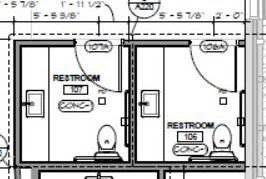
The restrooms shown in the drawing above are single user restrooms located in a cluster. Only 50% need to comply if the exception is taken
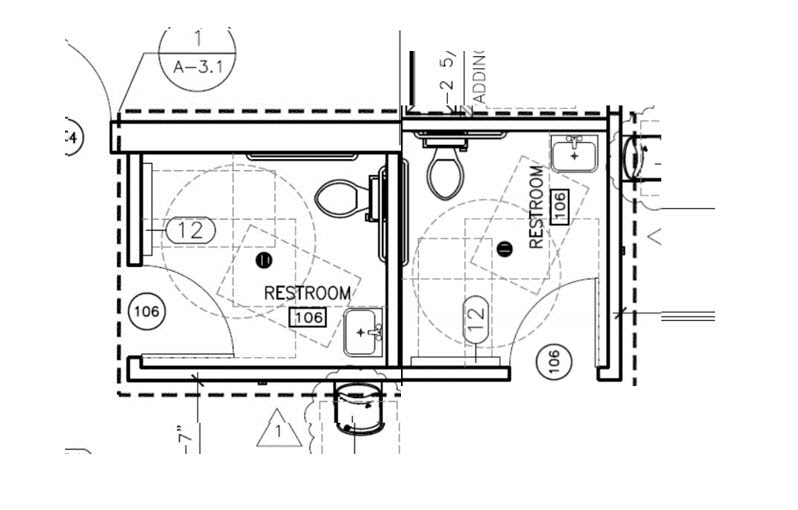
The drawing above shows single user restrooms but they are not located in a cluster because the doors open on different corridors. Both of these must comply
In Medical care facilities like hospitals, the percentage of patient rooms must have accessible restrooms. Except in the ICU
EXCEPTION: Toilet rooms that are part of critical or intensive care patient sleeping rooms shall not be required to comply with 603.
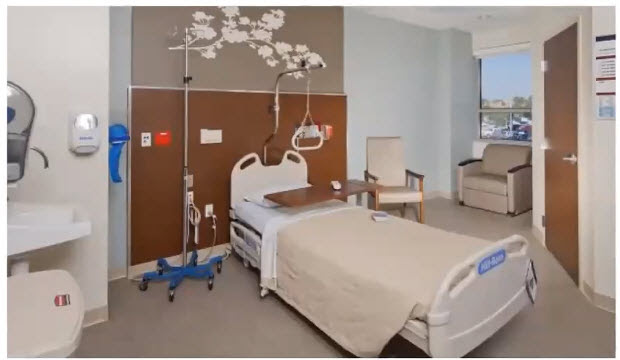
An ICU patient room will not require that the bathroom be compliant because the patient will not be using the bathroom independently.
There are also exceptions you may take within the following restrooms:
1. Private bathrooms accessed through a private office. I wrote a newsletter on this one. There are a few things that are exempted but some that are required. Click here to read it
2. Restrooms in residential facilities. These are residential facilities that are subject to the ADA section, such as First responder facilities with sleeping quarters, apartments in university residence halls used by faculty and staff, social service facilities like group homes and homeless shelters.
3. Detention facilities also provide some exceptions.
Exemptions are allowed but not required to be taken. They don’t need to be taken. It is simpler to not use them unless they are necessary.